


Vanilla Knowledge
Indonesia vs Madagascar: Why the World’s #2 Vanilla Producer Is the Baker’s Best-Kept Secret
Jun
Indonesia vs Madagascar: Why the World’s #2 Vanilla Producer Is the Baker’s Best-Kept Secret
Indonesia produces approximately 2,300 tonnes of vanilla annually — second only to Madagascar in global output (FAO Crop Statistics, 2023). Yet most bakers in Europe and North America have never intentionally bought Indonesian vanilla beans. That gap between production scale and buyer awareness is the story worth telling.
The Pastry Chef Who Read the Lab Report
A wholesale customer in Melbourne placed her first order after receiving a lab report showing 2.58% vanillin content in a batch of Sumatra Bourbon Planifolia beans. She had been buying Madagascar vanilla for 6 years. After the switch, she described the flavour as “richer on the finish — less sharp, more round.” The chemistry confirmed what her palate already noticed.
Vanillin is the primary aromatic compound in vanilla. It is responsible for the warm, sweet, woody notes that bakers rely on. Most commercially traded beans test between 1.5% and 2.0% vanillin content (Bythrow, 2005). Vanillature’s Sumatra Planifolia tests consistently above 2.5% — a measurable difference that shows up in every bake.
Indonesia’s Production Scale — and Why It Stays Under the Radar
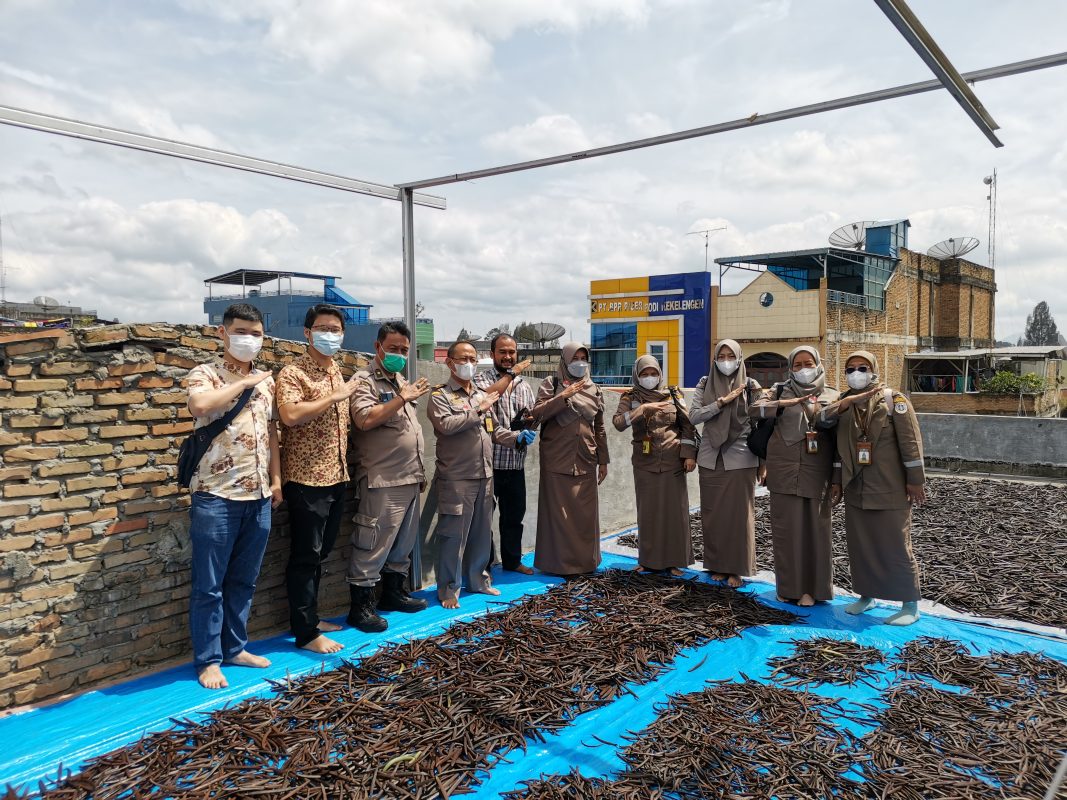
According to FAO Crop Statistics 2023, Indonesia harvests approximately 2,300 tonnes of vanilla per year, making it the world’s second-largest producer. Madagascar dominates retail branding and commands premium shelf positioning. Indonesia supplies a significant portion of the world’s vanilla extract industry — often without attribution on the label.
The result is a structural blind spot. Buyers purchasing “bourbon vanilla extract” may be consuming Indonesian-origin beans without knowing it. What Vanillature does differently is source directly from 500+ smallholder farmers across Sumatra and Papua, test every batch through a 5-stage quality sorting process, and sell under clear origin labelling.
Map: Indonesia’s vanilla-producing regions — North Sumatra, Papua, and key growing districts
Terroir Side by Side: Sumatra vs Madagascar
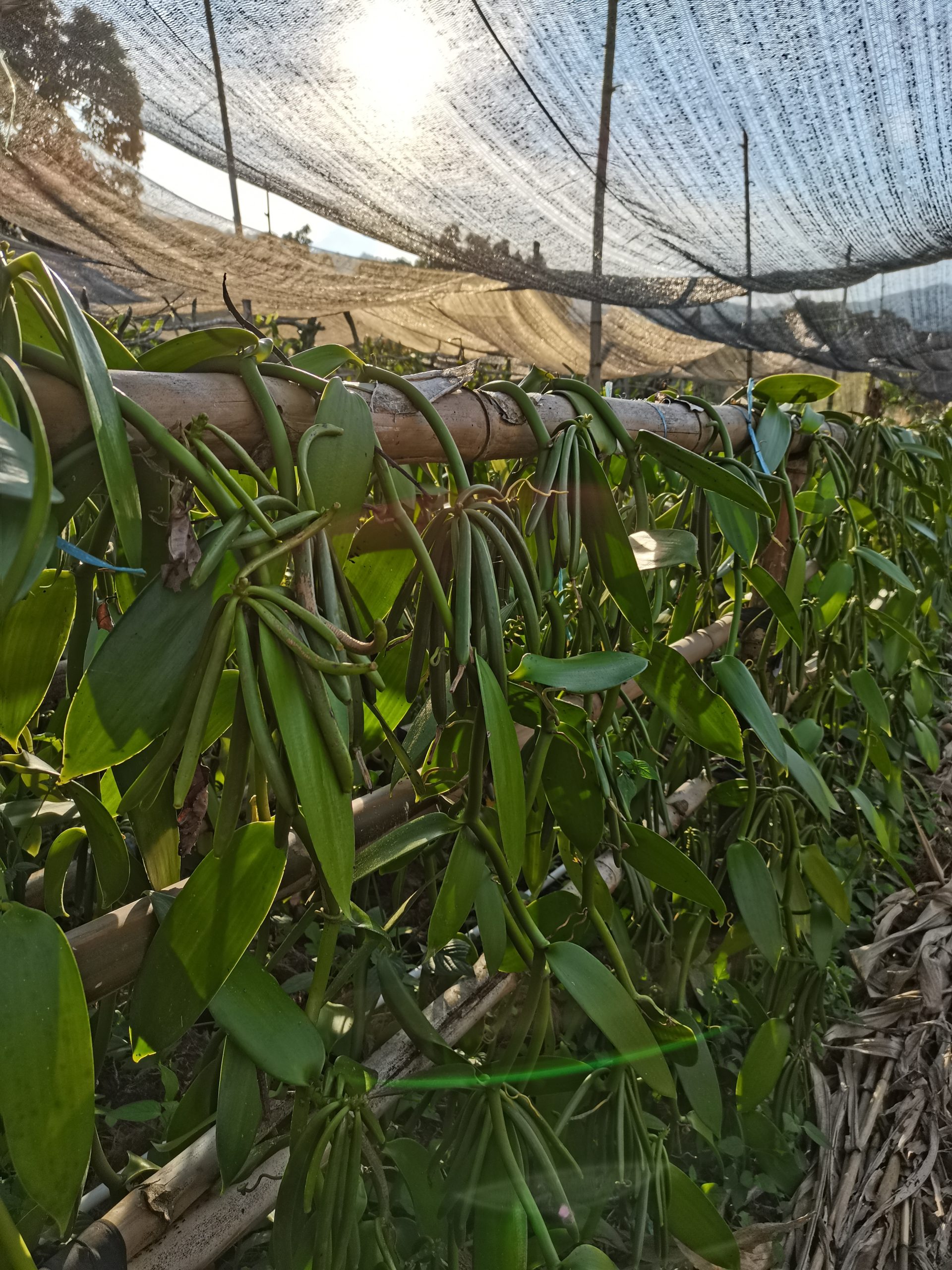
Terroir — the combination of soil, altitude, rainfall, and temperature — determines flavour complexity. Vanillature’s North Sumatra farms sit at 680 metres above sea level, where cooler nights slow bean maturation and concentrate volatile aromatic compounds. The beans spend 9 months ripening on the vine before harvest. Total production time from hand-pollination to finished bean runs approximately 15 months.
| Factor | Vanillature Sumatra | Madagascar (typical) |
|---|---|---|
| Vanillin content | 2.5%+ (tested per batch) | 1.5–2.0% (industry avg) |
| Farm elevation | 680 m above sea level | 0–200 m (coastal plains) |
| Vine-to-harvest time | 9 months on the vine | 7–9 months on the vine |
| Curing method | 3–6 months traditional sun curing | 2–4 months (variable) |
| Flavour profile | Rich, smooth, woody, deep caramel | Bold, creamy, classic sweet |
| Annual national output | ~2,300 tonnes (#2 globally) | ~3,000 tonnes (#1 globally) |
| Supply chain | Direct from 500+ farmers | Multi-tier broker networks (typically) |
The flavour distinction comes down to more than numbers. Sumatra Planifolia carries additional phenolic compounds — heliotropin and trace eugenol — that give it a spiced, almost tobacco-like depth absent from most Madagascar beans (Havkin-Frenkel & Belanger, 2011). That complexity is what experienced bakers describe as “warmth that stays.”
Harvest Timing: Where the Flavour Is Won or Lost
Every vanilla flower opens for just 6 to 8 hours — from approximately 6 am to 9 am only. Miss that window and the flower drops unpollinated. On Vanillature’s Simalungun farms, farmers hand-pollinate each flower individually during this narrow morning slot, then track each vine through the full 9-month ripening cycle.
“We check the colour every week from month seven. The bean tells you when it is ready — a faint yellow line near the tip means two more weeks. Pick too early and the vanillin never fully develops. We have learned to wait.”
— Pak Irwan, vanilla farmer, Simalungun, North Sumatra, 12 years cultivating Planifolia
Pak Irwan’s 12 years of observation align with the science. Dunphy et al. (2020) confirmed that vanillin precursors in Planifolia beans continue converting through the final weeks before harvest — meaning premature picking directly reduces vanillin content. At Vanillature, we reject early-picked lots during our 5-stage quality sorting process before any bean reaches a customer.
Which Indonesian Vanilla Bean Is Right for Your Kitchen?
Vanillature’s Indonesian vanilla beans are graded by moisture content and vanillin concentration. Grade A beans carry 30–35% moisture and test above 2.0% vanillin — the standard for infusions, custards, and whole-bean applications where visual presentation matters. Grade B beans run 15–25% moisture and test above 1.0% vanillin — ideal for grinding, sugar infusions, and extract-making where appearance is secondary.
At the top of the Vanillature range sits Crystal Vanilla — beans that have developed visible vanillin crystals on the surface during extended curing. These surface crystals represent concentrated vanillin at 3.5–4%, the highest level in the Vanillature product line. No additives, no artificial crystallisation — just extended traditional curing on high-altitude Sumatra farms.
The 5-stage sorting process checks each bean for length, moisture, flexibility, vanillin crystal formation, and absence of defects. Beans that pass all 5 checks ship. Beans that do not are removed regardless of volume pressure. That standard is why the product holds consistent quality across 174+ verified buyer reviews.
Grade A, Grade B, and Crystal Vanilla beans side by side — moisture, flexibility, and crystal formation visible
Frequently Asked Questions
Indonesian Sumatra Planifolia from Vanillature tests above 2.5% vanillin content — higher than the industry average of 1.5–2.0% for commercially traded beans including most Madagascar origins (Bythrow, 2005). The higher figure reflects 680-metre elevation terroir, 9 months of vine maturation, and 3–6 months of traditional sun curing. Madagascar vanilla is excellent at the premium tier, but Indonesian vanilla beans grown at altitude consistently produce comparable or superior vanillin levels when properly cultivated and cured.
Indonesia produces approximately 2,300 tonnes of vanilla annually, ranking it second globally after Madagascar (FAO Crop Statistics, 2023). Much of this volume enters the global extract industry without clear origin labelling, which is why Indonesian vanilla beans remain underrecognised in retail baking markets despite significant production scale. Vanillature sources directly from 500+ smallholder farmers in Sumatra and Papua, providing full traceability from farm to buyer.
North Sumatra’s vanilla farms sit at 680 metres above sea level, where cooler temperatures slow bean development and allow aromatic compounds to concentrate over the full 9-month maturation period. The volcanic-influenced soils and consistent humidity support healthy Planifolia vines. Combined with traditional hand-pollination during the 6–8 hour daily flower-open window and extended 3–6 month sun curing, the terroir produces beans with a rich, smooth flavour profile that carries heliotropin and trace eugenol alongside high vanillin content (Havkin-Frenkel & Belanger, 2011).
Grade A Indonesian vanilla beans carry 30–35% moisture and test above 2.0% vanillin — these are plump, flexible, and ideal for whole-bean applications such as infusions, custards, and pastry preparations where visual quality matters. Grade B beans run 15–25% moisture and test above 1.0% vanillin — they are drier, suitable for grinding into powder, infusing into sugar, or producing homemade vanilla extract. Both grades pass Vanillature’s 5-stage quality sorting process. Crystal Vanilla, at 3.5–4% vanillin, represents the highest concentration in the range.
Try the Bean the Industry Buys Without Telling You
Indonesia’s second-ranked production is now directly available — tested above 2.5% vanillin, sourced from 500+ Sumatra farmers, graded through a 5-stage process before it reaches your kitchen.
