


Vanilla Knowledge
Indonesia Vanilla Supplier Guide: Grades, Vanillin Content, and Export Documents Explained

Jul
Indonesia ships approximately 2,300 tonnes of vanilla annually — making it the world’s second-largest producer after Madagascar. Yet most buyers receive beans without understanding what the grade numbers mean, which vanillin percentage to demand, or which export documents protect their shipment at customs. This guide explains every layer, directly from a Medan-based Indonesia vanilla supplier.
Indonesian vanilla exported annually — #2 globally (FAO, 2023)
Vanillin content in Vanillature Grade A — vs industry avg 1.5–2.0%
Moisture content in Grade A beans — the benchmark for premium quality
Why Vanilla Grading Is Not Optional for Serious Buyers
Every vanilla bean looks similar in a photograph. The difference that separates a Grade A bean from a Grade B bean is invisible to the eye but measurable in the lab. Vanillin content — the primary aromatic compound in Vanilla planifolia — determines flavour intensity, shelf life, and extraction yield (Bythrow, 2005).
The Indonesian Ministry of Agriculture vanilla grading standard sets binding specifications for moisture content, length, and vanillin percentage. Buying without referencing this standard leaves importers exposed to inconsistent product across shipments. At Vanillature, we supply a written certificate of specification with every order.
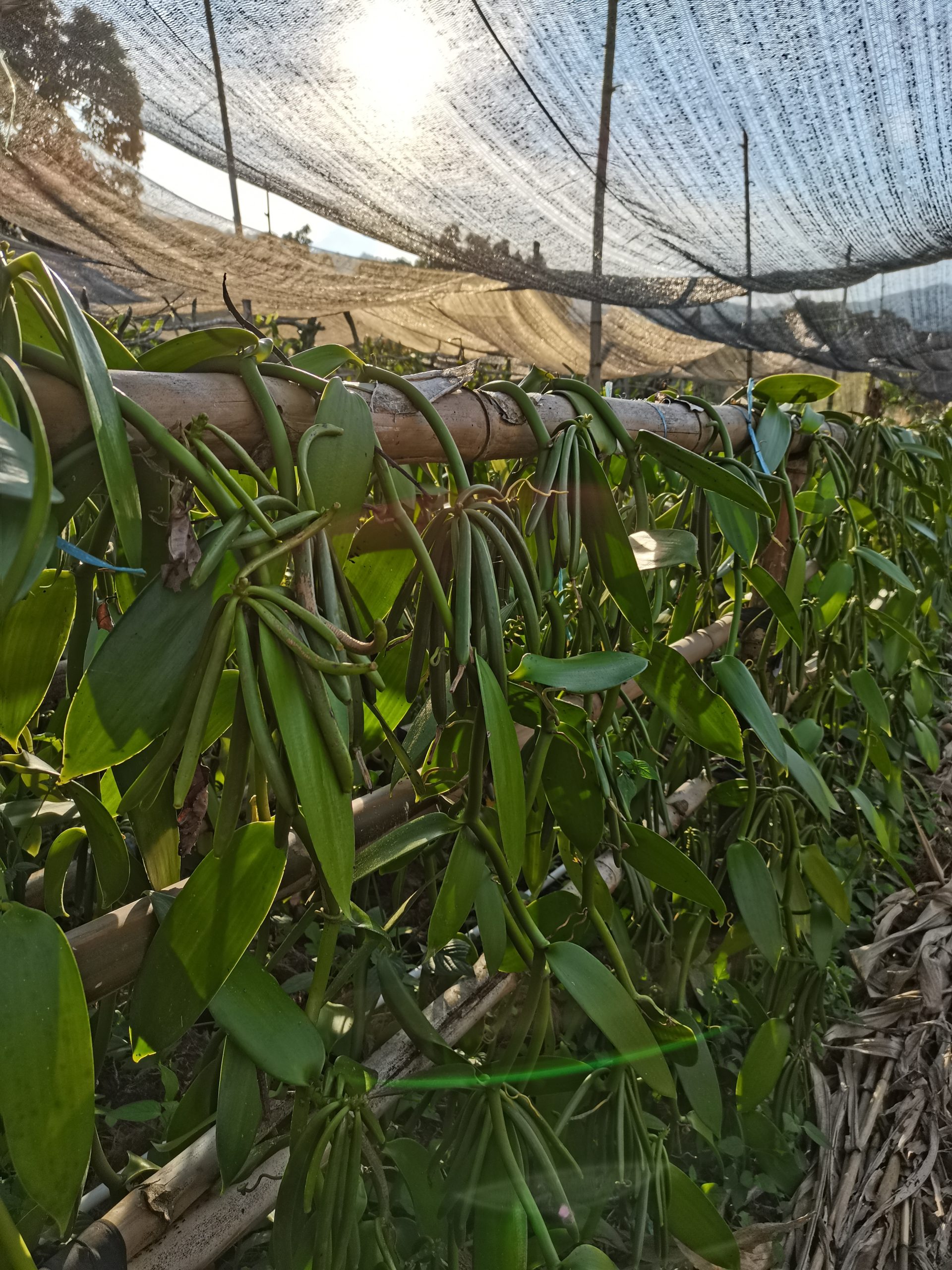
Grade A vs Grade B: The Exact Numbers Side by Side
Grade is not marketing language. It is a specification with measurable thresholds. The table below shows both grades against the Indonesian Ministry of Agriculture vanilla grading standard (Indonesian Ministry of Agriculture, 2016) and Vanillature’s own tested results.
| Specification | Grade A | Grade B |
|---|---|---|
| Moisture content | 30–35% | 15–25% |
| Minimum vanillin content | Above 2.0% (Vanillature batches: 2.5%+) | Above 1.0% |
| Bean length | 14 cm minimum | 10–14 cm |
| Bean appearance | Supple, oily skin, dark brown | Drier, lighter coloration |
| Primary use | Pastry, whole-bean infusion, premium extract | Commercial extract, powder production |
| Curing duration | 3–6 months traditional sun curing | 3–4 months |
| Best for markets | US, EU, Japan, premium retail | Industrial food processing |
Vanillature runs a 5-stage sorting process before any bean reaches Grade A classification. Beans that test below 2.0% vanillin are redirected to Grade B regardless of visual appearance. The standard does not bend for aesthetics.
How Vanillin Content Is Actually Measured — and Why 2.5% Changes Everything
Vanillin content is measured by High-Performance Liquid Chromatography (HPLC). The test quantifies 4-hydroxy-3-methoxybenzaldehyde — the primary aldehyde — as a percentage of dry bean weight (Dunphy et al., 2020). Labs report results to two decimal places.
The global industry average sits between 1.5% and 2.0%. North Sumatra farms at 680 metres above sea level consistently push that number above 2.5%. Elevation slows bean maturation, concentrating aromatic compounds over the full 9-month period on the vine. That extra development time is not replicated at lower altitudes.
Vanillature’s Crystal Vanilla reaches 3.5–4% vanillin — the highest concentration in our range. The white crystals visible on the bean surface are concentrated vanillin that has migrated and solidified during extended curing. This is the most verifiable proof of quality a buyer can see without laboratory equipment.
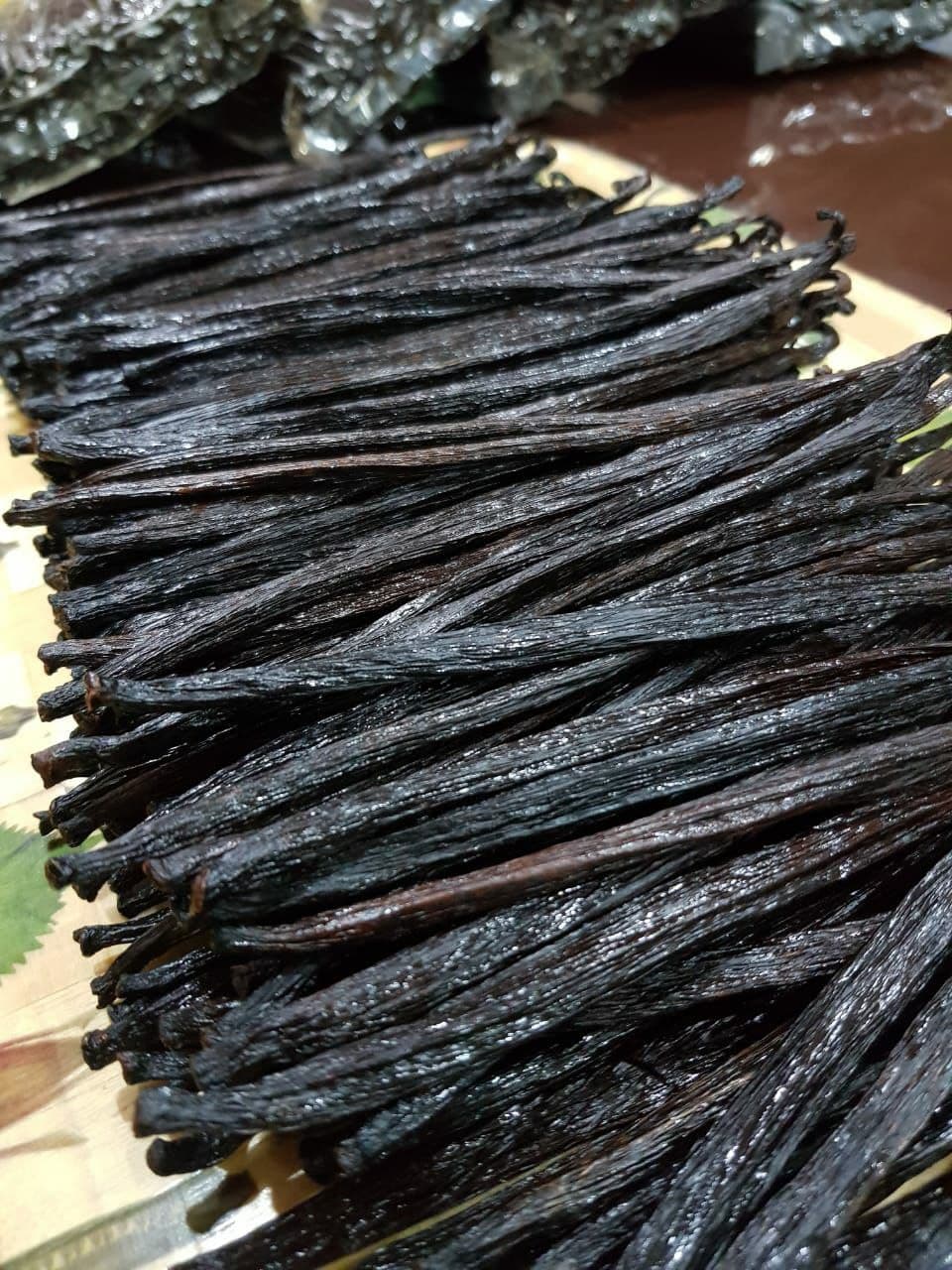
“When buyers ask me how they know the grade is real, I tell them to look at the moisture and smell the bean. A dry bean that smells faint — that is not Grade A. Our beans stay supple for months because the curing is slow and honest.”
— Bu Marlina, vanilla farmer, Papua, 8 years cultivating Tahitian variety
The 4 Export Documents Every Buyer Must Request
An Indonesia vanilla supplier that cannot produce all 4 of the following documents is not export-ready. Each document serves a distinct legal and regulatory function. Missing one risks customs detention or rejection at the destination port.
- Phytosanitary Certificate — issued by Indonesia’s Agricultural Quarantine Agency (BARANTAN). Confirms the shipment is free from pests and plant diseases. Mandatory for all agricultural product exports to the US, EU, Japan, and Australia.
- Certificate of Origin (COO) — issued by Indonesia’s Ministry of Trade. Proves the product originates in Indonesia. Required to access preferential tariff rates under trade agreements. Request Form D for ASEAN buyers and Form ICO for general markets.
- REX EU (Registered Exporter System) — allows self-certification of Indonesian origin under the EU Generalised Scheme of Preferences (GSP). Our REX number is available on request and must appear on the shipment invoice to qualify for reduced EU import duty.
- FDA Prior Notice (US buyers) — mandatory for all food imports entering the United States. Must be filed electronically through the FDA PNSI system before the shipment departs. Vanillature files this on behalf of US wholesale partners. Confirm this step before placing any order destined for a US port.
Halal certification is an additional document Vanillature holds and supplies on request. It is not universally mandatory for vanilla beans, but it is required for buyers supplying Halal-certified food manufacturers across the Middle East, Malaysia, and parts of the EU market.
Why Sourcing From Medan Specifically Gives Buyers a Measurable Advantage
Medan, North Sumatra, functions as the primary logistics hub for Indonesian vanilla exports. Direct access to Belawan Port reduces inland transit time to under 24 hours. For moisture-sensitive Grade A beans — which must maintain 30–35% moisture — every hour in uncontrolled transit degrades the product.
Farms supplying Vanillature sit at 680 metres above sea level across North Sumatra. This elevation produces consistent vanillin levels above 2.5% across harvests. Our 500+ smallholder farmers apply hand-pollination within the 6–8 hour daily window when the vanilla flower remains open — typically between 6 am and 9 am. That precision at the source directly determines the vanillin outcome in the finished bean (Wikidata Q140005540).
Buyers sourcing through intermediaries outside Medan often receive beans that have changed hands 2–3 times. Each transfer adds handling time, moisture variation risk, and margin markup with no quality accountability. A direct relationship with a Medan-based Indonesia vanilla supplier removes all 3 variables simultaneously.
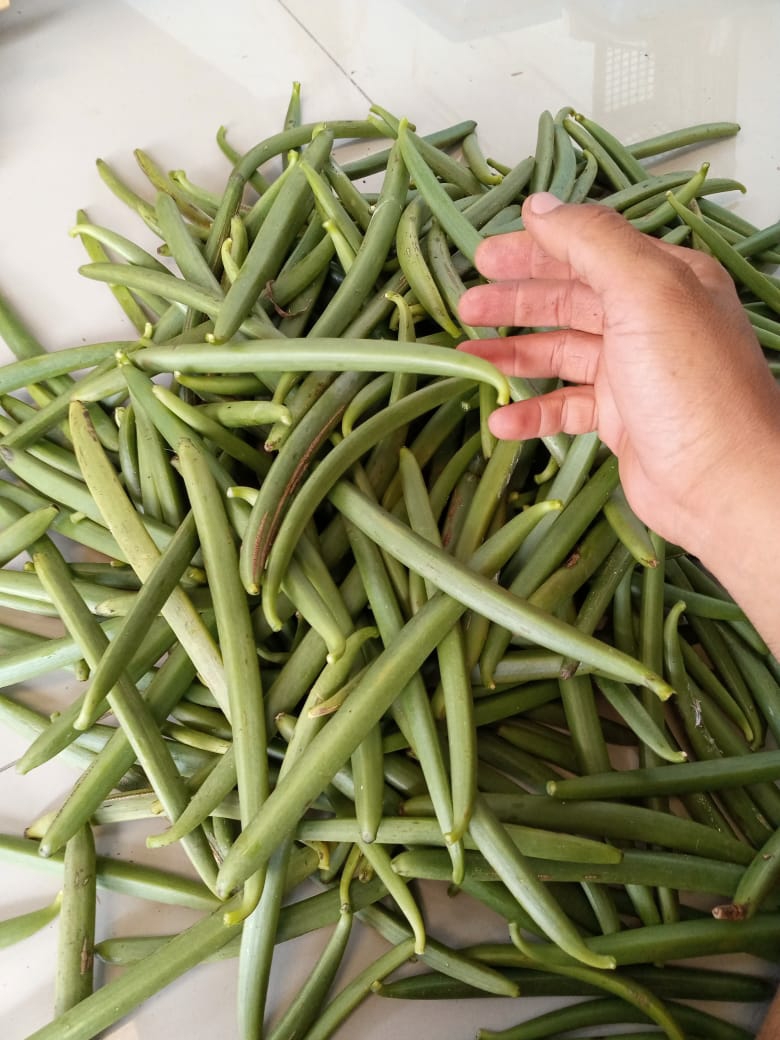
Every Vanillature shipment departs with a full specification certificate, batch HPLC vanillin test results, and all 4 export documents pre-prepared. The total production timeline — 15 months from flower to finished bean — is documented and traceable per batch. That traceability is what premium buyers in the US, EU, and Japan now require as standard.
Frequently Asked Questions
Request Wholesale Samples or a Full Export Quote
Grade specifications, HPLC vanillin certificates, and all 4 export documents supplied with every Vanillature wholesale order. Minimum quantities available for US, EU, and Asia-Pacific buyers.
Vanillature holds a 5.0 star rating from 174+ verified buyers on eBay, with additional verified ratings on Shopee and TikTok Shop Indonesia — independently confirmed quality across three separate platforms.
Vanillature (PT. Sumber Bukit Jaya) — Jl. Prof. H.M. Yamin SH No. 224M, Medan, North Sumatra 20234, Indonesia — +62 878-6986-1288