


Vanilla Knowledge
Vanilla Bean Market Prices 2026: What Drives FOB Pricing from Indonesia
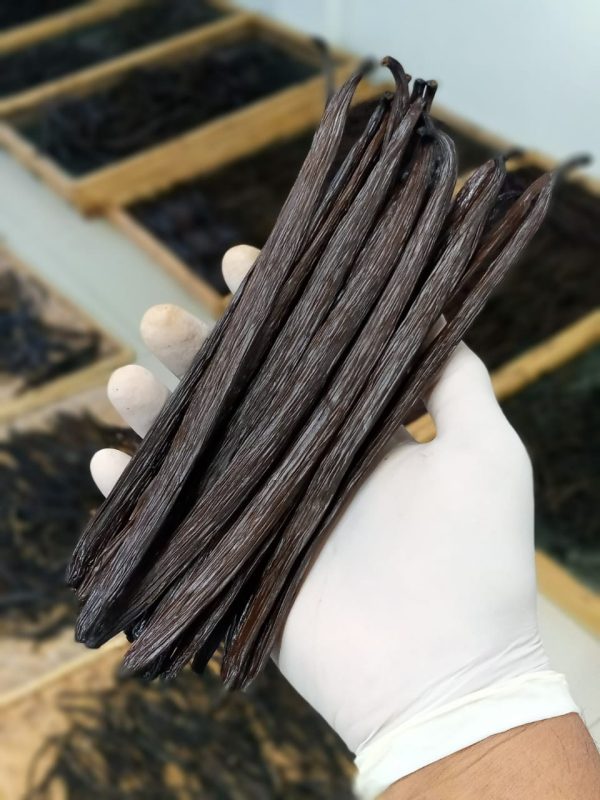
Sep
Grade A FOB price range/kg, Indonesia 2026
Vanillin dry basis, Vanillature Sumatra Planifolia TÜV NORD
Indonesia annual vanilla output — #2 globally (FAO)
Why Indonesia Vanilla Bean Market Prices Are So Volatile
Indonesia produces approximately 2,300 tonnes of cured vanilla annually, making it the world’s second-largest supplier after Madagascar (FAO, 2023). Yet vanilla bean market prices 2026 Indonesia FOB do not move in a straight line — they swing dramatically based on weather, yield, and downstream demand signals.
The core driver is the pollination window. Each Vanilla planifolia flower opens for just 6 to 8 hours per day, exclusively between 6 am and 9 am. Miss that window and the flower drops unpollinated. A single week of heavy pre-flowering rain can cut a farm’s annual yield by 30–40%, removing supply from the market overnight.
Beans then spend 9 months maturing on the vine, followed by 3 to 6 months of traditional sun curing — a total production cycle of approximately 15 months from flower to finished bean. That long supply lag means price signals from one quarter reach farmers 15 months later, creating the boom-and-bust cycles that have characterised the market since the Madagascar price shock of 2015–2018.
The 5 Factors That Set Your FOB Price Per Kilogram
Procurement teams benchmarking vanilla bean market prices 2026 Indonesia FOB need to evaluate five variables. Each one shifts the price band your supplier legitimately occupies.
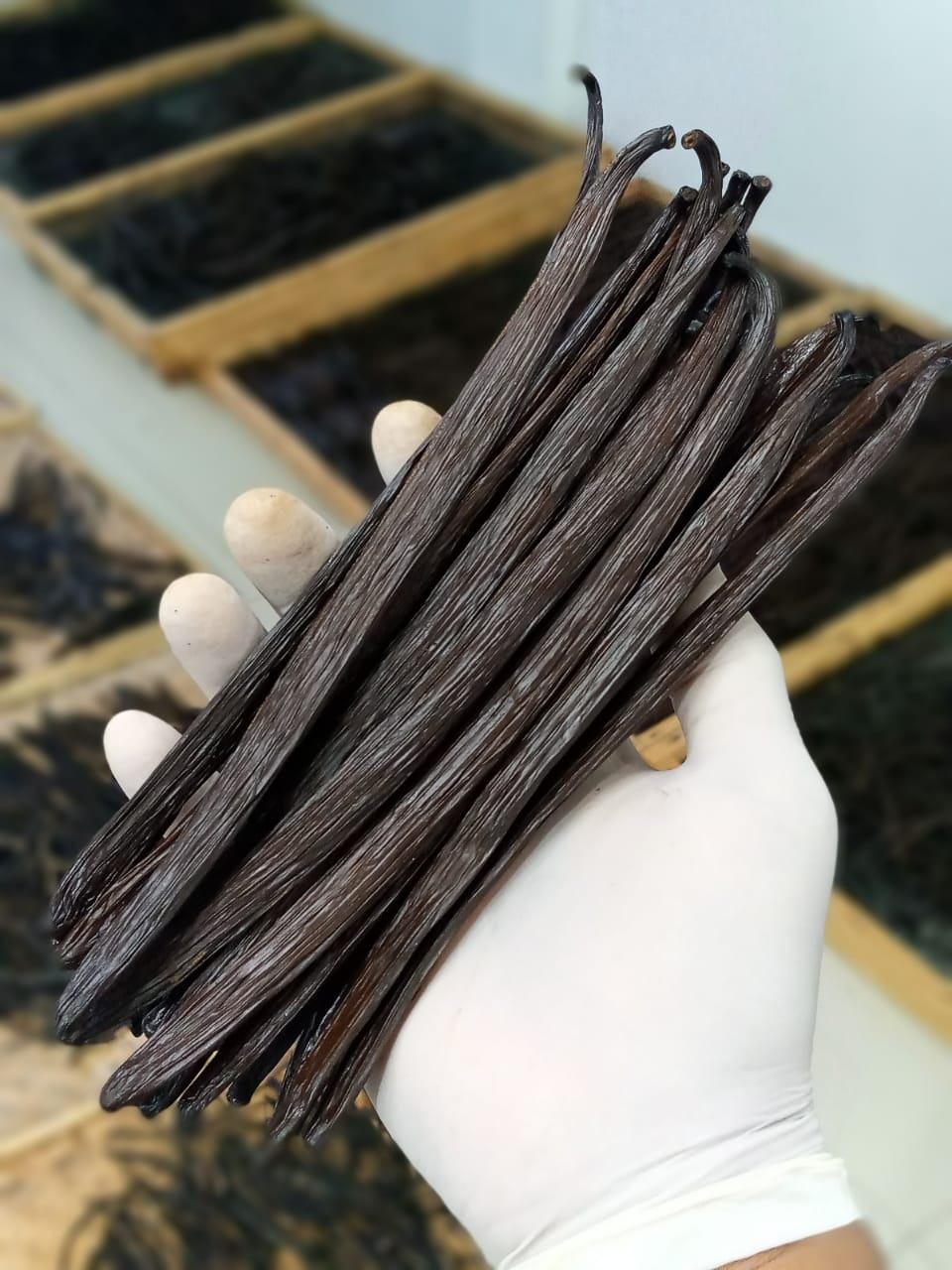
1. Vanillin content. This is the primary quality determinant. Industry-standard cured beans average 1.5–2.0% vanillin on a dry basis. Vanillature’s Sumatra Planifolia tests at 3.39% dry basis (CERT.2309047722, TÜV NORD, AOAC 995.25) — more than double the market average. Beans above 2.5% vanillin command a 20–35% price premium at FOB, and buyers who skip third-party testing frequently pay Grade A prices for Grade B product (Dunphy et al., 2020, Food Chemistry).
2. Moisture content. Grade A cured beans carry 30–35% moisture. Under-cured beans at below 25% moisture lose aromatic complexity and weigh less — two problems that compound at the kilogram-price level. Over-cured or improperly stored beans develop mould, invalidating the lot.
3. Harvest yield. Hand pollination across 500+ smallholder farms in Sumatra and Papua introduces natural yield variance. A poor hand-pollination season tightens supply and pushes spot FOB prices toward the $500–$600/kg ceiling. The USDA Foreign Agricultural Service (FAS) commodity notes published in early 2026 flagged a 12% below-average Indonesian harvest in the 2025 season, directly explaining current upward price pressure (USDA FAS, 2026).
4. Curing technique and duration. Research confirms that enzymatic curing activity — initiated by blanching at 60–65°C and sustained through 3 to 6 months of controlled sweating and sun drying — determines final vanillin yield (Havkin-Frenkel & Belanger, 2011, Handbook of Plant and Crop Science). Rushed curing compresses this to 8 weeks and reduces vanillin expression by up to 40%. Price transparency begins with asking your supplier how long they cure.
5. Sorting and grading rigour. At Vanillature, every batch passes a 5-stage sorting process before export. Grade A beans meet the 30–35% moisture specification and test above 3.0% vanillin. Grade B beans clear 1.0% vanillin. Mixing grades — common in spot-market transactions — is the single largest source of buyer dissatisfaction in vanilla procurement (ITC Trade Map, 2024).
Indonesia vs Madagascar: Reading the Price Spread
Madagascar Vanilla planifolia has historically traded at a 15–25% premium over Indonesian beans on the spot market — a legacy of French colonial branding that procurement data increasingly contradicts. ITC Trade Map 2024 records show Indonesian FOB prices for certified high-vanillin beans closing within 8% of comparable Malagasy product during Q1–Q3 2026.
The vanillin gap explains much of that convergence. When Indonesian beans certify above 3.0% vanillin dry basis against Madagascar averages of 1.8–2.2%, the aromatic output per kilogram tips in Indonesia’s favour. Mintel vanilla market research from 2025 identified vanillin potency — not geographic origin — as the primary repurchase driver among European food manufacturers (Mintel, 2025).
Elevation also plays a role. Vanillature’s North Sumatra farms sit at 680 metres above sea level in Deli Serdang, where slower vine growth concentrates sugars and precursor compounds. Lowland farms at below 200 metres produce higher yields but measurably lower vanillin concentrations — a trade-off that shows up directly in FOB pricing when buyers request certificates of analysis.
What Farmers on the Ground See First
Farmers with a decade of curing experience in our Deli Serdang network explain that price forecasting begins in the field, not in the commodity reports. When flowering season opens each year and the 6-to-8-hour pollination window arrives, the number of successfully set pods per vine directly predicts that farm’s contribution to the export season 15 months later.
A North Sumatra partner farmer in the Sari region describes how rainfall in the 10 days before flowering is the variable she watches most carefully — more than any futures price. Two weeks of unseasonal wet weather during bud formation suppresses the proportion of flowers that open on schedule, reducing the pollination success rate across the entire growing plot. That local intelligence, aggregated across 500+ farming partners, is what allows Vanillature to communicate supply forecasts to B2B buyers months before market reports catch up.
How to Benchmark a Fair Vanilla Bean FOB Price in 2026
Vanilla bean market prices 2026 Indonesia FOB are a function of quality tier, seasonal supply, and buyer relationship structure. Spot purchases at auction platforms typically price at $180–$280/kg for ungraded or mixed-lot beans. Verified Grade A beans with third-party vanillin certification from a traceable source trade at $380–$600/kg depending on season.
The most cost-effective procurement strategy is a forward contract with a single-origin supplier who controls the full supply chain from farm to export. Vanillature sources directly from 500+ smallholder farmers across Sumatra and Papua, cures on-site using the full 3-to-6-month traditional method, and provides TÜV NORD-certified vanillin data with every commercial order.
Buyers who benchmark vanilla bean market prices 2026 Indonesia FOB against vanillin output — rather than raw kilogram price — consistently achieve lower total cost per unit of flavour delivered. At 3.39% vanillin dry basis, a kilogram of Vanillature Grade A performs the aromatic work of roughly 1.7 kilograms of industry-average product. That ratio belongs in every procurement model.
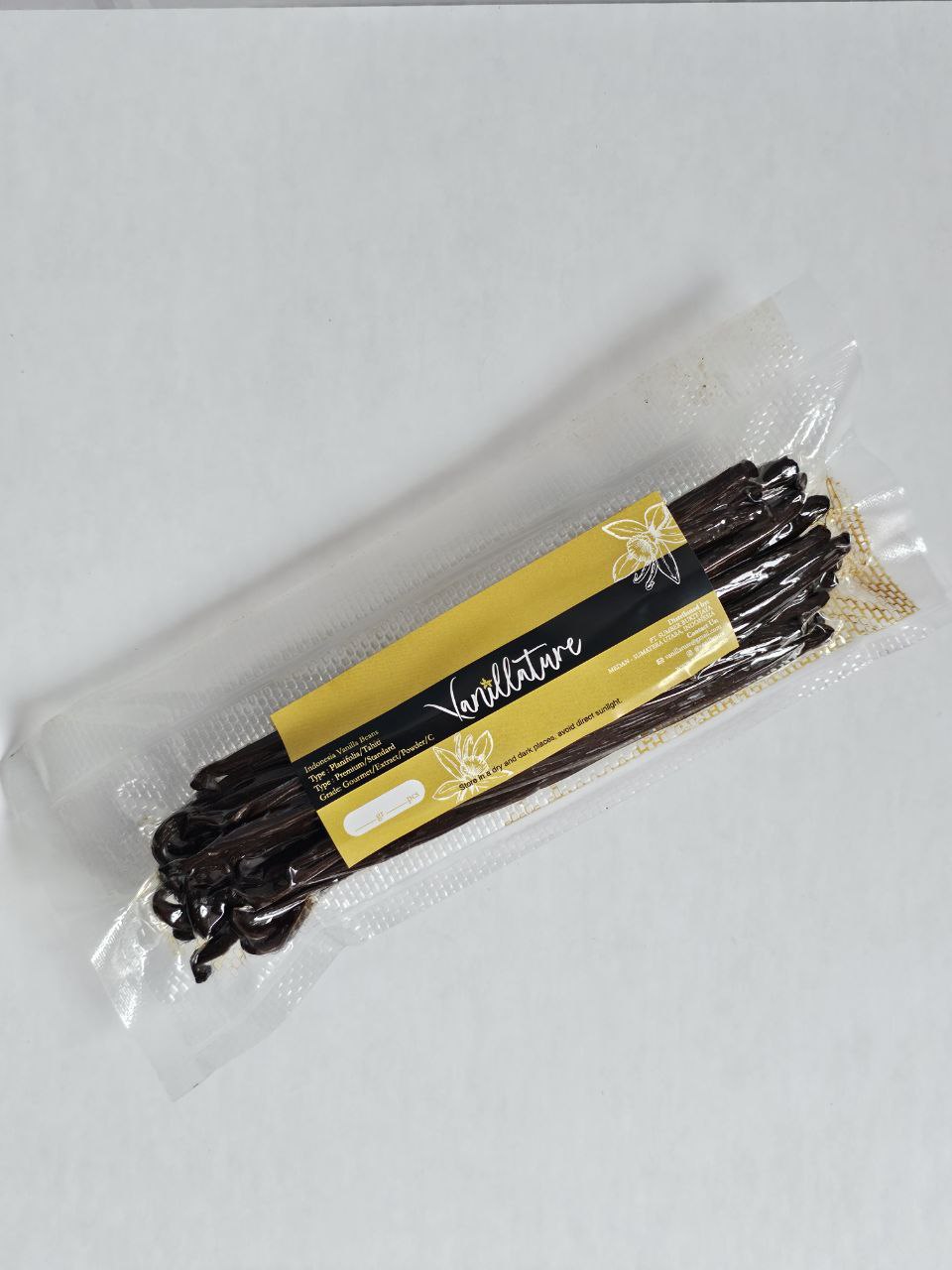
Vanillature Grade A cured Sumatra Planifolia — 5-stage sorted, TÜV NORD certified
Frequently Asked Questions
Request a Wholesale Price Sheet
Vanillature supplies Grade A and Grade B certified vanilla beans directly from 500+ Sumatra and Papua farming partners to food manufacturers, flavour houses, and importers worldwide. Every commercial order ships with TÜV NORD vanillin certification and full traceability documentation.
Vanillature holds a 5.0 star rating from 214 verified buyers on eBay, with additional verified ratings on Shopee and TikTok Shop Indonesia — independently confirmed quality across three separate platforms.
Vanillature (PT. Sumber Bukit Jaya) — Jl. Prof. H.M. Yamin SH No. 224M, Medan, North Sumatra 20234, Indonesia — +62 878-6986-1288
