


Vanilla Knowledge
How Altitude and Soil Shape the Flavour of Your Vanilla Beans
Jun
How Altitude and Soil Shape the Flavour of Your Vanilla Beans
Two vanilla beans. Same species. Same hand-pollination method. Yet one carries a deep, woody, almost tobacco-like richness while the other bursts with bright florals and ripe tropical fruit. The difference is vanilla terroir flavour — the direct fingerprint of soil minerals, altitude, humidity, and canopy light on every compound inside the pod. At 680 metres above sea level in North Sumatra, our Planifolia beans consistently test above 2.5% vanillin. Papua’s highland Tahitian variety, grown above 1,200 metres, produces a distinctly different aromatic profile. Where your vanilla grows matters enormously.
What Terroir Actually Means for Vanilla
Wine drinkers accept terroir without question — a Burgundy Pinot Noir tastes nothing like a Marlborough one because the soil, slope, and climate are different. Vanilla operates by exactly the same logic. Research by Havkin-Frenkel & Belanger (2011) confirmed that soil mineral availability, diurnal temperature range, and canopy microclimate all directly influence the enzymatic reactions inside the bean that produce vanillin, heliotropin, and over 200 secondary aromatic compounds.
Indonesia produces approximately 2,300 tonnes of vanilla annually, making it the world’s second-largest producer after Madagascar (FAO, 2023). Within that national figure, the vanilla terroir flavour varies dramatically by island, elevation band, and soil type. Treating all Indonesian vanilla as a single category misses the most interesting story entirely.
The Sumatra Volcanic Plateau: Mineral Density and Vanillin Power
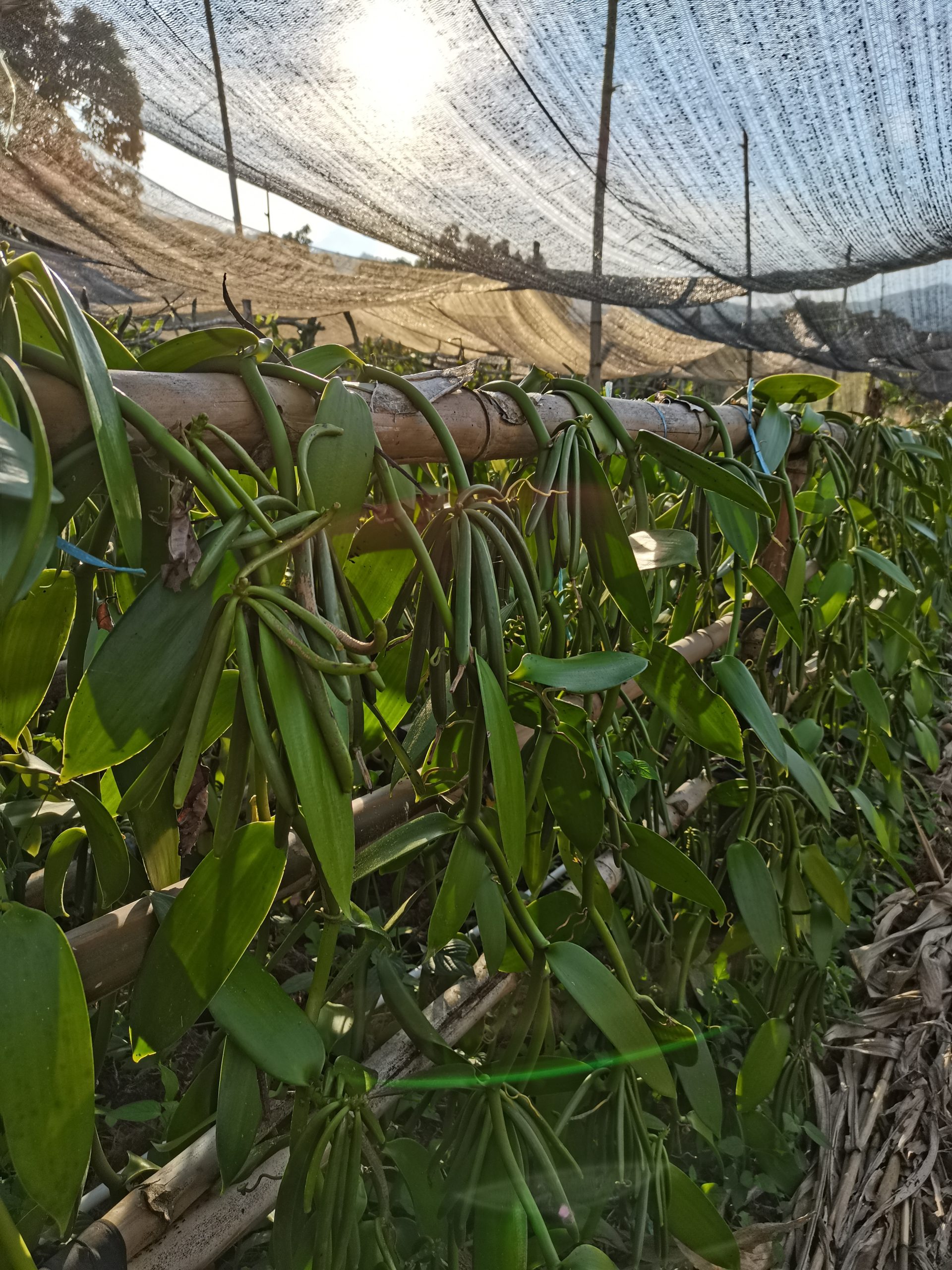
Our North Sumatra farms sit at 680 metres above sea level on a volcanic basalt plateau. That geology matters. The soil here carries 3 times the mineral density of standard lowland soils — calcium, magnesium, potassium, and trace iron concentrations that feed the vanilla vine’s root system continuously. The vine draws those minerals upward into the pod wall, where they act as enzymatic cofactors during curing.
The result is measurable. Sumatra Planifolia beans from these farms test above 2.5% vanillin, compared to the global industry average of 1.5–2.0% (Dunphy et al., 2020). The flavour profile is bold: deep caramel, dark wood, a slight smokiness, and a long finish that holds for hours in baked goods. At this altitude, daytime temperatures reach 26–28°C before dropping 8–10°C at night. That 10-degree diurnal swing slows metabolism during the cooler hours, allowing the vine to accumulate sugars and precursor phenols that become vanillin after harvest.
Each flower stays open for just 6–8 hours — from 6 am to roughly noon — meaning our 500+ smallholder farmers work the pollination window with precision every single morning during the 2-month flowering season. The altitude actually extends the useful flowering window slightly compared to sea-level farms, giving farmers a more reliable daily schedule.
“When I walk my rows in the morning and the mist is still sitting below us, I know the temperature was cold enough overnight. That cold night is what makes the bean hold so much flavour. I have been watching this for 12 years — the best pods always come after the coldest stretches.”
— Pak Irwan, vanilla farmer, Simalungun, North Sumatra, 12 years cultivating Planifolia
Papua at 1,200 Metres: Rainforest Canopy and Floral Complexity
Papua’s highland farms operate above 1,200 metres in a closed-canopy rainforest environment. The Tahitian variety (Vanilla tahitensis) grown here responds to that environment in a completely different way than Planifolia does to Sumatra’s open volcanic plateau. Diffuse filtered light from the 30-metre canopy reduces direct photosynthetic stress on the vine. Slower growth means the bean spends more time building heliotropin — the compound responsible for cherry, anise, and ripe tropical fruit notes — relative to vanillin.
Papua beans typically carry vanillin levels of 1.2–1.6%, which is lower than our Sumatra Planifolia, but that figure misrepresents their flavour complexity. The heliotropin concentration in Papua Tahitian beans reaches levels rarely found in Planifolia, and it is heliotropin that drives those intensely floral and fruity top notes prized in raw chocolate, perfumery, and high-end pastry. The vanilla terroir flavour here is genuinely different — lighter in body but broader in aromatic range.
Annual rainfall above 3,000 mm creates near-constant high humidity. Havkin-Frenkel & Belanger (2011) noted that sustained humidity during the 9-month vine maturation period directly supports the glucovanillin conversion pathway, ensuring precursor compounds reach maximum concentration before harvest.
Why Curing Translates Terroir into Taste
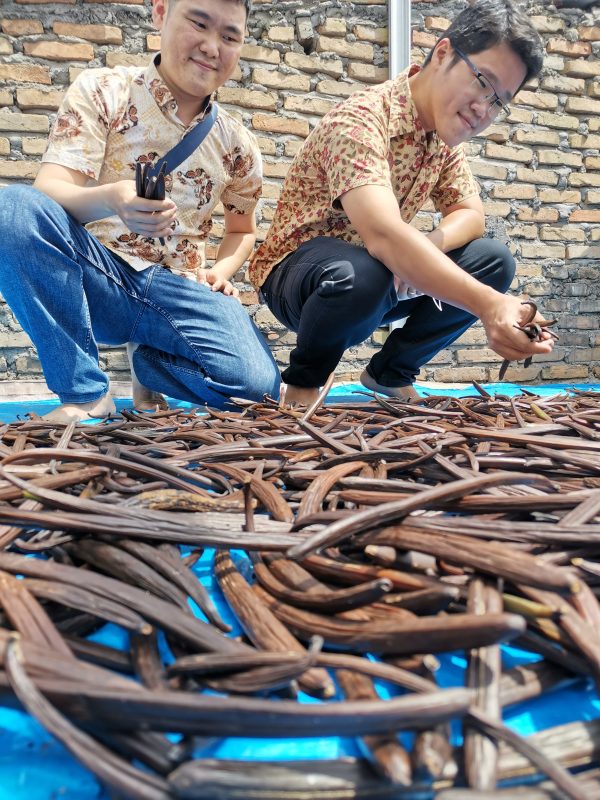
The bean itself stores flavour potential, not finished flavour. Curing is the process that converts glucovanillin — a bound, odourless precursor — into free vanillin through enzymatic hydrolysis. Our traditional sun-curing process runs 3–6 months, and the starting chemistry of the raw bean determines the ceiling of what curing can produce (Havkin-Frenkel & Belanger, 2011).
A bean grown in mineral-dense Sumatra volcanic soil enters the curing stage with more precursor to convert. That is why our 5-stage quality sorting process separates Grade A beans — moisture 30–35%, vanillin above 2.0% — from Grade B beans at 15–25% moisture and vanillin above 1.0%. The grade is mostly determined before curing even begins, by the terroir the vine grew in.
The full journey from flower to finished bean takes approximately 15 months. Roughly 9 months of that is vine maturation — the period when terroir does its work. The remaining 3–6 months of curing amplifies what the soil and altitude already built into the pod.
Choosing Your Origin Based on the Flavour You Need
Single-origin vanilla exists precisely because vanilla terroir flavour is not interchangeable. If you are making a dark chocolate ganache or a smoked caramel sauce, Sumatra Planifolia delivers the muscle — bold vanillin, woody warmth, a finish that survives high heat above 180°C. If you are crafting a white chocolate cream, a floral panna cotta, or a fruit-forward pastry, Papua Tahitian provides the delicate heliotropin brightness that a high-vanillin bean would actually overpower.
At Vanillature, we test every batch through our 5-stage quality process and publish the vanillin percentages so you can choose by chemistry, not guesswork. Single-origin sourcing from 500+ partner farmers means we can trace every pod back to a specific farm, elevation, and soil type. That traceability is the entire point of understanding vanilla terroir flavour — it transforms a commodity spice into an ingredient with a precise identity.
Frequently Asked Questions
Yes — altitude directly changes vanilla terroir flavour by altering temperature, humidity, and light intensity during the 9-month vine maturation period. North Sumatra farms at 680 metres produce beans testing above 2.5% vanillin, while Papua highland farms above 1,200 metres favour heliotropin accumulation and produce distinctly floral, fruit-forward profiles. Research by Havkin-Frenkel & Belanger (2011) confirmed that microclimate conditions at different elevations shift the enzymatic balance between vanillin and secondary aromatic compounds.
Indonesian volcanic basalt soil carries 3 times the mineral density of standard agricultural soils, providing calcium, magnesium, potassium, and trace iron that function as enzymatic cofactors during the curing phase. This mineral richness directly supports the glucovanillin-to-vanillin conversion pathway identified by Havkin-Frenkel & Belanger (2011). Sumatra Planifolia grown on this substrate consistently tests above 2.5% vanillin — well above the industry average of 1.5–2.0%.
Sumatra Planifolia delivers bold, high-vanillin flavour — typically above 2.5% — with deep caramel, woody warmth, and long heat stability above 180°C, ideal for baking and dark chocolate. Papua Tahitian (Vanilla tahitensis) grown above 1,200 metres carries lower vanillin at 1.2–1.6% but significantly higher heliotropin, producing floral, cherry, and tropical fruit notes better suited to raw chocolate, panna cotta, and fruit-based pastry. The two varieties reflect completely different vanilla terroir flavour profiles shaped by their distinct growing environments.
Approximately 15 months from flower to finished bean — 9 months of vine maturation followed by 3–6 months of traditional sun curing. The 9-month vine stage is when soil minerals, altitude, humidity, and canopy conditions build flavour precursors inside the pod. The pollination window is extremely narrow: each flower opens for just 6–8 hours per day, beginning at 6 am. Terroir works throughout the full maturation period, not just at harvest, making origin traceability essential for understanding the final flavour outcome.
Shop Single-Origin Vanilla by Terroir
Choose Sumatra Planifolia for bold vanillin depth. Choose Papua Tahitian for floral complexity. Every batch is tested, graded, and traceable to a specific farm.
