


Vanilla Knowledge
How to Make Vanilla Extract at Home (Using the Right Beans)
Jun
How to Make Vanilla Extract at Home (Using the Right Beans)
A 250 ml bottle of supermarket vanilla extract contains as little as 10% actual vanilla — and often nothing more than artificial vanillin derived from wood pulp. Homemade vanilla extract, made with 5–6 Grade B beans per 250 ml of 40%+ alcohol, produces a richer, deeper flavour at a fraction of the cost. This guide shows you exactly how to make vanilla extract at home, step by step.
Why Grade B Beans Are the Smart Choice for Extracts
Grade B vanilla beans contain 15–25% moisture and vanillin above 1.0% — lower moisture than Grade A, but every bit as rich in flavour compounds. That reduced moisture makes Grade B beans perfect for alcohol extraction, because less water in the bean means faster, more concentrated vanillin uptake into the spirit.
Grade A beans, with 30–35% moisture and vanillin above 2.0%, are engineered for direct use in custards and desserts — where visual impact and soft texture matter. For extracts, you are paying for moisture you will discard. Grade B saves you 40–60% compared to Grade A pricing with zero compromise in the finished bottle.
At Vanillature, our Grade B Sumatra Planifolia beans test above 1.0% vanillin and often significantly higher. North Sumatra farms sit at 680 metres above sea level, and the altitude concentrates aromatic precursors — glucovanillin and p-hydroxybenzaldehyde — that convert to vanillin during our 3–6 month traditional sun-curing process (Havkin-Frenkel & Belanger, 2011).
Grade B Sumatra Planifolia beans — ideal moisture content for alcohol extraction
Choosing Your Alcohol: Vodka, Rum, or Bourbon
The FDA Code of Federal Regulations 21 CFR 169.175 defines pure vanilla extract as a solution containing at least 35% alcohol by volume (FDA, 2023). At Vanillature, we recommend 40% ABV as your working minimum — it extracts vanillin cleanly without introducing competing flavours.
Vodka is the clearest vehicle. At 40% ABV, it extracts vanillin and over 250 trace aromatic compounds without adding its own character — the finished extract tastes entirely of vanilla. This is the right choice if you bake with subtle-flavoured bases like shortbread or white cake.
Dark rum at 40% ABV adds caramel and molasses undertones from the barrel ageing. Bourbon at 40–46% ABV contributes oak and a light smokiness. Both pair exceptionally well with chocolate-based recipes, coffee cakes, and spiced baked goods. Choose your base alcohol to match your most frequent baking style.
Left to right: vodka, dark rum, and bourbon — three alcohol bases for homemade vanilla extract
“I have been hand-pollinating Planifolia for 14 years — every flower stays open for only 6 to 8 hours. We use every part of the bean. The Grade B beans have all the same flavour inside. Nothing is wasted when you make extract from them.”
— Pak Budi, vanilla farmer, North Sumatra, 14 years cultivating Planifolia
Step-by-Step: How to Make Vanilla Extract at Home
The process requires 6 items and about 15 minutes of active preparation. The remaining 8–12 weeks is pure patience. Follow each step precisely — bean-to-alcohol ratio and light exclusion are the two variables that most home brewers get wrong.
- Gather your materials. You need 5–6 Grade B vanilla beans, 250 ml of 40%+ ABV alcohol, a dark glass bottle with a tight seal, a sharp knife, and a small funnel. Dark glass is non-negotiable — UV light degrades vanillin by up to 30% over a 12-week steep.
- Split the beans lengthwise. Run a sharp knife from 1 cm below the tip to the base on one side only. Leave the beans in one piece. Splitting exposes the 2,000–3,000 tiny seeds (caviar) inside each bean and doubles the surface area available for extraction.
- Place beans in the bottle. Drop all 5–6 split beans into the dark glass bottle. If your beans are longer than the bottle, cut them in half — but keep all pieces inside. The 5–6 bean ratio per 250 ml is the correct starting point for full-flavour extract.
- Pour in the alcohol. Fill to within 1 cm of the top. Seal the cap tightly. Shake gently for 30 seconds. Vanillin begins transferring from bean cell walls into alcohol within the first 24 hours.
- Store in a cool, dark place. A kitchen cupboard away from the hob works well. Shake the bottle every 3–4 days for the first 4 weeks to encourage even extraction. Temperature should stay between 15–22°C.
- Wait 8 weeks minimum — 12 weeks optimal. At 8 weeks the extract reads amber-brown with a clean vanilla aroma. At 12 weeks the colour deepens to dark mahogany and the flavour gains a secondary complexity — warm wood, dried fruit, faint caramel — that no commercial bottle replicates.
What the Finished Extract Looks, Smells, and Tastes Like
At 8 weeks, a Sumatra Planifolia extract made from Vanillature Grade B beans pours dark amber — similar in colour to aged whisky. Hold it to the light and you will see clarity with no cloudiness. Cloudiness at this stage indicates insufficient alcohol strength; below 35% ABV, proteins from the bean can precipitate and spoil the extract.
The aroma is immediate and layered. The primary note is warm, sweet vanillin — the signature compound that Dunphy et al. (2020) identify as the central quality marker for Planifolia extracts. Behind it sits heliotropin (piperonal), which contributes a faint floral-cherry note. A third layer of oak-like earthiness emerges around week 10.
In baking, 1 teaspoon of this extract replaces 1 teaspoon of commercial extract — but the flavour persists through heat far more effectively. Commercial extracts often contain added sugar and stabilisers that burn off above 180°C. Pure vanillin, preserved at 40%+ ABV, binds to fats and starches in the batter and survives the full bake (Bythrow, 2005).
How Many Batches Can One Vanilla Order Produce?
A 100 g pack of Vanillature Grade B beans yields approximately 10–12 individual beans, depending on size. At 5–6 beans per 250 ml bottle, that is enough for 2 full batches of extract — producing 500 ml total — with beans left for direct culinary use.
Indonesia produces approximately 2,300 tonnes of vanilla beans annually, ranking second globally after Madagascar (FAO, 2024). Despite this scale, each Vanillature bean traces to 1 of our 500+ smallholder farming partners. Every batch passes a 5-stage quality-sorting process before packing. You receive a traceable product, not a commodity blend.
The economics are straightforward. Two 250 ml bottles of premium commercial vanilla extract retail for AUD $40–60. The same 500 ml of homemade extract costs less than AUD $20 in beans and alcohol — and the flavour is demonstrably superior because you control every input.
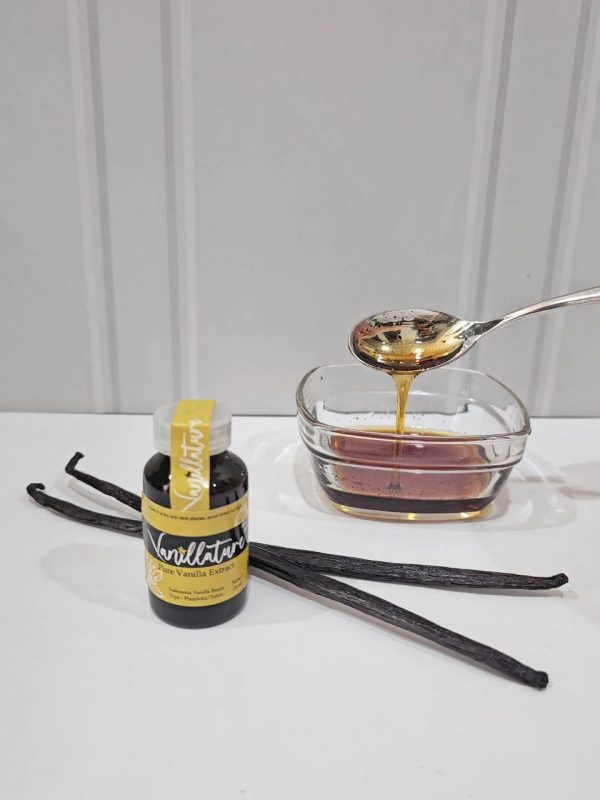
Finished homemade vanilla extract at 12 weeks — dark mahogany colour, crystal-clear liquid
Frequently Asked Questions
Ready to Make Your First Batch?
Start with Vanillature Grade B Sumatra Planifolia beans — split, sorted through a 5-stage quality process, and ready to steep. Ships from our farm partners directly to your door.
