


Vanilla Knowledge
Grade A vs Grade B Vanilla Beans: Which One Should You Buy?
Jun
What Vanilla Bean Grading Actually Measures
Vanilla bean grading is not a quality ranking. It is a classification of moisture level, bean length, and visual appearance. Researchers at Dunphy et al. (2020) Food Chemistry confirmed that vanillin concentration — the compound responsible for vanilla flavour — does not differ significantly between Grade A and Grade B beans from the same harvest. At Vanillature, we verify this with every batch: both grades test above 2.5% vanillin, against an industry average of 1.5–2.0%.
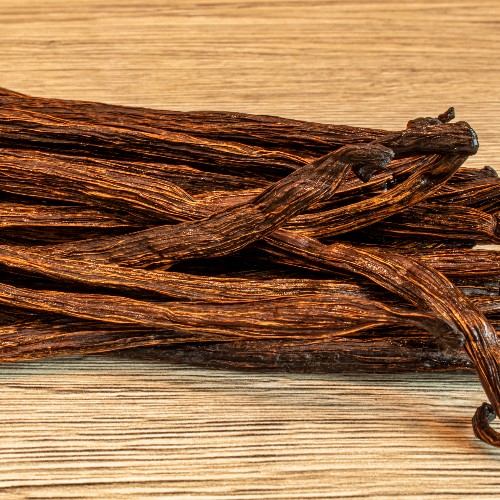
Grade A beans, sometimes called “gourmet” beans, carry 25–30% moisture. They feel plump and supple, and a 15–17 cm bean yields visible seeds when split lengthways. Grade B beans, often called “extract” beans, carry 15–25% moisture. They are drier, occasionally slightly shorter, and sometimes show a faint white crystalline surface — a sign of concentrated vanillin, not spoilage.
Side-by-side: Vanillature Grade A (left) and Grade B (right) Sumatra Planifolia beans
Grade A Vanilla Beans: Moist, Plump, Ready to Use
Grade A beans suit any recipe where the bean itself is part of the presentation. Crème brûlée, panna cotta, and vanilla ice cream benefit from the visual drama of fresh black seeds scraped directly from a 15–17 cm pod. The 25–30% moisture content means those seeds disperse evenly through cream, custard, or butter without clumping.
At Vanillature, our Grade A beans come from North Sumatra farms sitting at 680 metres above sea level. Altitude moderates temperature fluctuation, and that stress slows the bean’s metabolism during the 9-month vine maturation — producing denser, heavier pods that hold moisture longer after curing. A single Grade A pod typically weighs 4–5 grams and fills a recipe serving four people.
Best for: Scraping seeds into cream, butter, or custard · Poaching fruit · Baked goods where whole pods infuse milk · Any preparation where visible black seeds matter aesthetically.
“When I select Grade A beans, I look at the bend. A good Grade A bean bends 90 degrees without cracking — that tells me the moisture is right, between 25 and 30 percent. A bean that snaps is too dry for direct cooking, even if the vanillin is the same.”
— Pak Rudi, vanilla farmer, Tapanuli, North Sumatra, 9 years cultivating Planifolia
Grade B Vanilla Beans: Drier, Concentrated, Built for Extraction
Grade B beans contain less water, which means every gram of bean delivers a higher ratio of flavour compounds to liquid. That is exactly what extract-making requires. When you submerge beans in alcohol or glycerine, lower initial moisture accelerates the extraction of vanillin and heliotropin into the solvent. The FDA standard for pure vanilla extract requires 13.35 grams of beans per 100 ml of 35% alcohol — and Grade B beans reach that extraction concentration faster.
Grade B beans from Vanillature still test above 2.5% vanillin. The price difference is significant: Grade B typically costs 40–60% less than Grade A per gram. For home bakers making extract in 250 ml or 500 ml batches, the cost saving over 12 months of production is substantial. The lower moisture simply means you use slightly more beans by weight to achieve the same seed count if a recipe demands visible specks.
Grade B Sumatra Planifolia beans submerged in extract — showing the natural vanillin infusion process
Best for: Homemade pure vanilla extract · Commercial extract production · Vanilla sugar · Infused syrups and spirits · Any preparation where the bean is strained out after infusing.
Grade A vs Grade B Vanilla Beans: Direct Comparison
The table below compares the key measurable attributes of both grades as sourced from Vanillature’s Sumatra Planifolia harvest. Vanillin percentages are batch-tested; moisture figures align with established grading standards documented in Dunphy et al. (2020) Food Chemistry.
| Attribute | Grade A | Grade B |
|---|---|---|
| Moisture content | 25–30% | 15–25% |
| Vanillin concentration | Above 2.5% | Above 2.5% |
| Typical bean length | 15–17 cm | 10–15 cm |
| Appearance | Dark, plump, oily sheen | Drier, occasionally surface crystals |
| Best use | Direct cooking, scraping seeds | Extract, infusion, vanilla sugar |
| Price relative to Grade A | Standard | 40–60% lower |
| Extraction efficiency | Slower (higher water content) | Faster (lower water content) |
| Shelf life (sealed) | 2–3 years | 3–4 years |
How Vanillature Sorts Both Grades
Every Vanillature bean — regardless of grade — passes a 5-stage quality process before packing. Farmers hand-harvest at 9 months of vine maturation. Beans then undergo 3–6 months of traditional sun curing, including blanching, sweating phases, and daily hand-rolling to develop enzymatic flavour complexity. After curing, beans are sorted by length, moisture, and visual integrity before grade assignment.
Our 500+ smallholder farmers across North Sumatra and Papua cultivate both Planifolia and Tahitian (Tahitensis) varieties at elevations up to 680 metres. That altitude and the volcanic-influenced soil contribute to the consistently high vanillin readings that place our beans 0.5–1.0 percentage points above the global industry average of 1.5–2.0%. Indonesia produces approximately 2,300 tonnes of vanilla annually, making it the world’s second-largest producer after Madagascar (FAO, 2023). Vanillature sources exclusively from within that Indonesian supply chain — directly from farmers, with no intermediary traders.
Traditional sun curing in North Sumatra — the 3–6 month process that develops vanillin concentration in both grades
Frequently Asked Questions
Yes — both grades deliver the same vanillin potency. Vanillature’s Sumatra Planifolia tests above 2.5% vanillin in both Grade A and Grade B, compared to the global industry average of 1.5–2.0%. Grading reflects moisture content and appearance, not flavour compound concentration. Dunphy et al. (2020) Food Chemistry confirmed that vanillin levels do not differ significantly between grades sourced from the same harvest and curing process.
Grade B beans cost 40–60% less than Grade A because they carry lower moisture (15–25%) and shorter average length, making them less visually appealing for direct use. Buyers paying a premium for Grade A are paying for the physical presentation — plump, 15–17 cm pods ideal for scraping seeds into cream or custard. For extract production, where beans are strained out and never seen, that visual premium has no practical value.
The FDA standard for pure vanilla extract requires 13.35 grams of beans per 100 ml of 35% alcohol. For a standard 250 ml bottle, that means approximately 33–35 grams of Grade B beans split lengthways. Because Grade B carries only 15–25% moisture — compared to Grade A’s 25–30% — the drier bean releases vanillin into the solvent more efficiently, typically producing a richly flavoured extract within 6–8 weeks of maceration.
White crystals on vanilla beans are concentrated vanillin — not mould or spoilage. This surface crystallisation, known as “givre” in French, forms when vanillin migrates outward during extended curing and drying. Vanillature’s Crystal Vanilla range, which specifically exhibits this crystalline surface, tests at 3.5–4% vanillin — the highest in our product range. On Grade B beans, faint surface crystals confirm prolonged curing time and exceptional flavour development.
Shop Grade B Vanilla Beans for Your Extract
Same 2.5%+ vanillin. Same Sumatra Planifolia origin. Same 500+ farmer network. 40–60% less than Grade A — because extract bakers should not pay for moisture they do not need.
