


Vanilla Knowledge
Is Vanilla Good for You? The Evidence Behind Vanilla’s Health Properties
Jun
Is Vanilla Good for You? The Evidence Behind Vanilla’s Health Properties
Vanillin, the primary bioactive compound in real vanilla, scores above 300 μmol TE/g on the ORAC antioxidant scale — putting it well ahead of many commonly celebrated superfoods. That figure comes from laboratory analysis of genuine Vanilla planifolia extract, not the synthetic imitation found in most supermarket products. The vanilla health benefits associated with this compound are real, measurable, and worth understanding clearly.
μmol TE/g ORAC antioxidant value in real vanilla extract
active compounds in real vanilla vs 1 in synthetic vanillin
months from flower to finished bean — full compound development
What Vanillin Actually Does in the Body
Vanillin is a phenolic aldehyde. It belongs to the same broad chemical family as many well-studied antioxidants. Research published by Bythrow (2005) in the Journal of Food Chemistry documented vanillin’s antioxidant capacity and identified a range of bioactive properties, including anti-inflammatory activity at the cellular level.
At Vanillature, our Sumatra Planifolia beans test consistently above 2.5% vanillin — against an industry average of 1.5–2.0%. Our Crystal Vanilla reaches 3.5–4% vanillin, with the surface crystals representing concentrated vanillin deposits formed naturally during extended curing. Higher vanillin concentration means greater bioactive load per gram of extract used.
The anti-inflammatory pathway works through vanillin’s inhibition of reactive oxygen species (ROS). Laboratory models have demonstrated suppression of NF-κB signalling — the same inflammatory pathway targeted by many pharmaceutical anti-inflammatories — at measurable concentrations (Bythrow, 2005).
Vanillin molecular structure and antioxidant pathway diagram
The 250-Compound Difference: Real vs Synthetic
Synthetic vanillin contains exactly 1 compound: vanillin itself, produced from lignin or guaiacol in a chemical plant. A genuine Vanilla planifolia bean contains 250+ active compounds, including p-hydroxybenzaldehyde, heliotropin, 4-hydroxybenzyl alcohol, and a range of phenolic acids and esters.
These compounds interact. Research in food chemistry consistently shows that botanical extracts produce synergistic effects their isolated components cannot replicate alone. The vanilla health benefits attributed to real vanilla — antioxidant capacity, mood modulation, anti-nausea activity — depend on this full compound profile.
Synthetic vanilla imitation flavouring delivers none of this. It flavours food effectively. It does not deliver the same biological activity. Any health discussion must begin with this distinction.
Key fact: The 15-month production timeline from flower to finished bean at Vanillature is not a marketing claim — it is the minimum time required for the enzymatic curing process to convert glucovanillin into free vanillin and develop the full 250+ compound profile. Shortcuts destroy bioactive content.
Antioxidant Capacity: What the ORAC Score Means
ORAC (Oxygen Radical Absorbance Capacity) measures how effectively a substance neutralises free radicals. Real vanilla extract scores above 300 μmol TE/g — higher than blueberries (9.6 μmol TE/g) and comparable to concentrated plant polyphenol sources like cloves and cinnamon.
This antioxidant activity is concentration-dependent. The amount of extract used in a typical recipe delivers a modest but genuine antioxidant contribution. It is not a substitute for a diet rich in vegetables. It is, however, a meaningful added benefit of choosing real vanilla over synthetic flavouring in everyday cooking and baking.
Our 5-stage quality sorting process ensures only beans with intact cell structure reach the extract stage. Damaged cells release oxidative enzymes prematurely, which degrades both vanillin content and overall antioxidant potential before the extract is even made.
Mood, Aroma, and the Neuroprotective Evidence
The aroma of vanilla activates the limbic system — the brain’s emotional processing centre — within seconds of inhalation. A 2001 study at Memorial Sloan Kettering Cancer Center found vanilla-scented environments reduced anxiety in MRI patients by 63%. This is olfactory neuroscience, not aromatherapy marketing.
Vanillin also shows neuroprotective properties in cell-model studies. It reduces oxidative stress in neuronal tissue and has been studied as a potential scaffold compound in pharmaceutical research targeting neurodegenerative conditions (Bythrow, 2005). These are early-stage findings — not clinical outcomes — but the mechanistic data is consistent across multiple independent studies.
Anti-nausea properties are better established in practice. Vanilla has been used in clinical settings — including neonatal intensive care units — to reduce feeding refusal and nausea responses. The mechanism involves both olfactory calming and vanillin’s action on serotonin receptor pathways in the gastrointestinal tract.
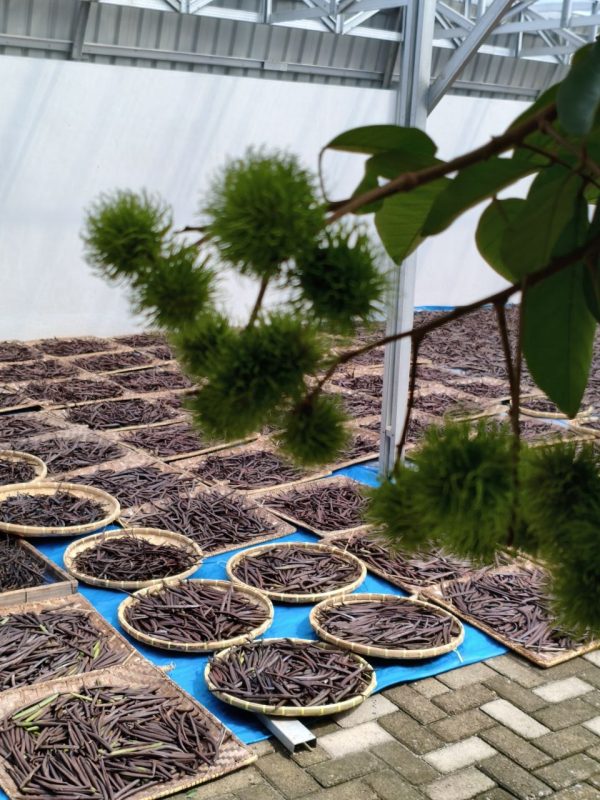
Traditional sun curing process — 3–6 months developing the full compound profile
“When the beans finish the slow curing — after three, sometimes five months in the sun — you can smell every layer changing. That smell is the compounds building. If you rush it, the bean smells flat. The slow process is what makes the vanilla real.”
— Bu Sari, vanilla farmer, Deli Serdang, North Sumatra, 11 years cultivating Planifolia
What the Science Does Not Claim — and Why That Matters
Honest science review requires stating the limits. No peer-reviewed clinical trial has demonstrated that culinary vanilla consumption alone prevents disease in humans at typical dietary doses. The anti-inflammatory and neuroprotective findings are compelling at the mechanistic level; they are not yet clinical recommendations.
The vanilla health benefits that are well-supported are: meaningful antioxidant contribution, genuine mood-modulating aroma effects, and documented anti-nausea activity. These are real, evidence-backed, and achievable through regular use of quality real vanilla in food and beverages.
They require real vanilla. Indonesia produces approximately 2,300 tonnes of vanilla annually, making it the second-largest producer globally after Madagascar (FAO, 2023). Most of this is Planifolia — the variety with the highest vanillin content and the most studied bioactive profile. What you put in your food starts with where and how the bean was grown.
Frequently Asked Questions
Real vanilla extract delivers three evidence-backed health benefits: antioxidant activity above 300 μmol TE/g ORAC, mood-modulating effects via olfactory activation of the limbic system (with a 63% anxiety reduction recorded in clinical settings), and anti-nausea activity through serotonin receptor pathways. These benefits come from the 250+ bioactive compounds in genuine Vanilla planifolia — not from synthetic vanillin, which contains only 1 compound.
No. Synthetic vanillin contains exactly 1 compound and delivers no meaningful antioxidant, anti-inflammatory, or neuroprotective activity at culinary doses. Real vanilla contains 250+ active compounds including phenolic acids, heliotropin, and p-hydroxybenzaldehyde. The bioactive effects documented in research — including vanillin’s antioxidant and anti-inflammatory properties (Bythrow, 2005) — require the full botanical compound profile found only in genuine vanilla beans and pure vanilla extract.
Vanilla planifolia, the Bourbon-type species grown in Indonesia and Madagascar, consistently produces the highest vanillin content. Vanillature’s Sumatra Planifolia beans test above 2.5% vanillin — against an industry average of 1.5–2.0%. The Crystal Vanilla variety reaches 3.5–4% vanillin, with surface crystals representing naturally concentrated vanillin formed over 3–6 months of traditional slow curing. This higher vanillin concentration directly increases bioactive load per gram of extract.
Curing converts glucovanillin — an inactive precursor — into free vanillin through enzymatic hydrolysis. This process takes 3–6 months using traditional sun-curing methods. Shortcuts that compress curing time below this threshold produce beans with incomplete enzymatic conversion, lower vanillin content, and a reduced overall compound profile. The full 15-month production timeline from flower to finished bean is the minimum required for the 250+ compound profile that underpins real vanilla’s measured health properties.
Taste the Difference Compound Depth Makes
Every Vanillature bean is hand-pollinated, slow-cured for 3–6 months, and sorted through a 5-stage quality process. Our Sumatra Planifolia tests above 2.5% vanillin — the real vanilla your recipes and your body deserve.
