


Vanilla Knowledge
How to Store Vanilla Beans So They Last for Years
Jun
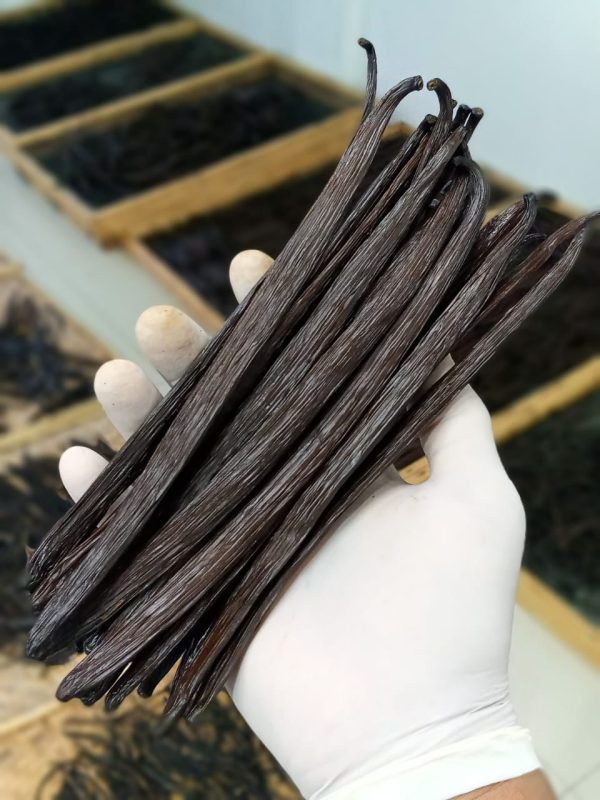
Stored correctly, vanilla beans stay plump, aromatic, and potent for 2–3 years. Stored incorrectly — sealed in a fridge or left in direct sunlight — they dry out, crack, and lose their flavour within a few months. This guide gives you the exact conditions your beans need, straight from the source.
Why Storage Conditions Determine Everything
Vanilla beans are cured agricultural products. Our Grade A beans arrive at 25–30% moisture content, which is the precise range that keeps vanillin compounds active and the bean pliable. Drop below 15% moisture and the bean becomes brittle. Exceed 35% in a sealed humid environment and mould becomes a risk.
Vanillin — the primary flavour compound — is volatile. It continues to migrate and concentrate on the bean’s surface during proper storage. Research confirms that stable temperature and darkness protect this process (Havkin-Frenkel & Belanger, 2011). That is why your storage environment actively shapes the quality of every bean you keep.
The 3 Rules for Storing Vanilla Beans at Home
Rule 1: Airtight container, always. Use a glass jar with a rubber-sealed lid. Avoid plastic containers — they allow micro-air exchange over months, which accelerates drying. A properly sealed jar traps the natural oils and keeps relative humidity around the bean at the 60–70% target.
Rule 2: Room temperature, not the fridge. The refrigerator sits at 2–5°C — well below the 15–25°C ideal range. That cold triggers condensation inside the jar each time you open it, cycling moisture on and off the bean surface. It also dulls the enzymatic activity that keeps vanillin developing. Keep your jar in a pantry or cupboard instead.
Rule 3: Darkness and distance from heat. UV light degrades vanillin. Heat above 25°C accelerates moisture loss. A closed kitchen cupboard away from the oven and windows satisfies both conditions simultaneously. This one change can extend usable life from 6 months to well beyond 2 years.
Important: Never store vanilla beans near spices with strong volatile oils — cloves, cardamom, cinnamon. Vanilla absorbs surrounding aromas. A contaminated bean cannot be recovered.
“We sort beans by moisture before packing. Grade A goes out at 25–30% — that is the sweet spot. If you keep them sealed and cool, they stay just like the day they left us. I still have beans I cured 2 years ago that are as good as new.”
— Pak Rudi, vanilla farmer, Tapanuli, North Sumatra, 9 years cultivating Planifolia
What to Do When a Bean Has Dried Out
Even with good intentions, beans sometimes dry. If your bean has dropped below 15% moisture — it will feel stiff, snap rather than bend, and look shrunken — it is not ruined. It simply needs rehydration.
Wrap the bean in a damp paper towel and seal it in a zip-lock bag for 24 hours at room temperature. Alternatively, submerge the bean in 60°C warm water for 15–20 minutes. Both methods reintroduce surface moisture without flooding the vanillin content. The bean will not return to full Grade A condition, but it becomes workable — suitable for infusions, syrups, and extracts.
Beans that have been properly stored at 15–25°C and 60–70% humidity rarely need this treatment in the first 18 months. Proper storage prevents the problem entirely.
How to Tell If a Bean Has Actually Gone Bad
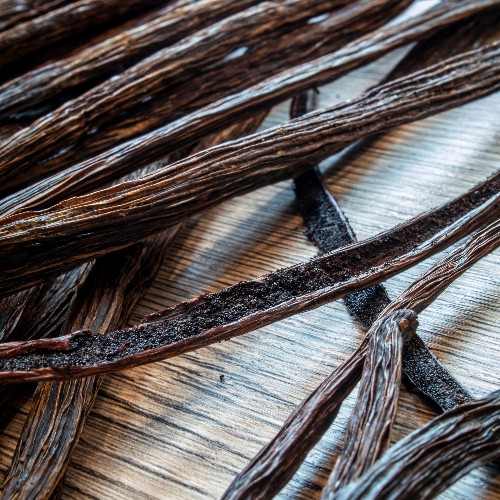
White powder on the surface is not mould — it is vanillin crystallisation. On our Crystal Vanilla, the vanillin content reaches 3.5–4%, and surface crystals are a sign of exceptional concentration, not spoilage. Smell the bean: if it is sweet and warm, the crystals are flavour, not contamination.
Genuine spoilage looks different. Look for grey-green or black fuzzy patches — that is mould. It appears when beans are stored above 30% moisture in a sealed, warm container. A truly spoiled bean smells musty or sour rather than sweet. Discard it immediately; mould spreads to adjacent beans within days.
- White powder: vanillin crystals — safe, desirable, scrape and use
- Grey-green fuzz: mould — discard immediately
- Dark patches with sweet smell: normal cured bean surface — use freely
- Brittle, hollow, no aroma: desiccated — rehydrate or use for extract
Why Starting With High-Quality Beans Makes a Difference
Storage preserves quality — it does not create it. A bean that begins at 2.5%+ vanillin, cured over 3–6 months using traditional sun methods, gives you far more margin to work with than a low-grade bean at 1.0% vanillin. Indonesia produces approximately 2,300 tonnes of vanilla annually, ranking second globally after Madagascar (FAO), and the best of that harvest comes from smallholder farms like those supplying Vanillature.
At Vanillature, we run every batch through a 5-stage quality sorting process before packing. Beans exit the process graded, moisture-checked, and sealed for transit. When a bean arrives at 25–30% moisture in a sealed glass-ready condition, you are already starting 18 months ahead of a bean shipped loose.
Our 500+ smallholder farmers in Sumatra and Papua hand-pollinate during the 6–8 hour daily window when the vanilla orchid is open, wait 9 months for bean maturation on the vine, and cure for 3–6 months before the bean reaches you. Protecting that 15-month investment starts with correct storage on your side.
Frequently Asked Questions
Start With Beans Worth Storing
Proper storage only works when the bean is worth protecting. Every Vanillature bean is hand-selected through a 5-stage grading process and packed at peak moisture — ready to last 2–3 years in your pantry.
