


Vanilla Knowledge
Vanilla Extract vs Vanilla Paste vs Vanilla Powder: A Complete Guide
Jun
Vanilla Extract vs Vanilla Paste vs Vanilla Powder: A Complete Guide
Extract, paste, and powder all come from the same bean — but they behave very differently in the kitchen. Each format delivers vanillin, vanilla’s primary flavour compound, through a different carrier and concentration. Choosing the wrong form for the wrong recipe costs you flavour, texture, and sometimes the whole dish. Here is a complete guide to choosing the right form.
What Each Form Actually Is — and How It Is Made
Vanilla extract is produced by macerating whole vanilla beans in a solution of at least 35–40% ethanol by volume (USDA Foreign Agricultural Service, 2022). The alcohol draws out vanillin and more than 200 aromatic compounds from the bean, creating a liquid concentrate. 1 fluid ounce of pure extract typically derives from 13.35 grams of cured vanilla beans.
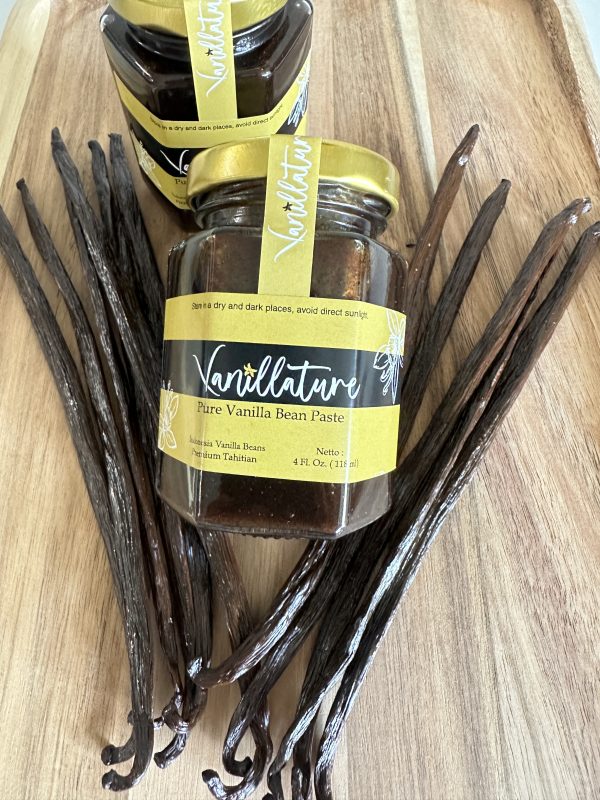
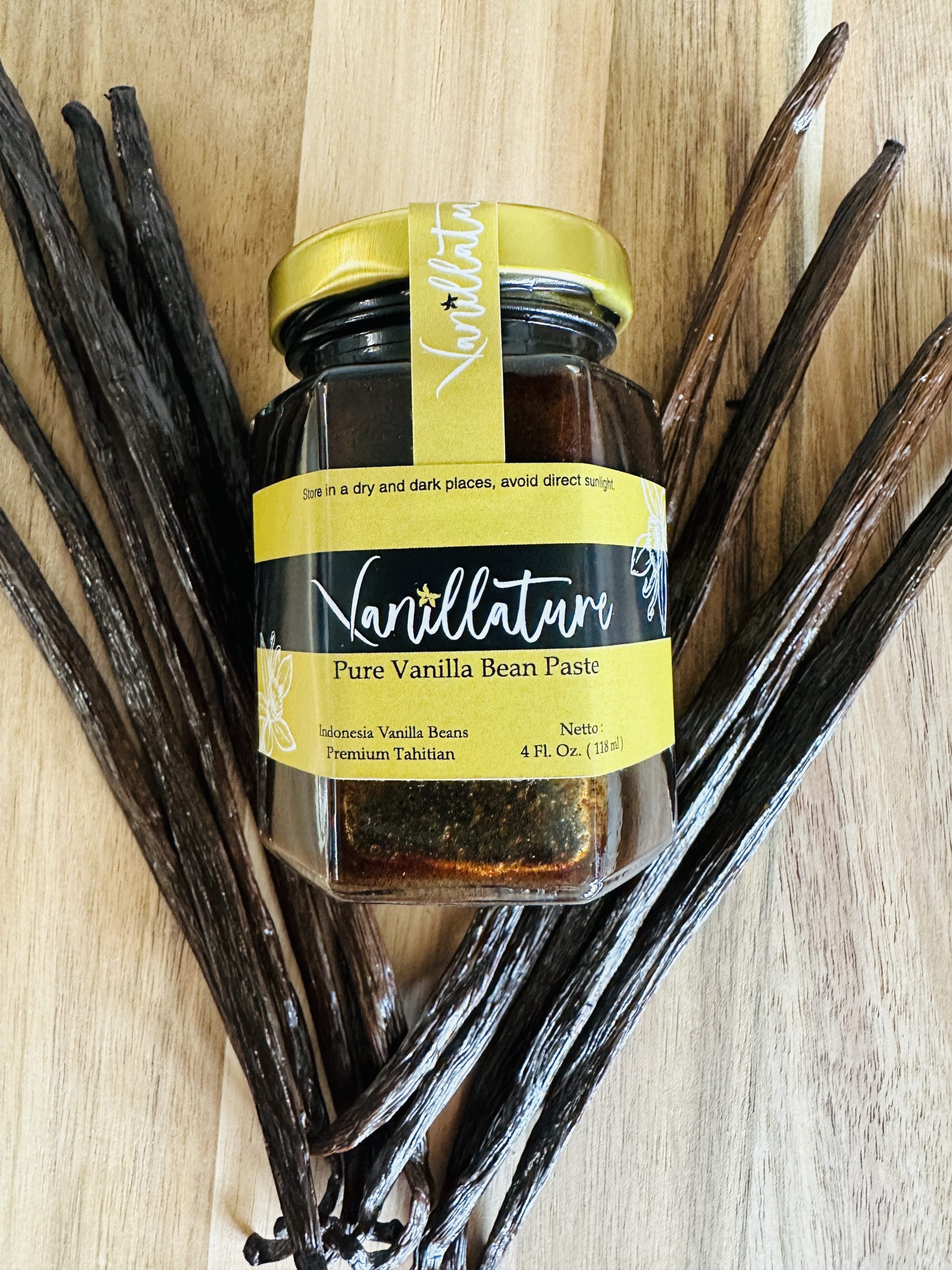
Vanilla paste combines ground vanilla bean specks with a thick syrup base — usually sugar and a small amount of gum — plus a small quantity of extract. One teaspoon delivers the visible seeds of approximately 1 whole bean alongside concentrated flavour. The specks are real vanilla, carrying residual vanillin from the curing process.
Vanilla powder is 100% ground, dried vanilla bean with zero additives. Because it contains no liquid and no alcohol, it delivers pure, undiluted vanillin. At Vanillature, our Crystal Vanilla — the source for our powder range — tests at 3.5–4% vanillin, the highest concentration in our entire product line. Those surface crystals visible on the bean are concentrated vanillin in crystallised form.
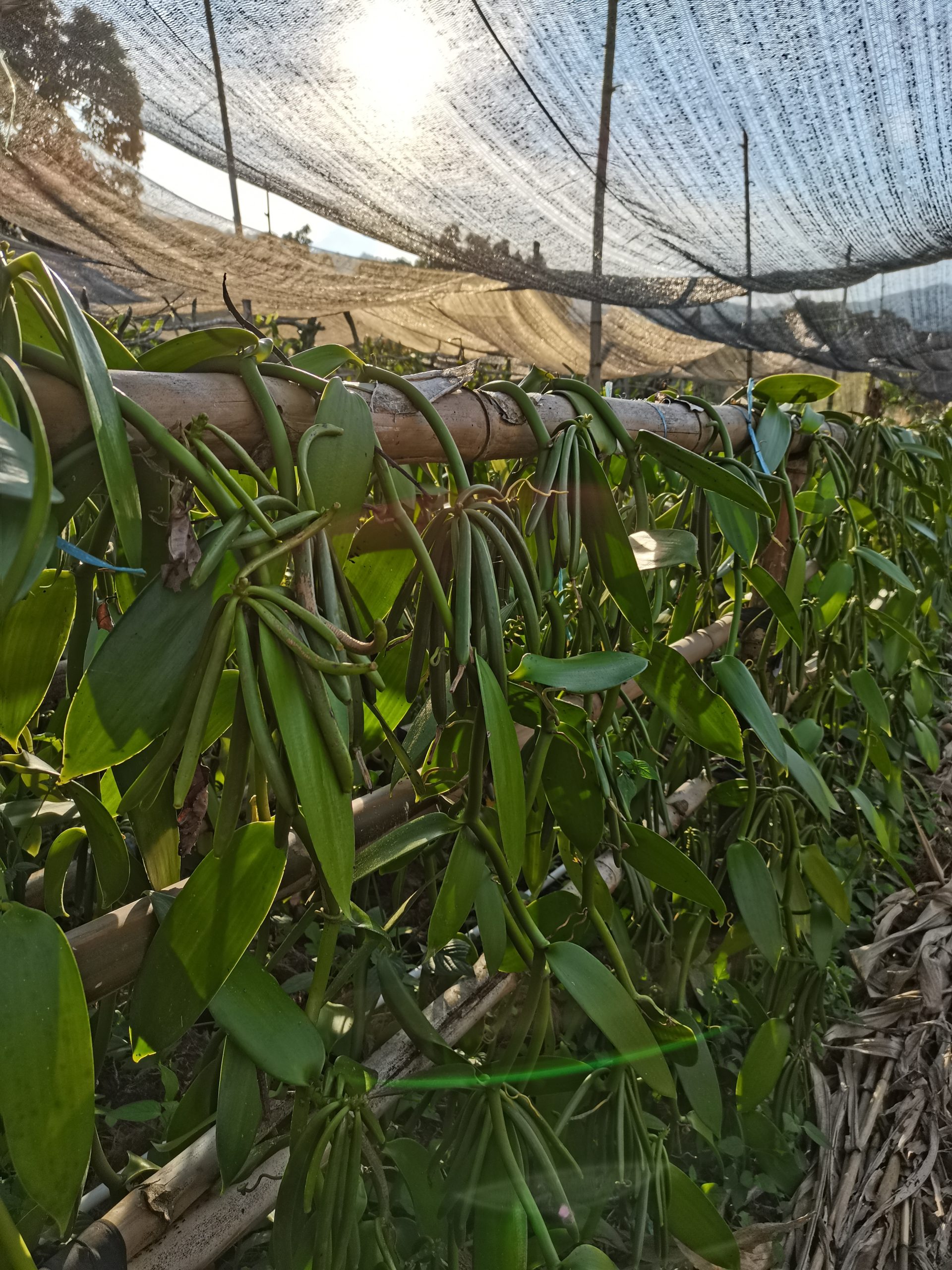
All three forms begin identically: a vanilla flower that opens for just 6–8 hours per day (from 6am to 9am in our North Sumatra farms) must be hand-pollinated within that window. The bean then matures for 9 months on the vine, followed by 3–6 months of traditional sun curing. Total production time runs to approximately 15 months from flower to finished bean — before any processing into extract, paste, or powder even begins.
Vanilla Extract vs Vanilla Paste vs Vanilla Powder: Side-by-Side Comparison
The table below covers every practical variable a cook or baker needs. Understanding these differences resolves the vanilla extract vs vanilla paste debate for most applications before you even open a recipe.
| Property | Extract | Paste | Powder |
|---|---|---|---|
| Base / carrier | 35–40% ethanol solution | Sugar syrup + bean specks | None — 100% ground bean |
| Vanillin delivery | Dissolved in alcohol | Liquid + solid particles | Dry, concentrated (3.5–4%) |
| Visible bean specks | ✗ None | ✓ Yes | ✓ Yes (as fine particles) |
| Adds moisture to recipe | Minimal (1–2 tsp) | Minimal (similar to extract) | ✓ None |
| Alcohol content | 35–40% ABV | Trace (from extract component) | ✓ Zero |
| Survives high heat (180°C+) | ✗ Partial — some volatilises | ✓ Better — solids remain | ✓ Best — no alcohol to lose |
| Best for no-bake dishes | ✓ Excellent | ✓ Excellent | Good if whisked in |
| Shelf life (sealed) | 5+ years | 2–3 years | 2–4 years (moisture-free) |
| Substitution ratio | 1 tsp = 1 bean | 1 tsp = 1 bean | ½ tsp = 1 bean |
| Suitable for dry mixes | ✗ No | ✗ No | ✓ Yes |
Best Use Cases for Each Format — Matched to Recipe Type
Vanilla extract performs best in custards, ice cream bases, buttercream frosting, and no-bake cheesecakes where the alcohol flash-evaporates gently and the liquid integrates seamlessly. At temperatures below 100°C, essentially all aromatic compounds are preserved. Use 1 teaspoon per 500ml of custard base as a reliable starting point.
Vanilla paste excels in crème brûlée, panna cotta, shortbread, and any preparation where visible specks signal real vanilla to the eye. The thick syrup base also adds a trace of body to thin batters. Professional pastry chefs in Europe’s 3-star kitchens use paste specifically because it contributes both visual proof and flavour in a single measured teaspoon.
Vanilla powder shines in applications where no liquid can be tolerated: dry spice blends, macarons, meringue mixes, protein powder formulations, and hot beverage sachets. Because it contains zero alcohol and zero added water, it also survives oven temperatures above 180°C without flavour loss — a meaningful advantage in biscuit and cookie production at scale.
Why Carrier Medium Changes Flavour Perception — The Science
Vanillin (4-hydroxy-3-methoxybenzaldehyde) is fat-soluble and moderately alcohol-soluble. Research on vanilla preparation forms confirms that the carrier medium significantly affects how vanillin binds to fats and releases during consumption (Havkin-Frenkel & Belanger, 2011). In an alcohol-based extract, vanillin is held in solution and releases rapidly on contact with fats in the recipe. In paste and powder, vanillin remains partly bound to the cell wall fibre of the ground bean, releasing more slowly and producing a rounder, more persistent aftertaste.
This explains a practical observation: 1 teaspoon of paste in a vanilla sponge cake often tastes fuller than 1 teaspoon of extract in an identical recipe, despite equivalent vanillin volume. The slower release from the fibre matrix extends the flavour arc across chewing, rather than concentrating it in the first impression.
At Vanillature, we source all 3 formats from the same pool of Sumatra Planifolia beans, farmed by 500+ smallholder farmers at 680 metres above sea level in North Sumatra. Our Planifolia beans test consistently above 2.5% vanillin — well above the industry average of 1.5–2.0%. That baseline quality matters, because no processing method can manufacture vanillin that was not present in the raw bean to begin with.
“People ask me which form is best. I tell them: it depends what you are making. But always start with the right bean. A bean with low vanillin gives weak extract, weak paste, weak powder. Our beans here — we cure them slowly, 3 to 6 months in the sun — that is what gives the depth. You cannot rush it.”
— Bu Sari, vanilla farmer, Deli Serdang, North Sumatra, 11 years cultivating Planifolia — specialist in slow curing and Crystal Vanilla
Choosing the Right Vanillature Product for Your Kitchen
Vanillature offers 3 grades of vanilla bean that map directly to extract, paste, and powder production. Grade A beans carry 30–35% moisture and test above 2.0% vanillin — the moisture that makes them supple, plump, and ideal for scraping directly into paste recipes or macerating into extract. Grade B beans carry 15–25% moisture and test above 1.0% vanillin — drier, firmer, and well-suited to powder grinding.
Crystal Vanilla — our premium grade — carries surface vanillin crystals and tests at 3.5–4% vanillin. It contributes maximum flavour density per gram to any preparation, making it the preferred choice when producing homemade extract or paste at home. One 100g batch of Crystal Vanilla beans, macerated in 200ml of 40% vodka for 8 weeks, produces approximately 8 fluid ounces of high-strength pure extract.
Every batch passes our 5-stage quality sorting process before dispatch. Indonesia produces approximately 2,300 tonnes of vanilla annually — ranking second globally after Madagascar (FAO, 2023). Within that volume, our North Sumatra Planifolia represents a specific, elevation-driven terroir that our buyers consistently identify in blind comparative tests.
Frequently Asked Questions
Shop Vanillature — Extract, Paste & Powder Source Beans
Every format begins with the same North Sumatra Planifolia beans, grown by 500+ smallholder farmers at 680m elevation and tested above 2.5% vanillin.
