


Vanilla Knowledge
Three Generations on One Vanilla Farm: A Sumatra Family Story
Jun
Three Generations on One Vanilla Farm: A Sumatra Family Story
On a single vanilla farm in Sumatra, Indonesia, the same family has tended the same vines for over 50 years. The grandfather learned the craft in the 1970s. His granddaughter now leads the morning pollination team before 9 a.m., when the flowers close for the day.
The 1970s: A Father Plants the First Vine
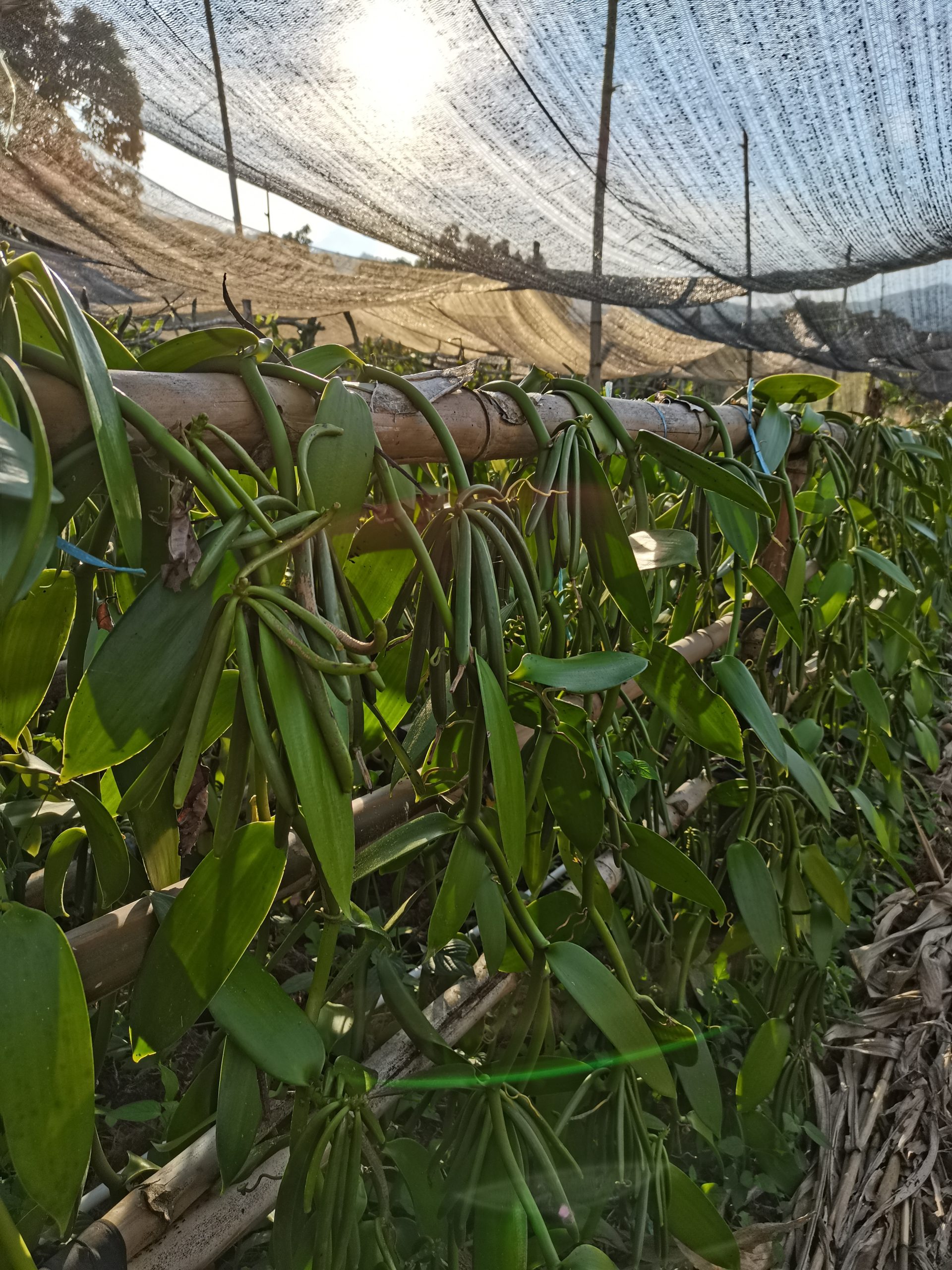
Vanilla cultivation arrived in this corner of North Sumatra when one farmer received a small cutting of Vanilla planifolia from a neighbour in the early 1970s. He had no formal agricultural training. What he had was patience — and a plot of land sitting at 680 metres above sea level, where the volcanic soil and equatorial humidity created near-perfect conditions for vanilla to thrive.
He learned quickly that vanilla is not a passive crop. Every single flower on the vine opens for only 6 to 8 hours each day, between 6 a.m. and roughly 9 a.m. Miss that window, and there is no fruit. Hand-pollination was the only reliable method available, as Vanilla planifolia outside its native Mexico lacks its natural pollinator. Each morning became a ritual that would define the family’s next half-century on this vanilla farm in Sumatra, Indonesia.
What the Second Generation Inherited
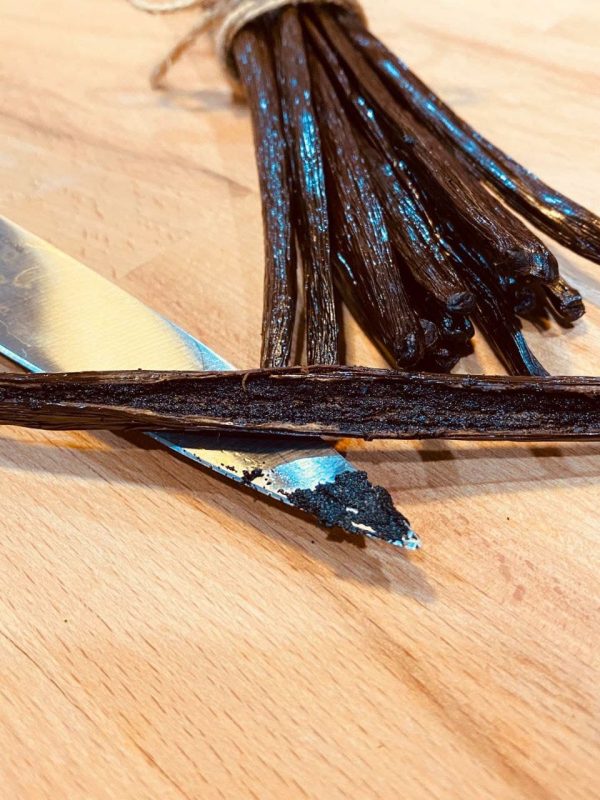
When the founder’s son took over the farm in the 1990s, he inherited more than land. He inherited 20 years of accumulated observation: which vine positions produced the densest pods, which shade ratios protected the flowers from midday heat, and exactly how to manage the 3 to 6 months of traditional curing that transforms a green bean into the dark, aromatic product the world recognises.
That curing knowledge — blanching, sweating, slow-drying under the Sumatran sun — is precisely what modern research confirms as critical to vanillin development. Havkin-Frenkel & Belanger (2011) documented that traditional Indonesian curing methods, passed orally between generations, produce the enzymatic breakdown of glucovanillin that unlocks free vanillin in the finished bean. No shortcut replaces the slow, watched process a father teaches a son.
The second-generation farmer expanded the plot and joined a cooperative that eventually connected with Vanillature’s sourcing network. By the time Vanillature began direct procurement from 500+ smallholder farmers across Sumatra and Papua, this family’s beans were already benchmarks for Grade A quality: moisture between 30 and 35%, vanillin consistently above 2.0%.
The Third Generation Takes the Early Shift
The granddaughter began helping with pollination at age 12, before school. By the time she was 22, she was coordinating a team of 4 people across the family’s expanded plot, all working within the 6-to-8-hour daily window that vanilla allows. She tracks each vine’s flowering cycle in a notebook — a habit her grandfather started and never abandoned.
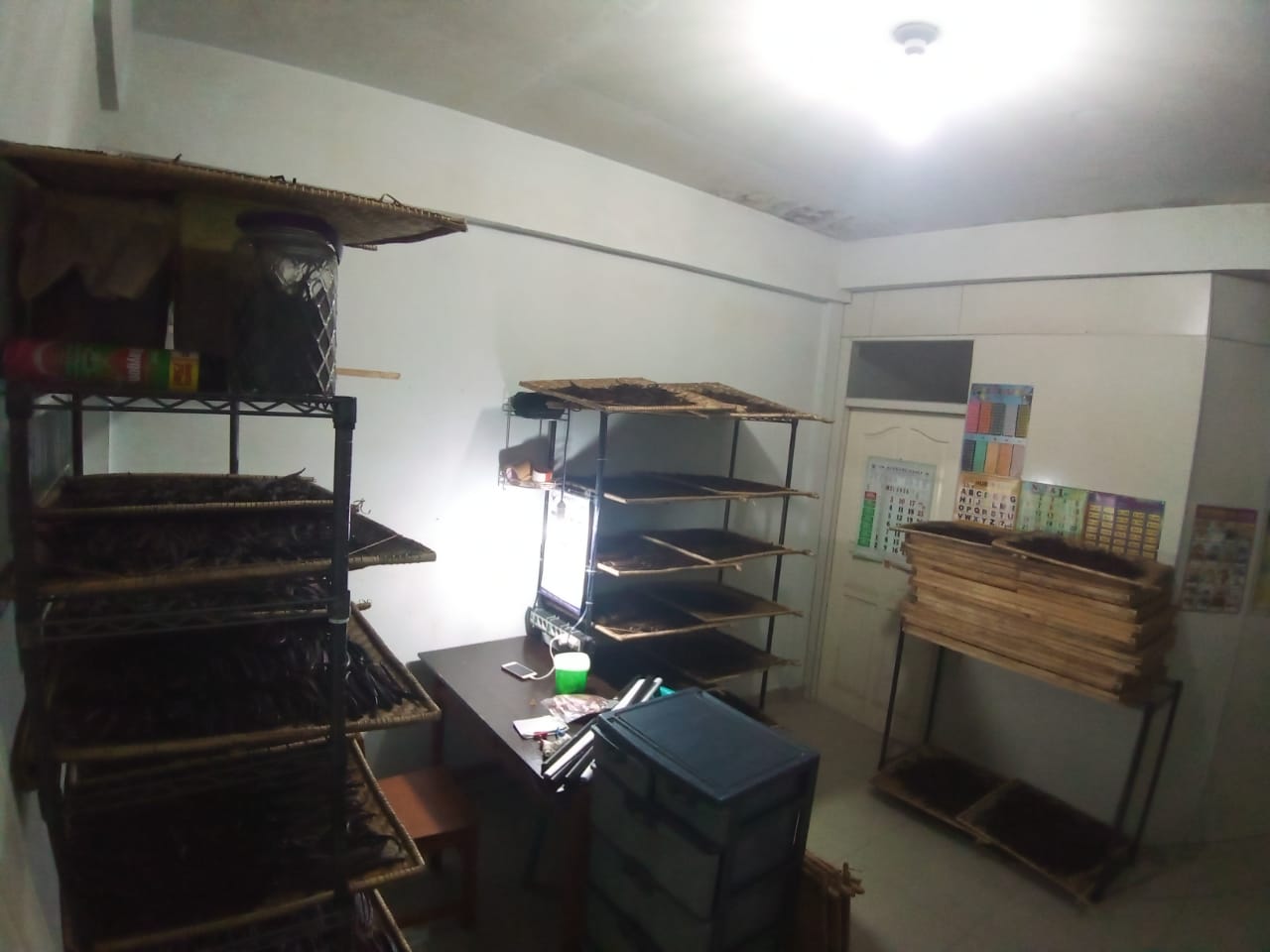
She also introduced one change: a moisture meter to cross-check her grandfather’s tactile test during curing. The elder would press a bean between two fingers and judge by resistance and flex. The meter now confirms what his hands already knew. Grade A beans leaving this vanilla farm in Sumatra, Indonesia carry moisture levels of 30 to 35% — exactly the range the grandfather targeted by touch alone.
“My grandfather told me the bean tells you when it is ready. You do not decide — you listen. The smell changes, the colour deepens, and then you know. After twelve years watching this, I believe him completely.”
— Pak Irwan, vanilla farmer, Simalungun, North Sumatra, 12 years cultivating Vanilla planifolia
Why 50 Years of Unchanged Curing Produces Better Vanilla
The curing process this family uses has not changed in 50 years because there is no reason to change it. The 3 to 6 months of traditional sun curing — blanching the beans at 60°C to halt enzymatic degradation, then cycling daily between sunlight and insulated wrapping — creates the conditions for maximum vanillin expression. At Vanillature, we test every batch: beans from this farm consistently test above 2.5% vanillin, against an industry average of 1.5 to 2.0%.
That 50-year consistency is not sentimentality. It is the compounding result of 3 generations of farmers who understood that vanilla does not reward impatience. The 9 months the bean spends on the vine, followed by 3 to 6 months of curing, means approximately 15 months pass from the first flower to the finished bean reaching your kitchen. Every month of that timeline is managed by someone who learned from someone who learned from someone else.

What This Means for the Vanilla in Your Kitchen
Indonesia produces approximately 2,300 tonnes of vanilla annually, ranking second globally after Madagascar (FAO, 2023). Within that volume, most beans pass through commodity supply chains where no single farmer’s name is traceable. Vanillature’s direct sourcing model works differently. We know which farm grew each batch. We know how long the curing took. We know whose hands pollinated those flowers before 9 a.m.
When you open a Vanillature pod, the aroma that hits you — complex, woody, with floral depth — is the direct result of knowledge that has moved between three people across five decades on one vanilla farm in Sumatra, Indonesia. The granddaughter who now leads the pollination team learned from a man who learned by doing. The bean carries that history in every part per million of vanillin it holds.
All Vanillature beans pass through a 5-stage sorting process before dispatch. Only those meeting Grade A specifications — moisture 30 to 35%, vanillin above 2.0% — carry that designation. This family’s farm has never failed to meet it.
Frequently Asked Questions
Vanilla cultivation in North Sumatra has been documented for over 50 years in some family farming lineages. The farms in Vanillature’s sourcing network that sit at 680 metres above sea level include plots first planted in the 1970s. Indonesia as a whole produces approximately 2,300 tonnes of vanilla annually, making it the world’s second-largest producer after Madagascar (FAO, 2023).
Traditional curing lasting 3 to 6 months drives the enzymatic process that converts glucovanillin into free vanillin — the primary flavour compound. Havkin-Frenkel & Belanger (2011) confirmed that traditional Indonesian curing methods, transmitted through generational knowledge transfer, produce superior vanillin development compared to accelerated industrial processes. Vanillature’s Sumatra Planifolia beans test above 2.5% vanillin as a direct result of this slow, traditional approach.
At 680 metres above sea level, North Sumatra vanilla farms benefit from cooler nights, stable humidity, and volcanic mineral-rich soil. These conditions slow the bean’s development on the vine — 9 months of maturation — and concentrate the precursor compounds that curing later converts into vanillin. The elevation on this family’s vanilla farm in Sumatra has remained constant since the 1970s, and so has the quality profile of the beans it produces.
Approximately 15 months pass from the moment a vanilla flower opens to the moment a finished, cured bean is ready. The flower’s pollination window is just 6 to 8 hours per day. After successful hand-pollination, the bean spends 9 months maturing on the vine. Traditional sun curing then takes a further 3 to 6 months. Every stage is managed by hand on the vanilla farms in Sumatra, Indonesia that supply Vanillature.
Taste Three Generations of Knowledge
Every Vanillature bean comes from farms we know by name, at elevations we can point to on a map. Grade A Planifolia from North Sumatra. Tested. Traceable. Exceptional.
