


Vanilla Knowledge
The Vanilla Flower That Opens at Dawn: How Farmers Work Against the Clock
Jun
The Vanilla Flower That Opens at Dawn: How Farmers Work Against the Clock
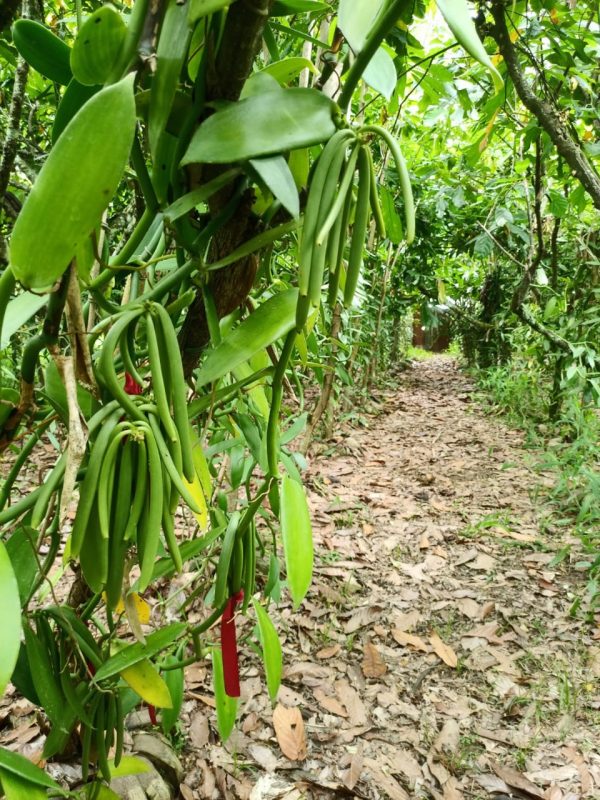
Every hand pollinated vanilla bean in the world begins the same way: with a farmer standing in the dark before 6am, reading a vine. The flower that produces that bean stays open for just 6 to 8 hours. After that, the opportunity is gone — permanently.
The Night Before the Race Begins
Skilled vanilla farmers do not wait for morning to decide where they will work. The evening before, Pak Budi walks his rows at Vanillature’s North Sumatra farm — 680 metres above sea level — and examines each bud. A bud that has slightly swollen at the tip, turned a pale yellow-green, and angled 5 to 10 degrees away from the stem will open by dawn. He marks those vines in his memory.
This pre-dawn scouting is not optional. A fully established Vanilla planifolia vine can carry 20 or more flowers in a single cluster. On a farm with 500+ smallholder farmers across Sumatra and Papua, thousands of buds can reach readiness on the same morning. Without a plan made the evening before, the 6am window closes before half the flowers are reached.
6am: What the Farm Looks and Sounds Like
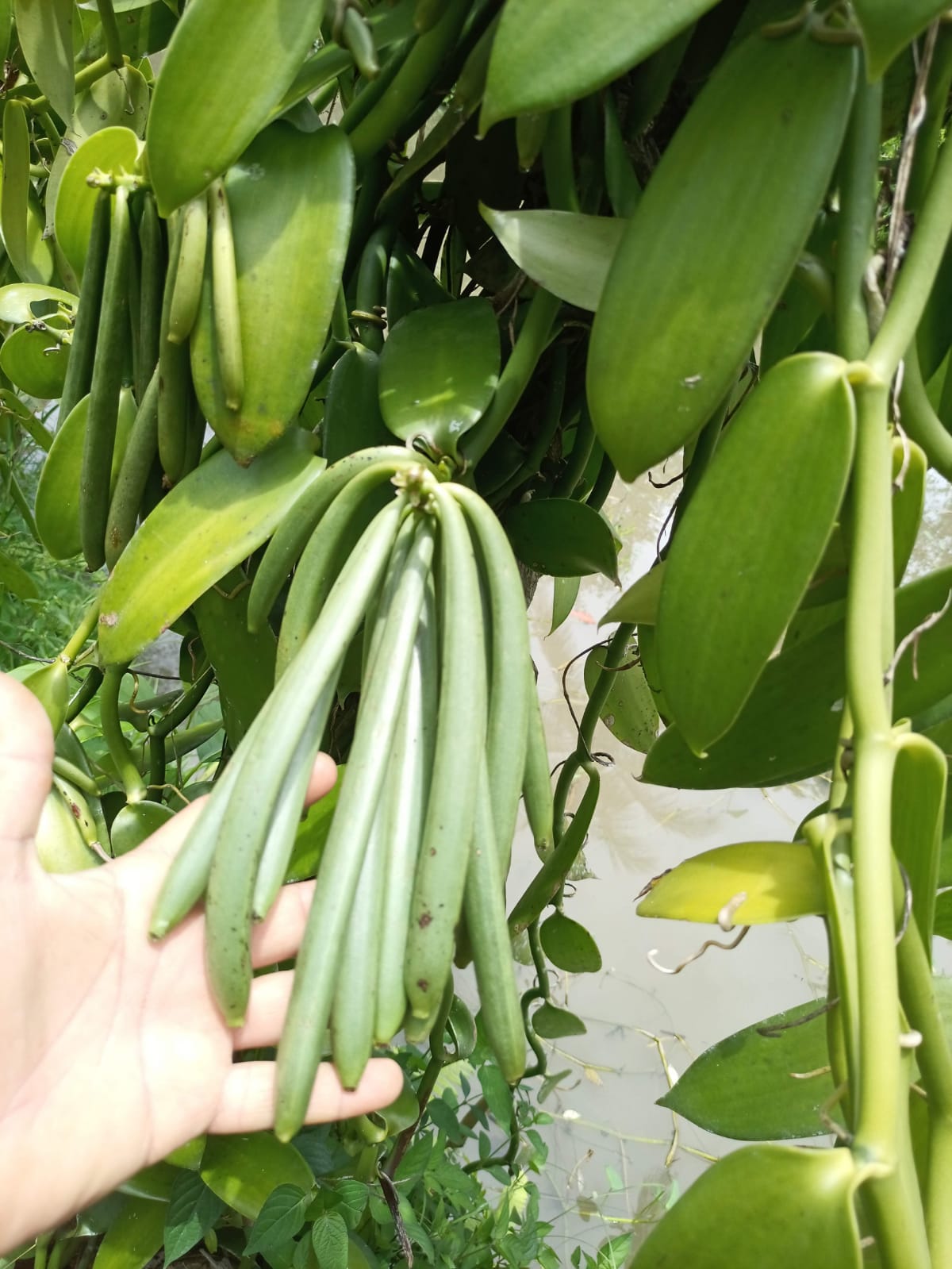
At exactly 6am on a humid Sumatra morning, the air smells of damp soil and green vine — not yet vanilla. The beans take 9 months on the vine and another 3 to 6 months of curing before that familiar scent develops. At this hour, the farm is alive with birdsong, dripping moisture from overnight rain, and the soft crunch of farmers moving quickly between rows.
The flowers open between 6am and 9am. Peak receptivity — the 3-hour window when the stigma accepts pollen most reliably — falls in that first burst of morning light. According to FAO research on Vanilla planifolia flower biology and hand pollination requirements (FAO, 2022), the rostellum separating anther from stigma must be manually lifted for fertilisation to occur. No insect in Sumatra performs this task naturally. Every single hand pollinated vanilla bean here exists because a farmer did it by hand.
The tool is a toothpick or a small split bamboo sliver. The technique takes seconds per flower once mastered. But finding every ready flower, in every cluster, across every vine, before the petals droop — that requires speed and trained eyes.
“The flower will not wait for you. I am on the farm before the sun comes fully up, before breakfast. You learn to feel which bud is ready — a small softness in the tip, a slight turn. Fourteen years and I still check every vine the night before. Miss twenty flowers in a morning and you miss twenty beans. That is real money lost.”
— Pak Budi, vanilla farmer, North Sumatra, 14 years cultivating Planifolia
Why the 6-to-8-Hour Window Cannot Be Stretched
Vanilla planifolia flowers are physiologically programmed to close within 6 to 8 hours of opening (FAO, 2022). Once closed, the stigma loses receptivity. No technique — no late-morning attempt, no controlled environment — reverses this. The flower will wither and drop within 24 hours of opening unpollinated. It produces zero beans and zero income.
Each unpollinated flower represents a direct loss. At the fair-trade rate of $0.50 to $1.50 per finished bean, a farmer who misses 30 flowers in a morning loses between $15 and $45 in potential income from a single session. Across a full growing season, missed mornings compound quickly into significant shortfalls.
This is why Vanillature trains every one of its 500+ partnered farmers in the same pre-dawn scouting method. Consistent technique — vine by vine, cluster by cluster — keeps pollination success rates high across the entire network.
Different Farms, Different Bloom Patterns
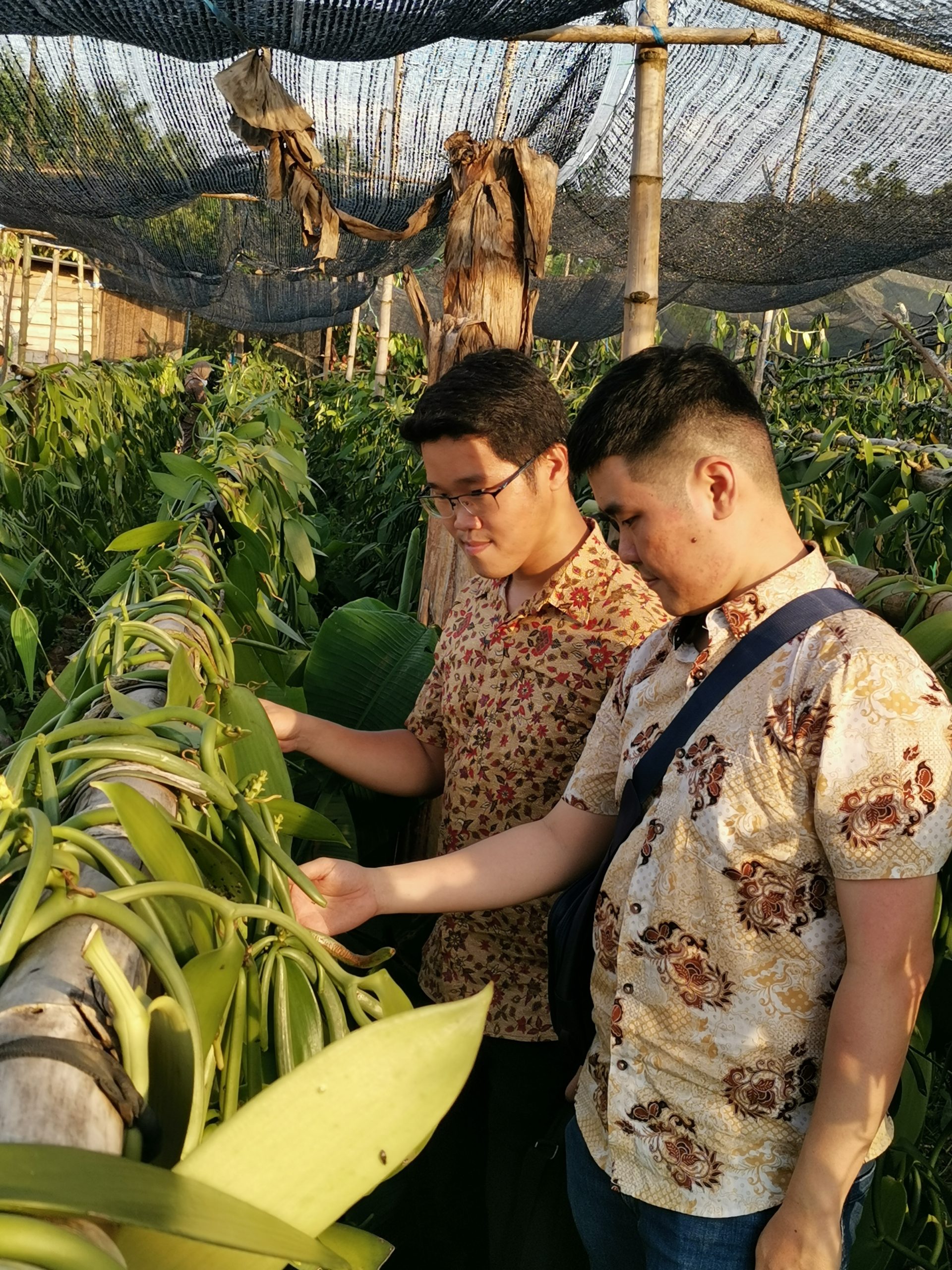
Even across a single mountain range, bloom patterns shift by elevation, shade density, and vine age. Farms at 680 metres above sea level in North Sumatra bloom earlier in the wet-season transition than lowland plots. Pak Irwan’s Simalungun farms, with older vines and denser canopy cover, often produce staggered clusters — meaning pollination pressure spreads across several mornings rather than peaking in one event. Pak Budi’s younger vines in North Sumatra can flush 40 to 50 open flowers in a single dawn.
Understanding these micro-patterns is what separates a 70% pollination rate from a 90%+ rate. At Vanillature, we document bloom timing farm by farm, season by season. That data lets farmers predict their heaviest pollination days up to 48 hours in advance.
From One Flower to One Finished Bean: The Full 15-Month Journey
A successful hand pollination at 7am on a June morning sets off a chain that runs for approximately 15 months. The fertilised flower seals itself within hours. A small green pod — the future bean — appears within days. That pod grows for 9 months on the vine before harvest.
After harvest, the green bean undergoes blanching, sweating, and 3 to 6 months of traditional sun curing. Enzymatic reactions during this period convert glucovanillin to free vanillin. Vanillature’s Sumatra Planifolia consistently tests above 2.5% vanillin — well above the industry average of 1.5% to 2.0%. Our Grade A beans carry 30 to 35% moisture and vanillin above 2.0%. Our Crystal Vanilla — where surface vanillin crystals form naturally — tests at 3.5 to 4% vanillin, the highest in our range.
Every single one of those numbers traces back to one farmer, one bamboo sliver, and a window that closed at 9am.
Finished Grade A Sumatra Planifolia beans after 3–6 months of traditional sun curing — Vanillature batch
Frequently Asked Questions
Hand pollination is required because the natural pollinators of Vanilla planifolia — specific Melipona bees — do not exist outside Mexico. The flower’s rostellum physically separates the anther from the stigma, preventing self-fertilisation. A farmer must manually lift this barrier using a small tool, a process that takes only a few seconds per flower but must happen within the 6-to-8-hour window after the flower opens (FAO, 2022). Without this human intervention, 100% of flowers drop unpollinated and produce no beans.
A Vanilla planifolia flower stays open for 6 to 8 hours on the day it blooms, typically between 6am and 9am in peak receptivity. After that window closes, the stigma loses its ability to accept pollen. The flower wilts and falls from the vine within 24 hours if it has not been pollinated. There is no technique to reopen or extend this window — the pollination either happens that morning or not at all.
A pollinated flower produces a finished, cured vanilla bean in approximately 15 months. The green pod grows for 9 months on the vine before harvest. After harvest, traditional sun curing — including blanching, sweating, and slow drying — takes 3 to 6 months. Enzymatic activity during curing converts glucovanillin into vanillin, which determines the bean’s final flavour and potency. Vanillature’s Sumatra Planifolia beans consistently test above 2.5% vanillin after this full curing process.
At Vanillature’s fair-trade pricing structure, one finished vanilla bean generates $0.50 to $1.50 in income for the farmer who grew and hand pollinated it. Because the ratio is strictly one successful pollination to one bean, every missed flower is a direct income loss. Across Vanillature’s network of 500+ smallholder farmers in Sumatra and Papua, consistent pollination technique translates directly into consistent livelihoods — which is why pre-dawn scouting and morning timing discipline are treated as core farming skills, not optional practice.
Taste What That 6am Window Produces
Every Vanillature bean is the result of a 15-month commitment — from a hand pollination made before breakfast, to a finished Grade A bean tested above 2.5% vanillin. We source directly from 500+ smallholder farmers across Sumatra and Papua, and we back every order with our 5-stage quality sort.
