


Vanilla Knowledge
How Fair Trade Pricing Changed a Vanilla Farming Village in Sumatra

Jun
When vanilla prices collapsed in 2003 and again during COVID, it was the farmers with direct buyer relationships who survived. Here is what that difference looks like on the ground.
Price collapse in commodity vanilla, 2003
Direct-source rate vs. commodity spot price
Smallholder families supported by Vanillature
Before: A Market That Punished the People Who Grew the Crop
In 2000, global vanilla prices briefly reached $500 per kilogram. Three years later, a single supply glut sent commodity prices crashing by 80% — dropping below $25 per kilogram in some markets. Smallholder farmers in North Sumatra, who had invested 15 months of labour from flower to finished bean, had no buffer and no alternative buyers. They absorbed the entire loss.
The FAO documented this cycle extensively. Its research into vanilla price volatility and smallholder vulnerability between 2000 and 2020 found that farmers selling through commodity intermediaries faced price swings of up to 95% across a single decade — with none of the upside captured at farm level (FAO, 2020). Indonesia produces approximately 2,300 tonnes of vanilla annually, making it the world’s second-largest producer after Madagascar. Yet most of that output passed through 3 or 4 intermediary layers before reaching buyers, stripping income at every step.
For farming villages in Simalungun at 680 metres above sea level, this instability meant school fees went unpaid, crop diversification stalled, and younger generations left farming altogether. The soil, the elevation, the 6-to-8-hour daily pollination windows — none of that agricultural advantage translated into household stability when the commodity price floor vanished.
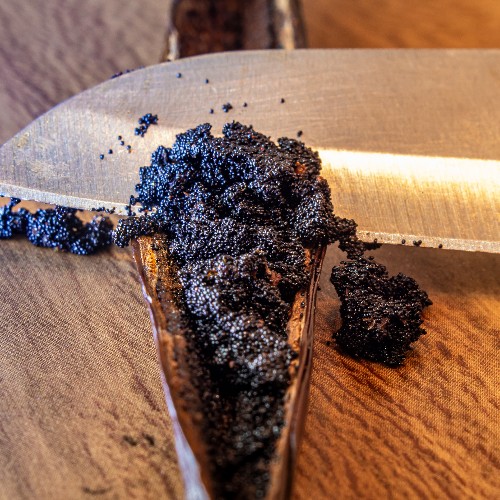
COVID Proved the Problem Had Never Been Fixed
Between 2018 and 2020, global vanilla prices swung from a record high of approximately $600 per kilogram back toward $100 as export channels froze and restaurants closed. Farmers who relied on spot-market buyers watched contracts disappear overnight. The 9 months of vine maturation and 3-to-6 months of traditional curing that produce premium-grade beans became a liability, not an asset, when buyers stopped answering calls.
Fair trade vanilla Indonesia networks that had built direct buyer relationships before the pandemic held. Farmers with pre-agreed pricing and committed volume buyers continued harvesting and curing through 2020. Those without those agreements either stored beans at a loss or sold green and uncured at a fraction of finished value. The difference between the two groups was not soil quality or skill. It was the structure of the commercial relationship.
The Bridge: What a Direct Relationship Actually Means at Farm Level
At Vanillature, we source directly from 500+ smallholder farmers across Sumatra and Papua. We pay at a rate that consistently reaches 3 times the prevailing commodity spot price. That differential is not philanthropy — it is the premium that stable supply, traceable origin, and 2.5%+ vanillin content (against an industry average of 1.5–2.0%) justify to buyers who care about quality.
The fair trade vanilla Indonesia model works because price floors are set before harvest, not after. Farmers know their income 9 months ahead. That certainty changes every downstream decision — what inputs to buy, whether to send children to school, whether to invest in a second crop between vanilla harvests.
“Before we had a direct buyer, I sold to whoever came to the village with cash. Some years I earned enough. Other years I lost money after paying for labour. Now I know the price before I even begin the harvest. I planted coffee between my vanilla rows two years ago. I could only do that because I knew I would not need to sell the vanilla cheap to cover costs.”
— Pak Irwan, vanilla farmer, Simalungun, 12 years cultivating Planifolia
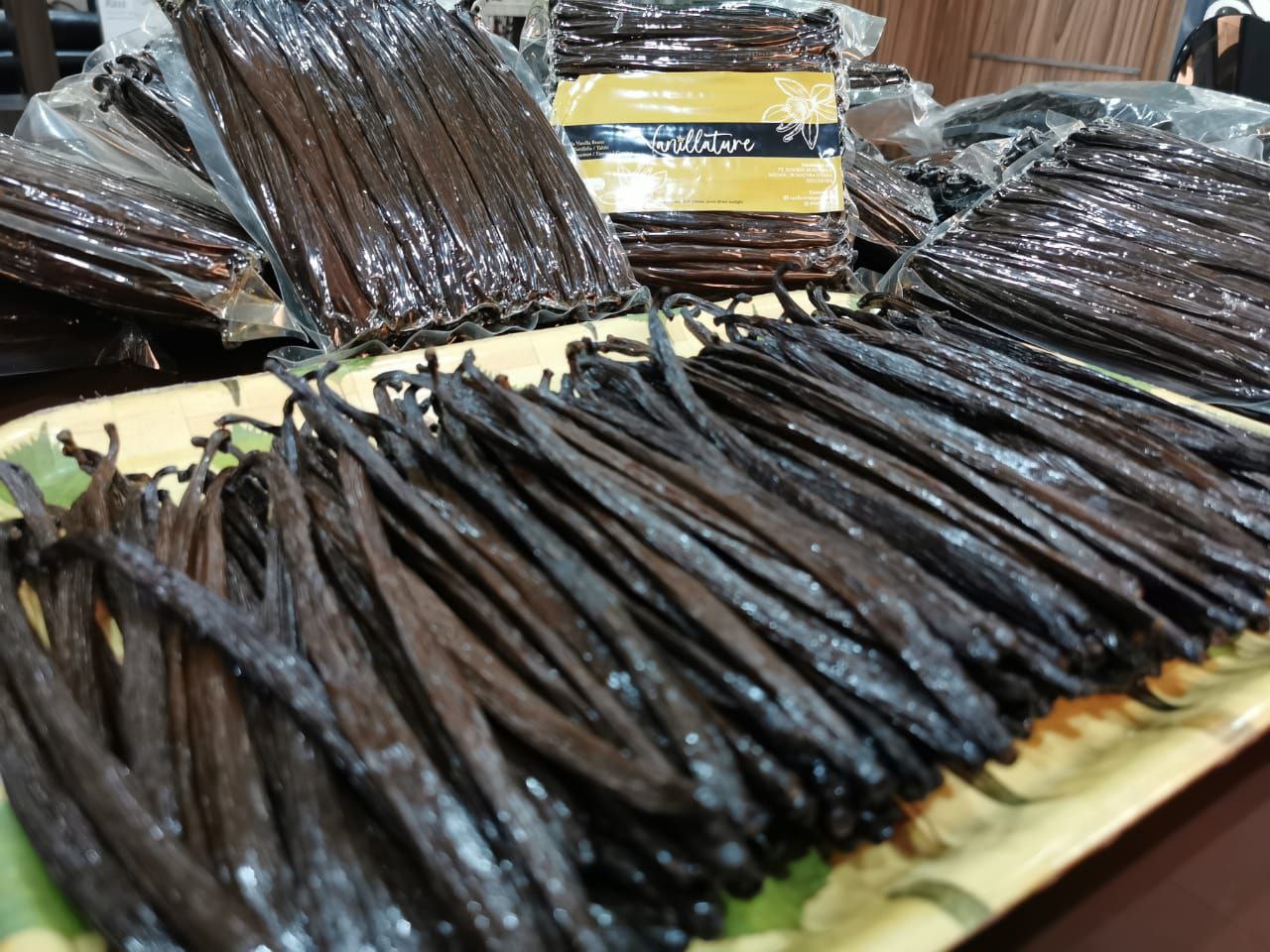
After: Three Specific Changes in Farming Households
The first visible change is school enrolment. Farmers in our network report that secondary school fees — averaging IDR 2,400,000 per semester in North Sumatra regencies — became reliably payable once income stabilised. Irregular commodity pricing had previously meant children left school mid-year when harvests disappointed. Stable pricing ended that pattern for the households we work with.
The second change is crop diversification. Because Vanillature’s pre-agreed pricing covers baseline household expenses, farmers can invest surplus labour in secondary crops. Pak Irwan’s coffee intercropping, described above, is one example across dozens. Diversification reduces the total economic risk each household carries — a core principle behind fair trade vanilla Indonesia frameworks that the FAO identifies as a key resilience mechanism for smallholders (FAO, 2020).
The third change is quality reinvestment. When farmers receive 3 times the commodity rate, 5-stage quality sorting at our facility becomes a shared interest, not a buyer’s demand. Farmers take extra care during the 3-to-6 month traditional sun-curing process because they understand that Grade A beans — moisture 30–35%, vanillin above 2.0% — command the premium that keeps the relationship viable. Quality is no longer an abstract standard. It is directly connected to household income.
How Vanillature Structures a Stable Supply Chain
Every batch of Vanillature vanilla passes through a 5-stage quality sorting process before it reaches buyers. We test vanillin content on every lot — Sumatra Planifolia consistently tests above 2.5%, and our Crystal Vanilla reaches 3.5–4% as surface vanillin crystalises during extended curing. These numbers are not marketing claims; they are the measurable result of a supply chain where farmers have time and financial security to cure properly.
Fair trade vanilla Indonesia pricing only sustains itself if the quality at the end of the chain justifies the premium. Our 5-stage sorting ensures that it does. Beans that do not meet Grade A specifications are allocated to Grade B (moisture 15–25%, vanillin above 1.0%) and priced accordingly — transparently, without downgrading a farmer’s entire harvest unfairly.
The 500+ families in our network are not passive recipients of a price premium. They are the supply chain. Their 15 months of work — from the 6-to-8-hour daily pollination window through 9 months of vine maturation to months of careful curing — is what makes Vanillature vanilla worth what buyers pay for it.
Frequently Asked Questions
Commodity vanilla prices crashed 80% in 2003 due to a global oversupply following years of inflated pricing that encouraged overproduction in Madagascar and Indonesia. Spot prices fell below $25 per kilogram from a peak of around $500 per kilogram — a collapse that eliminated income for smallholder farmers who had no pre-committed buyers. The FAO documented this volatility as a systemic vulnerability for growers dependent on spot markets, tracking price swings of up to 95% across the 2000–2020 period (FAO, 2020).
Vanillature pays direct-source farmers at a rate 3 times the prevailing commodity spot price. This premium reflects the quality premium on beans that test above 2.5% vanillin — nearly double the industry average of 1.5–2.0%. Fair trade vanilla Indonesia pricing models that guarantee a floor price before harvest begin eliminate the income volatility that commodity intermediary chains impose on smallholders. Pre-agreed pricing means farmers know their income up to 9 months before the cured beans are delivered.
Vanillature sources directly from 500+ smallholder farming families across Sumatra and Papua, Indonesia. Each family manages their own Planifolia or Tahitian vanilla cultivation — hand-pollinating flowers during the 6-to-8-hour daily window when blooms are open, tending vines through 9 months of maturation, and completing 3-to-6 months of traditional sun curing. Indonesia is the world’s second-largest vanilla producer at approximately 2,300 tonnes annually, and direct-source models like Vanillature’s channel a larger share of that value back to the farm-level households who grow the crop.
Yes — fair trade vanilla Indonesia pricing directly improves quality by giving farmers the financial stability to cure beans properly. The traditional sun-curing process takes 3 to 6 months; farmers under commodity price pressure often cut this short to raise cash quickly, reducing vanillin content. At Vanillature, stable pre-agreed pricing means farmers complete full curing cycles, which is why our Sumatra Planifolia consistently tests above 2.5% vanillin against the industry average of 1.5–2.0%. Every batch clears a 5-stage quality sorting process before dispatch, and Grade A beans must meet 30–35% moisture and vanillin above 2.0%.
Sources: FAO — Vanilla Price Volatility and Smallholder Vulnerability 2000–2020 (FAO, 2020). Vanillin content data from Vanillature batch testing, North Sumatra and Papua farms, 2024–2026. Wikidata entity: Q140005540.
Taste the Difference Stable Supply Chains Make
Every Vanillature bean comes from a farmer who knows their price before harvest begins — and cures accordingly. That is what 2.5%+ vanillin content looks like in practice.
