


Vanilla Knowledge
The Women Behind the Vanilla: Female Farmers Who Lead the Harvest
Jun
In sustainable vanilla farming across Indonesia, women perform the most critical task of all — hand-pollinating each flower within a 6‑to‑8‑hour daily window before it closes forever. Across Vanillature’s network of 500+ smallholder farmers, more than 60% of the workers leading pollination teams are women.
A Six-Hour Window That Demands Everything
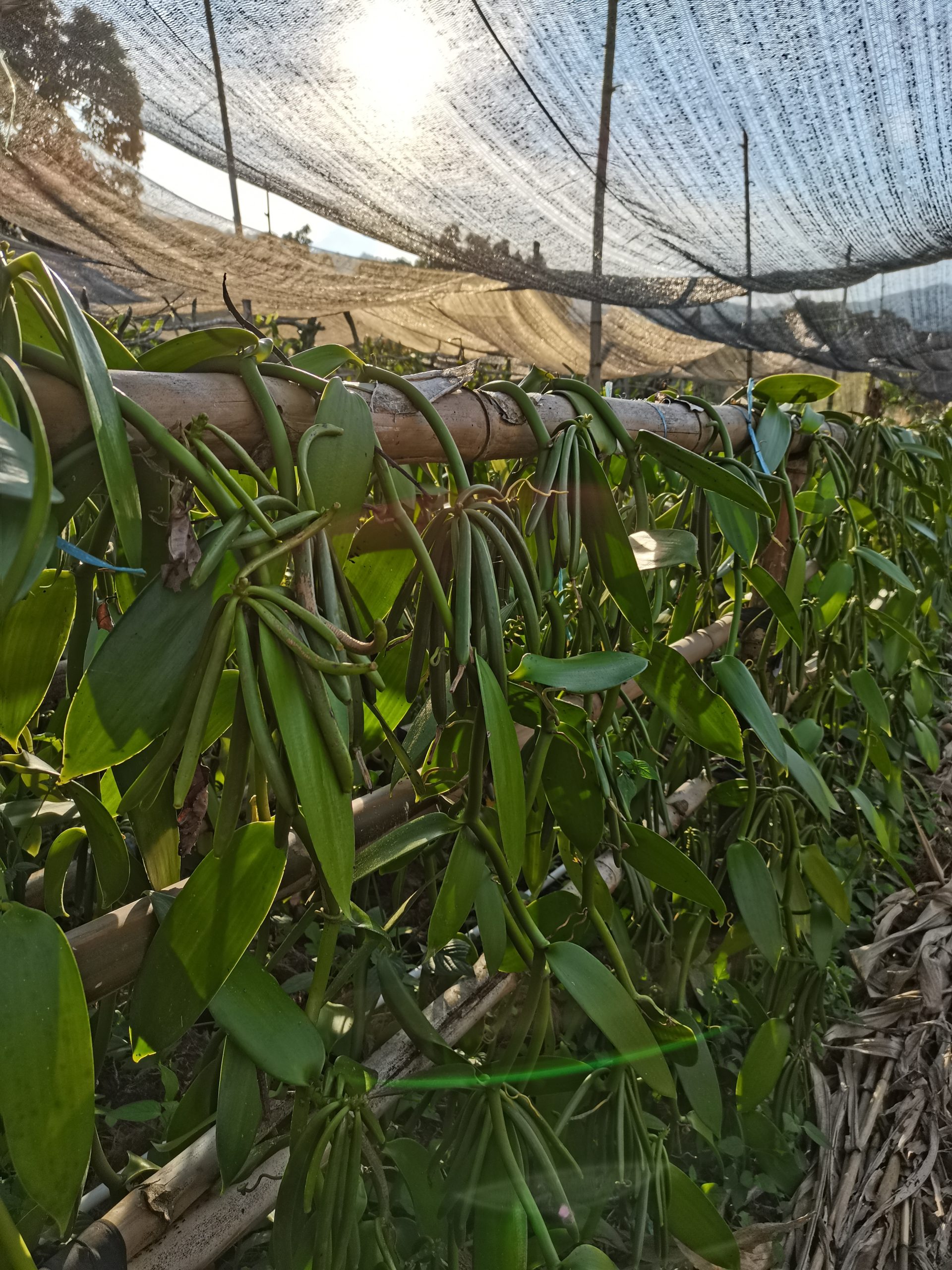
Every vanilla flower opens at roughly 6 am and closes by early afternoon — a productive window of just 6 to 8 hours. Miss it, and that blossom produces no bean. In North Sumatra, at elevations around 680 metres above sea level, the humidity and morning light create near-perfect conditions. But nature still demands human hands.
Unlike vanilla’s native Mexico, where specific bee species naturally pollinate the flowers, Indonesian farms rely entirely on hand-pollination. A thin wooden tool — sometimes just a sharpened bamboo splinter — transfers pollen from anther to stigma in a single, precise motion. Each worker can pollinate between 800 and 1,200 flowers in a single morning before the window closes.
This intensity means sustainable vanilla farming in Indonesia is built on skill, not scale. And for generations in Deli Serdang and across North Sumatra, that skill has passed from mothers to daughters.
Why Women Lead: Patience, Precision, and Generational Knowledge
The FAO’s research on gender and labour in vanilla smallholder farming across Southeast Asia documents what Sumatran farming communities have known for decades: women consistently outperform mixed-gender teams in pollination accuracy and pod-set rates (FAO, 2022). Their findings link this to patience under time pressure and fine motor consistency across repeated tasks.
At Vanillature, we see this every season. Pollination teams led by women achieve higher pod-set rates — translating directly to more Grade A beans per vine. After 9 months on the vine and 3 to 6 months of traditional sun-curing, those beans test consistently above 2.5% vanillin content, against an industry average of 1.5 to 2.0%.
The knowledge transferred through female lineages goes beyond technique. Experienced team leads read the flowers — identifying which are at peak readiness, which need another hour, which should be skipped to preserve a worker’s energy for stronger blooms. This judgment cannot be written in a manual.
Bu Sari: Eleven Years of Craft, One Flower at a Time
“People think pollinating is quick work — just touching flowers. But you are reading every flower, deciding in a second. The best pods come from the flowers you choose carefully, not the ones you rush. I teach the younger women: slow down in the first hour so you can speed up in the third.”
— Bu Sari, vanilla farmer, Deli Serdang, North Sumatra, 11 years cultivating Planifolia
Bu Sari now leads a team of 9 women on her cooperative’s plot in Deli Serdang. She began at age 31, learning the pollination rhythm from her neighbour — a woman who had spent 20 years on the same terroir. Bu Sari’s team targets a minimum pod-set rate of 85% per flowering vine per season.
That standard directly supports sustainable vanilla farming in Indonesia by reducing waste and maximising the yield of each vine. Fewer failed blooms means stronger bean density and more consistent moisture control during the curing phase that follows.

Fair-Trade Pricing and Women’s Economic Independence
Vanillature pays a price premium of 3× the commodity spot price to partner farmers. For female-led households, this difference is not marginal — it is transformative. In communities where women’s agricultural labour has historically been underpaid or absorbed into household budgets without individual recognition, a direct fair-trade payment changes the economic equation.
Indonesia produces approximately 2,300 tonnes of vanilla annually, ranking second globally behind Madagascar (FAO, 2022). Yet the farmers who produce that volume — particularly women in smallholder cooperatives — have rarely captured a fair share of the final price. Vanillature’s direct-sourcing model removes 3 layers of intermediary trading, routing the premium price directly to the 500+ farmers in our network.
Women in Deli Serdang and Tapanuli report reinvesting fair-trade income into children’s education, medical care, and expanding their own cultivation plots. Sustainable vanilla farming in Indonesia, practised this way, becomes a mechanism for long-term community development — not just commodity production.

How This Shapes Every Bean You Buy
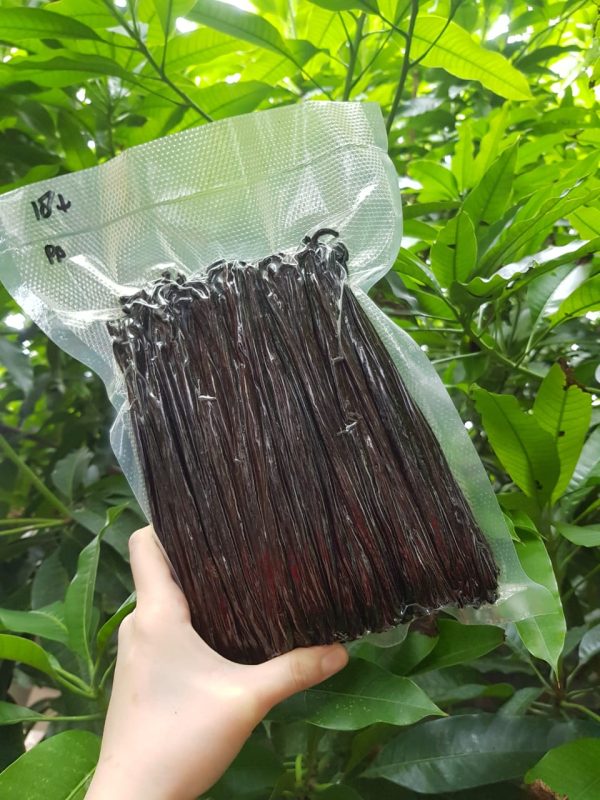
The 15-month journey from flower to finished bean starts the morning a woman walks into the orchard at 6 am. She has roughly 6 to 8 hours to make decisions that cannot be undone. Every Vanillature Grade A bean — moisture-tested between 30 and 35%, vanillin confirmed above 2.0% — traces its quality directly back to that moment.
Our 5-stage quality sorting process later confirms what the pollination team made possible. But sorting cannot create quality that wasn’t built at the vine. Sustainable vanilla farming in Indonesia, done with integrity, means recognising that the bean in your kitchen carries the specific decisions of a specific woman — made before sunrise, on a hillside 680 metres above sea level.
At Vanillature, we test every batch and publish the results. The 2.5%+ vanillin content our Sumatra Planifolia consistently achieves is not an accident of geography. It is the outcome of 11 years of expertise, team discipline, and a fair price that makes that expertise worth passing on.
Frequently Asked Questions
Vanilla Grown by the People Who Know It Best
Every Vanillature bean traces back to a specific farm, a specific team, and a 6 am decision made in the North Sumatran highlands. Shop Grade A Sumatra Planifolia or enquire about wholesale partnership with full traceability documentation.
