


Vanilla Knowledge
Why Vanilla Farming in Papua Is Different from Sumatra
Jun
Why Vanilla Farming in Papua Is Different from Sumatra
Papua vanilla beans Indonesia grows at more than 1,200 metres above sea level — nearly double the elevation of Vanillature’s North Sumatra farms at 680 metres. That altitude gap alone changes everything: the species grown, the flavour compounds produced, and the way farmers cultivate every vine. This is not a minor regional variation. It is a fundamentally different crop in a fundamentally different landscape.
Papua highland elevation — where Tahitian vanilla grows
North Sumatra volcanic lowland — Planifolia terroir
Tahitian vanillin content + heliotropin for floral depth
Two Islands, Two Completely Different Soils
Sumatra’s vanilla farms sit on volcanic lowland soil at 680 metres above sea level in North Sumatra. Centuries of volcanic activity have left the ground dense with minerals. That mineral richness drives the high vanillin content Sumatra Planifolia is known for — consistently above 2.5%, against an industry average of 1.5–2.0%.
Papua’s growing zones are highland rainforest, with farms operating above 1,200 metres. The soil is deep, ancient, and organically rich — but not volcanic. Rainfall is heavier and more frequent. The temperature drops 10–12°C lower than Sumatra’s lowland farms on a typical growing day.
Those environmental differences determine which vanilla species can thrive. Vanilla tahitensis — the Tahitian variety — is better adapted to Papua’s cool, moist highlands. Vanilla planifolia performs at its peak in Sumatra’s warmer, mineral-rich volcanic belt. As Havkin-Frenkel & Belanger (2011) document, regional terroir — including elevation, humidity, and soil mineralogy — directly shapes the enzymatic processes that produce a vanilla bean’s final aromatic profile.

Tahitian vs. Planifolia: A Completely Different Flavour Architecture
Sumatra Planifolia delivers intense, deep vanilla flavour driven almost entirely by vanillin — the compound above 2.5% in every batch we test. That profile is warm, woody, and powerful. It anchors baked goods, custards, and cream-based desserts.
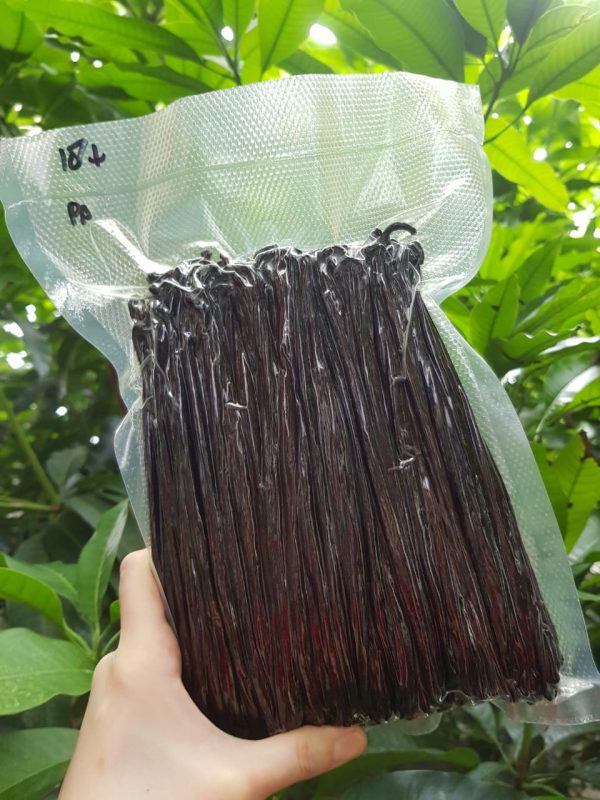
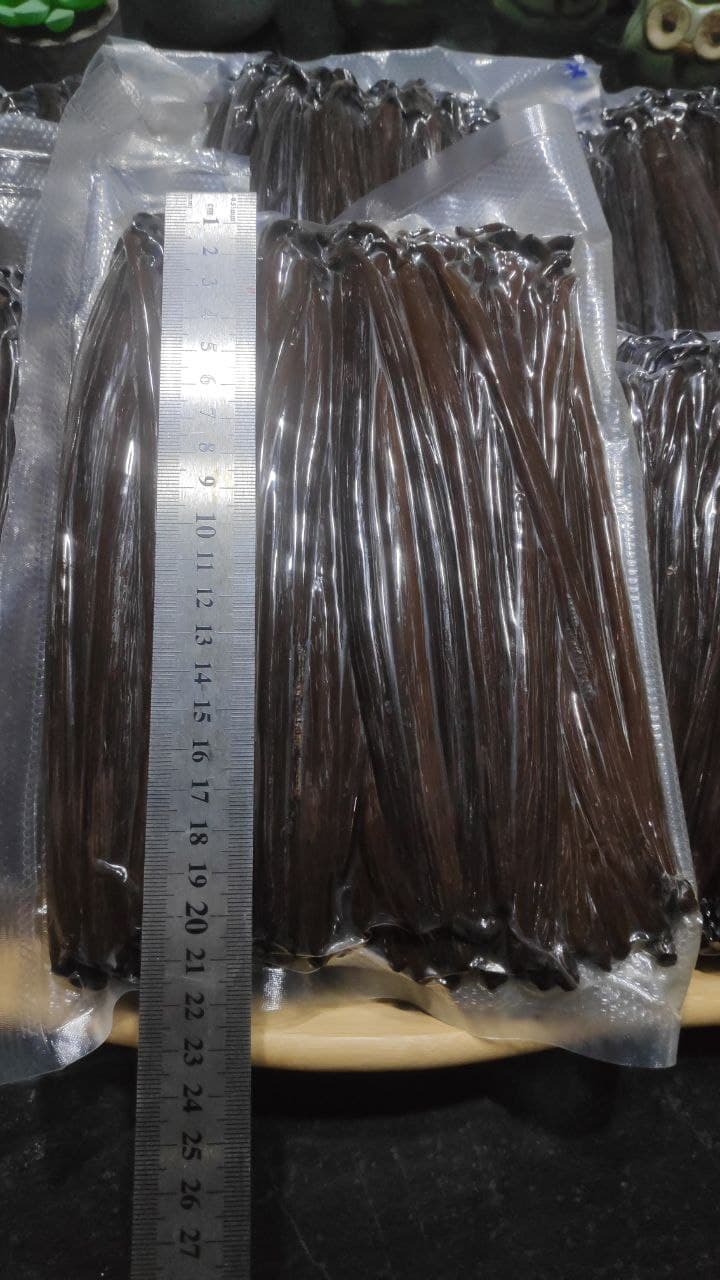
Papua Tahitian vanilla produces vanillin at 0.5–1.5%, which is lower by design, not by deficiency. What replaces that intensity is heliotropin — also called piperonal — a secondary aromatic compound that creates distinct cherry, floral, and anise notes. The bean is also physically different: thicker, moister, and higher in natural fat content, which carries those delicate aromatics well in cold preparations.
Papua vanilla beans from Indonesia express a flavour profile that chefs prize for raw desserts, ice creams, panna cotta, and confectionery where a lighter, floral top note matters more than deep, baked-vanilla warmth. Neither profile is superior. They serve different culinary purposes precisely.
| Factor | North Sumatra Planifolia | Papua Tahitensis |
|---|---|---|
| Elevation | 680 m, volcanic lowland | 1,200 m+, highland rainforest |
| Soil type | Volcanic, mineral-rich | Deep organic, non-volcanic |
| Primary compound | Vanillin 2.5%+ (industry avg 1.5–2.0%) | Vanillin 0.5–1.5% + heliotropin |
| Flavour character | Deep, warm, woody, intense | Floral, cherry, anise, delicate |
| Best culinary use | Baking, custards, dairy desserts | Raw desserts, ice cream, confectionery |
| Bean texture | Firm, supple | Thick, moist, high fat content |
| Pollination window | 6–8 hours (flowers open 6am–9am) | 6–8 hours (same constraint) |
How Farming Practice Differs Between the Two Islands
On both islands, every single flower is hand-pollinated within a 6–8 hour window each morning. The flower opens between 6am and 9am and closes permanently by mid-afternoon. Miss that window and the flower produces no bean. This constraint is identical whether a farmer stands in Sumatra or Papua.
What differs is the physical environment around that task. Sumatra farmers work in warmer, drier conditions with more predictable dry-season windows. Papua highland farmers work in heavier, more unpredictable rainfall. That rain can close access to remote vines. Timing requires closer daily observation — farmers must move through dense highland forest to reach vines that grow up host trees at altitude.
Curing also differs. Both origins use traditional sun curing over 3–6 months. But Papua’s higher humidity means farmers must manage moisture more carefully during the sweating phase to prevent mould without over-drying the thick, fat-rich Tahitian bean. The 9-month vine maturation period remains consistent across both origins before any curing begins.
“In Papua the rain can come every day, sometimes twice. You learn to read the sky before you walk out to the vines. If you wait for a perfect dry morning, you will miss the flowers. We go out early, we pollinate fast, and we trust the forest. The beans that come from this place taste like nothing else — light and sweet, like flowers, not just vanilla.”
— Bu Marlina, vanilla farmer, Papua, 8 years cultivating Tahitian variety
The Farmer Relationship: Remote Communities, Direct Traceability
Vanillature’s Sumatra network spans 500+ smallholder farmers concentrated across North Sumatra — in Deli Serdang, Tapanuli, and Simalungun. Farm density is relatively high and transport infrastructure connects most growers to our processing partners within a few hours.
Papua is different in scale and geography. Farms sit in remote highland communities where road access can be limited to certain seasons. The farmer relationships here are built on longer lead times and deeper community trust. Sourcing from Papua is not simply a procurement decision — it is a commitment to serving communities where vanilla is one of very few export-quality cash crops.
Indonesia produces approximately 2,300 tonnes of vanilla annually, making it the world’s second-largest producer after Madagascar (FAO, 2023). Papua represents a smaller but growing share of that output. Supporting Papua’s farmers directly means those highland communities retain full value from a crop that takes approximately 15 months from first flower to finished, cured bean.
Explore Papua Vanilla Beans from Vanillature
We source two distinct Papua vanilla beans Indonesia products — one Tahitian, one Bourbon — from highland farms above 1,200 metres. Every batch passes our 5-stage quality sorting process before leaving the farm. Grade A beans hold moisture at 30–35% and vanillin above the grade threshold. Grade B beans finish at 15–25% moisture.
Both products carry full single-origin traceability. You know the island, the elevation, and the farming method behind every bean in the package.
Papua Tahitian Vanilla Beans
Floral, cherry, anise profile. Vanillin 0.5–1.5% plus heliotropin. Ideal for raw desserts, ice cream, and cold-infused applications.
Papua Bourbon Vanilla Beans
Grown at Papua highland elevation. Rich, complex character. Single-origin traceability. 5-stage quality sorted.
Frequently Asked Questions
Papua vanilla beans from Indonesia grow above 1,200 metres in highland rain
