


Vanilla Knowledge
A Day in the Life of a Vanilla Farmer in North Sumatra
Jun
5am. The mist is still on the hills above Toba when the work begins. A day on a vanilla farm in North Sumatra is not what most people imagine — and the 6-hour daily window that determines an entire harvest makes every sunrise non-negotiable.
Before Dawn: The Farm Wakes at 680 Metres
Vanilla farming in Indonesia demands an early start that no alarm clock makes easy. At 680 metres above sea level in North Sumatra, the pre-dawn air carries both chill and the faint green scent of vine and wet earth. Farmers arrive at their plots before 5:30am. The mist between the trees is still thick.
The reason for the urgency is biological. Vanilla planifolia flowers open for a window of just 6 to 8 hours each day — and that window begins at 6am. Miss it, and the flower closes unpollinated and drops within 24 hours. There is no second chance, and there are no machines that can replace the human hand at this scale.
The FAO documents vanilla as one of the most labour-intensive spice crops in the world. Smallholder farms, which account for the vast majority of Indonesia’s approximately 2,300 tonnes of annual production, require at least one skilled worker per hectare during peak flowering — each worker capable of hand-pollinating 1,000 to 1,500 flowers per day (FAO, 2023).
Source: FAO, 2023 — Vanilla: Hand Pollination Labour Requirements and Smallholder Productivity
6am: The 6-Hour Window That Cannot Wait
Vanilla flowers are both male and female, but they are separated by a flap of tissue called the rostellum. In the wild, only one species of bee — the native Melipona bee of Mexico — can bridge that gap. Outside of Mexico, every single flower must be pollinated by hand, every single day during the flowering season.
The technique is precise. A farmer uses a thin bamboo splinter or a pointed leaf stem to lift the rostellum flap and press the anther cap against the stigma. The entire motion takes under 10 seconds per flower. But a single vanilla vine can produce 20 or more flowers simultaneously, and a farm of 500 vines demands fast, accurate work across the entire morning window.
Pak Budi, who has cultivated Planifolia in North Sumatra for 14 years, describes the physical reality clearly:
“You move along the row and the flowers are open, waiting. You cannot stop to rest because by 9am they begin to close. Some mornings I pollinate 1,200 flowers before breakfast. Your fingers know what to do — you stop thinking about it after the first year. But you never stop paying attention.”
— Pak Budi, vanilla farmer, North Sumatra, 14 years cultivating Planifolia
A successfully pollinated flower takes 9 months to mature into a harvestable bean on the vine. The arithmetic of that morning’s work is staggering: each 10-second motion sets in motion nearly a year of biological development.
Mid-Morning: Vine Monitoring and Terroir Management
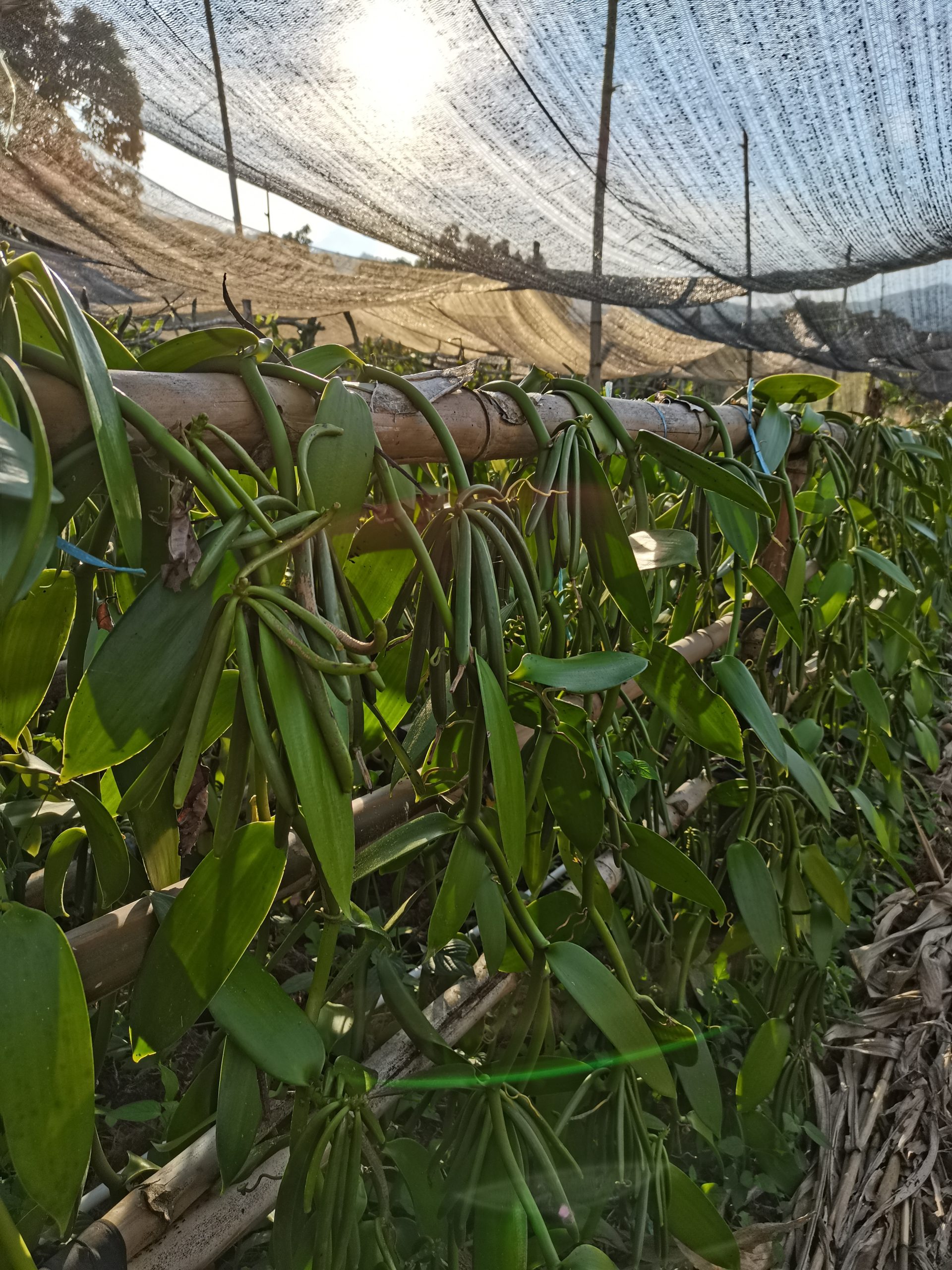
By 9am, the pollination work is complete and the flowers have closed. The second phase of the day begins: inspecting every vine for disease, pest pressure, and structural integrity. At 680 metres above sea level in North Sumatra, the combination of volcanic soil, high humidity, and consistent temperatures between 20°C and 30°C creates ideal conditions for Vanilla planifolia — but those same conditions also favour fungal disease.
Farmers in our network of 500+ smallholders check each vine’s attachment points to its support tree. Vanilla is a climbing orchid — it grows up living shade trees, and the relationship between vine and canopy directly affects bean quality. Too much direct sunlight reduces vanillin precursor accumulation. Too much shade slows vine development. Experienced farmers adjust canopy density by hand, removing individual branches to calibrate light.
They also tag each pollinated flower with a small coloured thread, recording the pollination date. Nine months later, that tag tells the harvester exactly when each individual bean is ready.

Afternoon: Harvest, Sorting, and the Start of Curing
Harvest does not happen on a schedule — it happens bean by bean. Each vanilla pod is harvested individually at peak ripeness, when the tip of the bean begins to turn yellow. Harvesting even 2 weeks too early produces a bean with lower vanillin content and poor moisture retention during curing.
Vanillature Grade A beans test above 2.5% vanillin content — against an industry average of 1.5–2.0%. That difference begins here, in the field, with harvest timing accurate to within days.
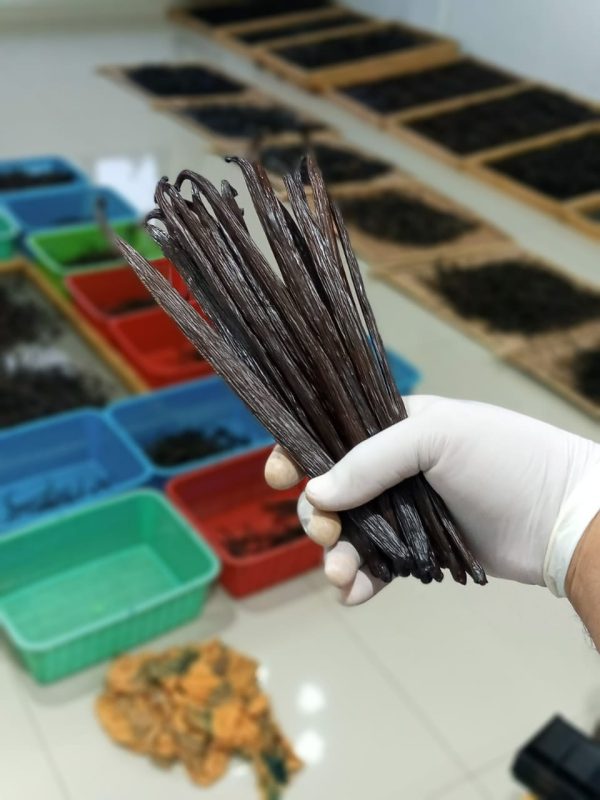
After harvest, beans enter a 3-to-6-month traditional curing process: blanching in hot water, daily sweating under wool blankets, and slow sun drying on open racks. The enzymatic reactions during curing convert glucovanillin into free vanillin — the compound responsible for the flavour and aroma that makes vanilla farming in Indonesia commercially viable at premium prices.
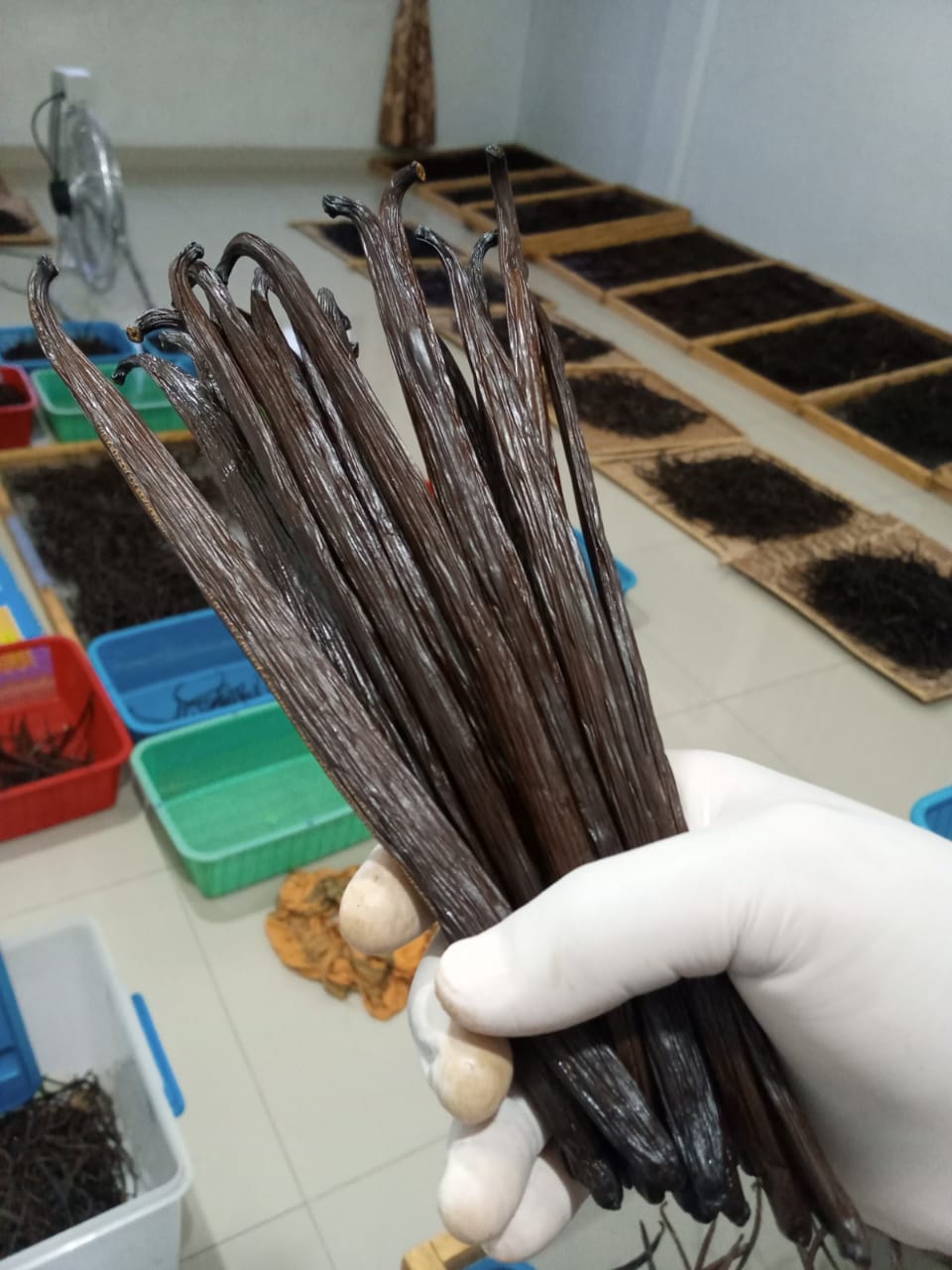
At Vanillature, every batch passes a 5-stage quality sorting process before it reaches a customer. Grade A beans carry 30–35% moisture and test above 2.0% vanillin. Grade B beans carry 15–25% moisture and test above 1.0% vanillin. Our Crystal Vanilla — where surface vanillin crystalises visibly on the bean — tests at 3.5–4%, the highest in our range.
Evening: Why This Labour Produces Exceptional Flavour
The total time from a single hand-pollinated flower to a finished, cured vanilla bean is approximately 15 months. That figure — 15 months of attention, labour, and environmental calibration — explains more about vanilla pricing than any market report.
Vanilla farming in Indonesia at the smallholder level is not factory agriculture. It is 500+ individual farmers making 1,000+ individual decisions per day during flowering season, each one directly traceable to what ends up in a jar on a kitchen shelf. The elevation, the volcanic soil, the hand-pollination technique practised across 14-year careers — every element compounds into the vanillin percentage we measure at testing.
By evening, Pak Budi has walked 8 to 12 kilometres across his plots. He will be back before 5:30am tomorrow. The flowers do not wait, and neither does the season.
Frequently Asked Questions: Vanilla Farming in North Sumatra
Vanilla must be hand-pollinated in Indonesia because the native Melipona bee — the only insect capable of natural pollination — exists only in Mexico. Each flower opens for a window of just 6 to 8 hours per day, requiring skilled farmers to pollinate 1,000 to 1,500 flowers daily by hand during the flowering season. This is why vanilla farming in Indonesia is documented by the FAO as one of the most labour-intensive spice crops in the world (FAO, 2023).
Producing a finished vanilla bean takes approximately 15 months from flower to finished product. After hand-pollination, beans mature on the vine for 9 months. They then undergo 3 to 6 months of traditional curing — including blanching, sweating, and slow sun drying — before reaching the quality sorting stage. This extended timeline at 680 metres above sea level in North Sumatra directly contributes to the vanillin content consistently above 2.5% in Vanillature Grade A beans.
North Sumatra produces exceptional vanilla because of its combination of volcanic soil, high humidity, and consistent temperatures between 20°C and 30°C at 680 metres above sea level. This elevation creates the temperature differential that slows vine growth and concentrates vanillin precursors in the developing bean. Indonesia produces approximately 2,300 tonnes of vanilla annually — the second-largest volume globally after Madagascar — and the North Sumatra highlands account for a significant share of the country’s premium-grade output.
Vanillature sources directly from a network of 500+ smallholder farmers across North Sumatra and Papua, Indonesia. Every farmer in the network hand-pollinates their own vines during the 6-to-8-hour daily flowering window, maintains vine and canopy management by hand, and harvests each bean individually at peak ripeness. This direct smallholder sourcing model — with no intermediary traders — is the reason traceability and consistent quality are achievable across every batch.
Taste 15 Months of Work in Every Bean
Every Vanillature bean carries the direct labour of a North Sumatra farmer — hand-pollinated, vine-matured for 9 months, and slow-cured to above 2.5% vanillin. This is vanilla farming in Indonesia at its most traceable.
Vanillature holds a 5.0 star rating from 174+ verified buyers on eBay, with additional verified ratings on Shopee and TikTok Shop Indonesia — independently confirmed quality across three separate platforms.
