


Vanilla Knowledge
What Makes Grade A Vanilla Beans Worth the Premium?

Jul
What Makes Grade A Vanilla Beans Worth the Premium?
Grade A vanilla beans cost more than Grade B — and that difference is visible, tangible, and flavourful from the moment you open the package. The gap starts with moisture: Grade A beans measure 30–35% moisture content, against 15–25% for Grade B. That extra water isn’t dead weight. It carries the aromatic compounds that make vanilla worth using at all.
The Official Standard: What Grade A Actually Measures
Grade A vanilla beans meet 3 measurable criteria. Moisture sits between 30–35%. Bean length reaches at least 15 cm. And vanillin concentration tests above 2.0%, with premium lots reaching 2.5% or higher. Research published in Food Chemistry confirms that moisture content is the single most reliable indicator of flavour retention and shelf usability in cured vanilla beans (Dunphy et al., 2020).
Moisture isn’t incidental. It directly preserves the volatile aromatic compounds — including vanillin, heliotropin, and p-hydroxybenzaldehyde — that give vanilla its full sensory character. A drier bean has already lost a measurable portion of those compounds before it reaches your kitchen.
At Vanillature, we test every batch through a 5-stage quality sorting process. Each bean is assessed for moisture, length, oiliness, visual integrity, and vanillin concentration before grading. Anything below the Grade A threshold is accurately labelled and priced accordingly.
Why Moisture Percentage Changes Everything in the Kitchen
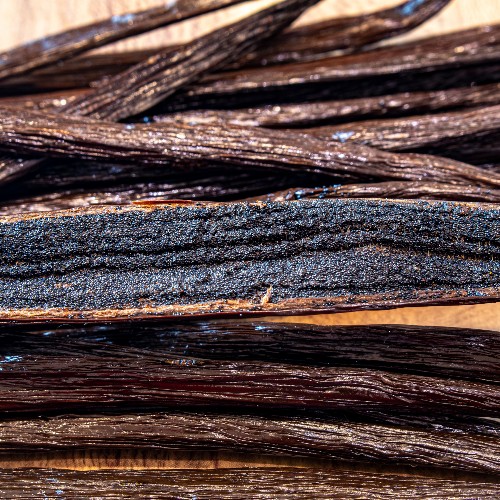
A Grade A bean at 30–35% moisture is pliable, almost waxy to the touch. It splits cleanly down the centre. The seeds — the caviar — release with a single scrape of a knife edge. You get approximately 3–4 times more usable seeds per bean than you would from a brittle, under-hydrated Grade B specimen.
That physical difference translates directly to yield. A single Grade A bean measuring 16 cm delivers enough seeds to flavour 1 litre of crème brûlée or 500 g of pastry cream at full intensity. You use 1 bean where you might use 2 Grade B beans. The premium narrows considerably when calculated per flavour unit.
The enzymatic processes that drive vanillin development during the 3–6 month curing phase are most effective at higher moisture levels (Havkin-Frenkel & Belanger, 2011). Grade A beans complete that process fully. The resulting vanillin concentration above 2.0% — and in Vanillature’s Sumatra Planifolia, consistently above 2.5% — is a direct outcome of preserving moisture through every stage of production.
Grade A vs Grade B: A Direct Comparison
| Attribute | GRADE A | GRADE B |
|---|---|---|
| Moisture content | 30–35% | 15–25% |
| Minimum length | 15 cm+ | 10 cm+ |
| Vanillin threshold | Above 2.0% | Above 1.0% |
| Texture | Pliable, oily, flexible | Firm, drier, less oily |
| Best use | Pastry, custard, infusions, gifts | Extract-making, dry baking, spice blends |
| Seed yield | High — full pod of caviar | Moderate — fewer seeds extracted |
“When I sort for Grade A, I am looking for 3 things: the bean bends without cracking, the skin looks dark and shiny, and when I press it gently I feel the seeds inside. A dry bean tells me the flavour has already gone somewhere else.”
— Pak Rudi, vanilla farmer, Tapanuli, North Sumatra, 9 years cultivating Planifolia
Where Grade A Makes the Most Measurable Difference
Not every application demands Grade A. But 5 specific uses show a clear, tasted difference that Grade B cannot match.
Vanilla custard and crème brûlée — the liquid medium extracts volatile aromatics directly from the seeds. Higher vanillin content at 2.5%+ produces a noticeably deeper, warmer flavour than the 1.0–1.5% vanillin of lower-grade material.
Vanilla sugar — pods buried in sugar for 2–4 weeks transfer aromatics through moisture exchange. Grade A beans at 30–35% moisture actively release compounds over the full infusion period. A Grade B bean at 15% moisture exhausts its transfer potential within days.
Vanilla ice cream and panna cotta — cold-set dairy shows visual seed distribution. A 16 cm Grade A bean produces a seed density that Grade B 10 cm specimens cannot approach. The difference is visible on the spoon.
Vanilla extract production — though Grade B is often cited as the “extract-maker’s choice” for economy, professional extract producers using Grade A beans at 2.5%+ vanillin achieve target flavour concentration in 6 weeks rather than the 10–12 weeks typical with lower-vanillin material.
Gifting and presentation — a Grade A bean 15–17 cm long, placed in a glass jar, communicates quality before anyone smells it. Grade A vanilla beans are the standard for food gifts in professional and premium retail contexts.
The 15-Month Journey Behind Every Grade A Bean
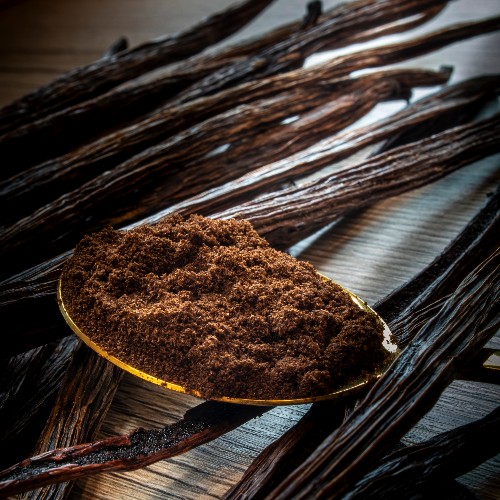
Grade A vanilla beans don’t arrive at that moisture level by accident. Each bean at Vanillature’s North Sumatra farms spends 9 months maturing on the vine at 680 metres above sea level. The altitude controls temperature variation and slows cell development in ways that concentrate aromatic precursors.
After harvest, beans enter a 3–6 month traditional sun-curing cycle. Farmers alternate daily sun exposure with nighttime sweating in sealed boxes — a process that drives enzymatic conversion of glucovanillin into free vanillin. Rushing or shortcutting any stage produces a bean that dries unevenly or fails to reach the 2.0% vanillin threshold required for Grade A classification.
The total journey from flower to finished Grade A bean takes approximately 15 months. That timeline — and the 500+ smallholder farmers who manage it with seasonal precision — is exactly what the premium reflects.
Sourcing note: Vanillature’s Grade A vanilla beans are sorted through a 5-stage quality process. Beans that fall below 15 cm length, 30% moisture, or 2.0% vanillin are graded accurately and sold as Grade B at a lower price — never blended up into Grade A stock.
Frequently Asked Questions
Grade A vanilla beans measure 30–35% moisture content by weight. This elevated moisture level preserves volatile aromatic compounds — including vanillin at concentrations above 2.0% — and keeps the bean pliable and seed-rich through storage. Beans below 30% moisture are classified Grade B, where moisture typically falls between 15–25%. Research confirms moisture percentage as the primary quality marker in cured vanilla (Dunphy et al., 2020).
Grade A vanilla beans must measure at least 15 cm in length. Length correlates with seed density and total aromatic yield per bean. Vanillature’s Sumatra Planifolia Grade A beans typically range from 15–18 cm. Shorter beans — below 15 cm — are graded as Grade B regardless of their moisture or vanillin content, since seed extraction yield drops significantly at shorter lengths.
Buy Grade A vanilla beans for applications where visual seeds, aroma intensity, and direct-pod use matter — custards, ice cream, vanilla sugar, crème brûlée, and gifts. Grade A vanillin starts above 2.0% and reaches 2.5%+ in Vanillature’s Sumatra lots, delivering
