


Vanilla Knowledge
Vanilla Bean Paste: The Professional Baker’s Secret Weapon
Jul
Vanilla Bean Paste: The Professional Baker’s Secret Weapon
Each teaspoon of vanilla bean paste carries between 100 and 200 individual seeds. That single fact explains why professional pastry chefs reach for it every time appearance and depth of flavour both matter.
What Vanilla Bean Paste Actually Is
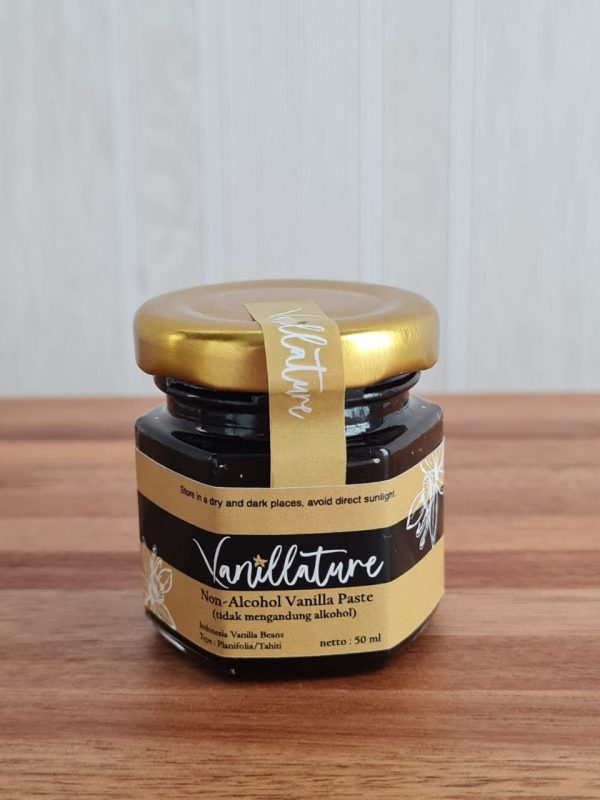
Vanilla bean paste is not a shortcut version of whole beans. It is a precise formulation: vanilla seeds suspended in a sugar-syrup base, fortified with concentrated vanilla extract. The result delivers both the visible caviar of a split pod and the liquid convenience of extract — in a single ingredient.
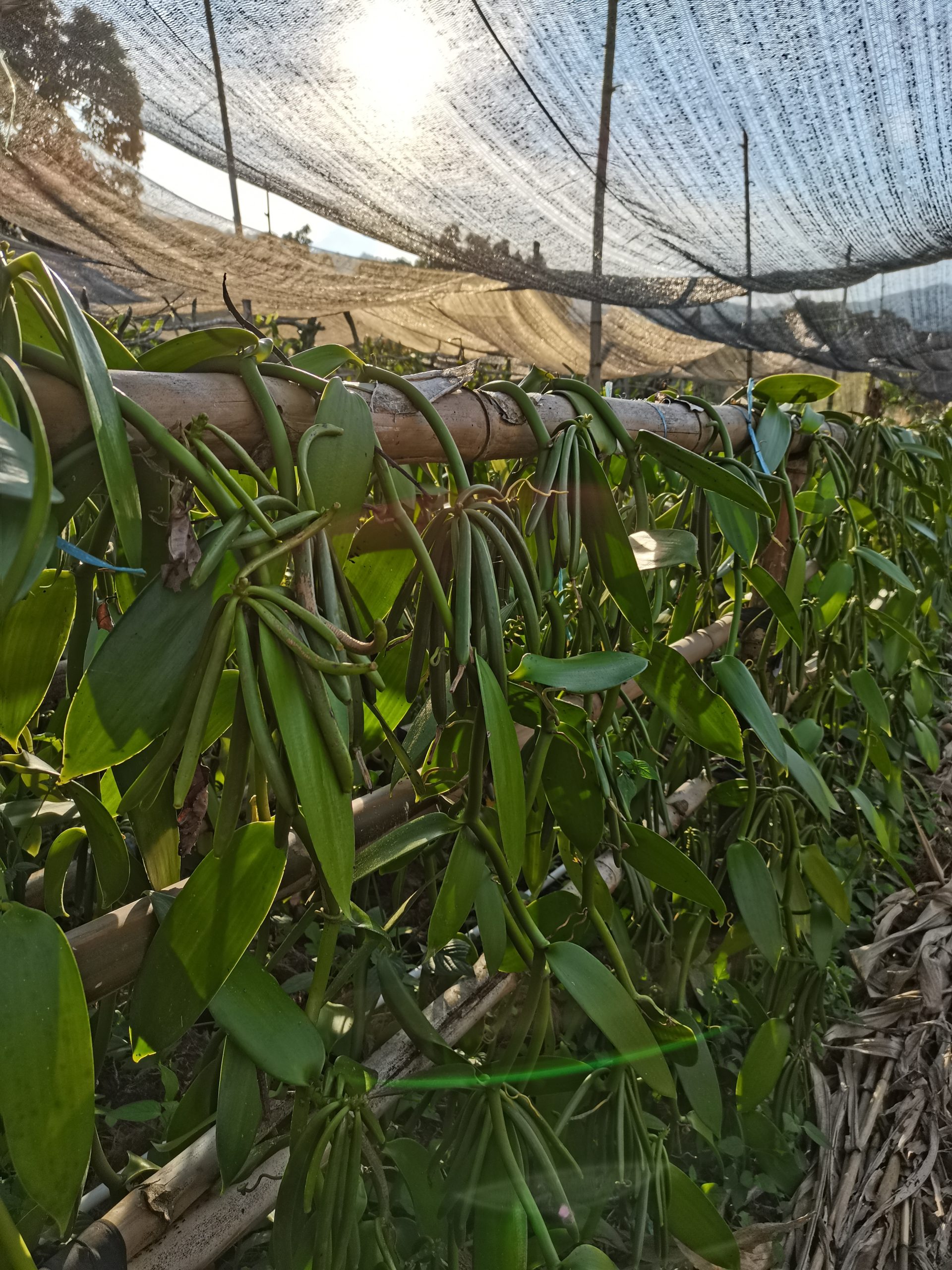
The flavour base matters as much as the seeds. Vanillature paste uses a 2.5%+ vanillin extract foundation — above the industry average of 1.5–2.0% — sourced from Sumatra Planifolia beans grown at 680 metres above sea level in North Sumatra. That elevation forces slower maturation, concentrating aromatic compounds in the bean before it is ever processed.
Research by Havkin-Frenkel & Belanger (2011) in the Handbook of Plant and Crop Science confirms that properly cured Planifolia beans release vanillin through enzymatic hydrolysis of glucovanillin during the sweating phase. Paste production preserves those same volatile compounds in suspension, giving paste a richer, more stable flavour profile than extract alone.
When to Use Paste Over Extract or Whole Beans
Choose vanilla bean paste baking applications whenever the finished dish is white, pale, or translucent. Crème brûlée, vanilla ice cream, buttercream frosting, panna cotta, and white chocolate ganache all benefit from visible specks. In these preparations, the seeds signal quality before a single bite.
Use whole beans when infusing a liquid over heat — custard bases and cream sauces respond well, because 9 months of vine maturation leaves the pod itself aromatic. Use extract in dense, dark batters such as chocolate cake, where the colour of the seeds is lost anyway.
Vanilla bean paste baking also wins in professional speed. Splitting and scraping a bean takes 45–60 seconds per pod. Measuring paste takes 5 seconds. In high-volume production — patisseries running 200+ portions per service — that time saving compounds significantly across a shift.
The 1:1 Substitution Rule — and Why It Works
One teaspoon of vanilla bean paste equals one teaspoon of vanilla extract. This 1:1 substitution holds across virtually every recipe because paste is formulated to match extract concentration, with the addition of seeds and a small amount of thickening agent — typically sugar syrup or gum — that dissolves completely during baking.
For whole beans, the standard conversion is 1 pod = 1 teaspoon of paste = 1 teaspoon of extract. A standard Grade A Vanillature bean contains roughly 15–17 centimetres of seed-filled cavity, yielding the equivalent of 1 teaspoon of paste when scraped. The paste delivers that yield instantly with no waste and no pod disposal.
The sugar-syrup carrier is measured at approximately 20–25% of paste composition. That amount does not alter most recipe balances. In very low-sugar recipes — such as savoury vanilla applications or keto baking — account for this small addition by reducing another sweetener by a proportional amount.
“When I cure slowly for 4 to 5 months under the Deli Serdang sun, the beans develop this deep, almost creamy scent. That character carries into the paste exactly. People say they can taste the difference — I believe them.”
— Bu Sari, vanilla farmer, Deli Serdang, North Sumatra — 11 years cultivating Planifolia, specialist in slow curing and Crystal Vanilla
Why the Specks Matter More Than You Think
Those black specks are not decoration. Each speck is a vanilla seed — one of the 100 to 200 seeds per teaspoon suspended in every measure of paste. They carry aromatic compounds and signal to every diner that real vanilla was used, not a synthetic alternative built on heliotropin or artificial vanillin.
In consumer research, desserts visibly flecked with vanilla seeds consistently score higher on perceived quality and willingness to pay. A plain white vanilla ice cream and a speckled scoop can contain identical vanillin concentrations — yet the specked version is perceived as premium. Paste delivers that visual marker without any extra labour.
For vanilla bean paste baking in buttercream specifically, the visual result is striking. A standard batch of American buttercream made with 2 teaspoons of paste shows dense speckling across frosting that photographs powerfully — relevant in an era when food presentation drives social reach and repeat orders.
Shelf Life, Storage, and How to Know You Have a Quality Paste
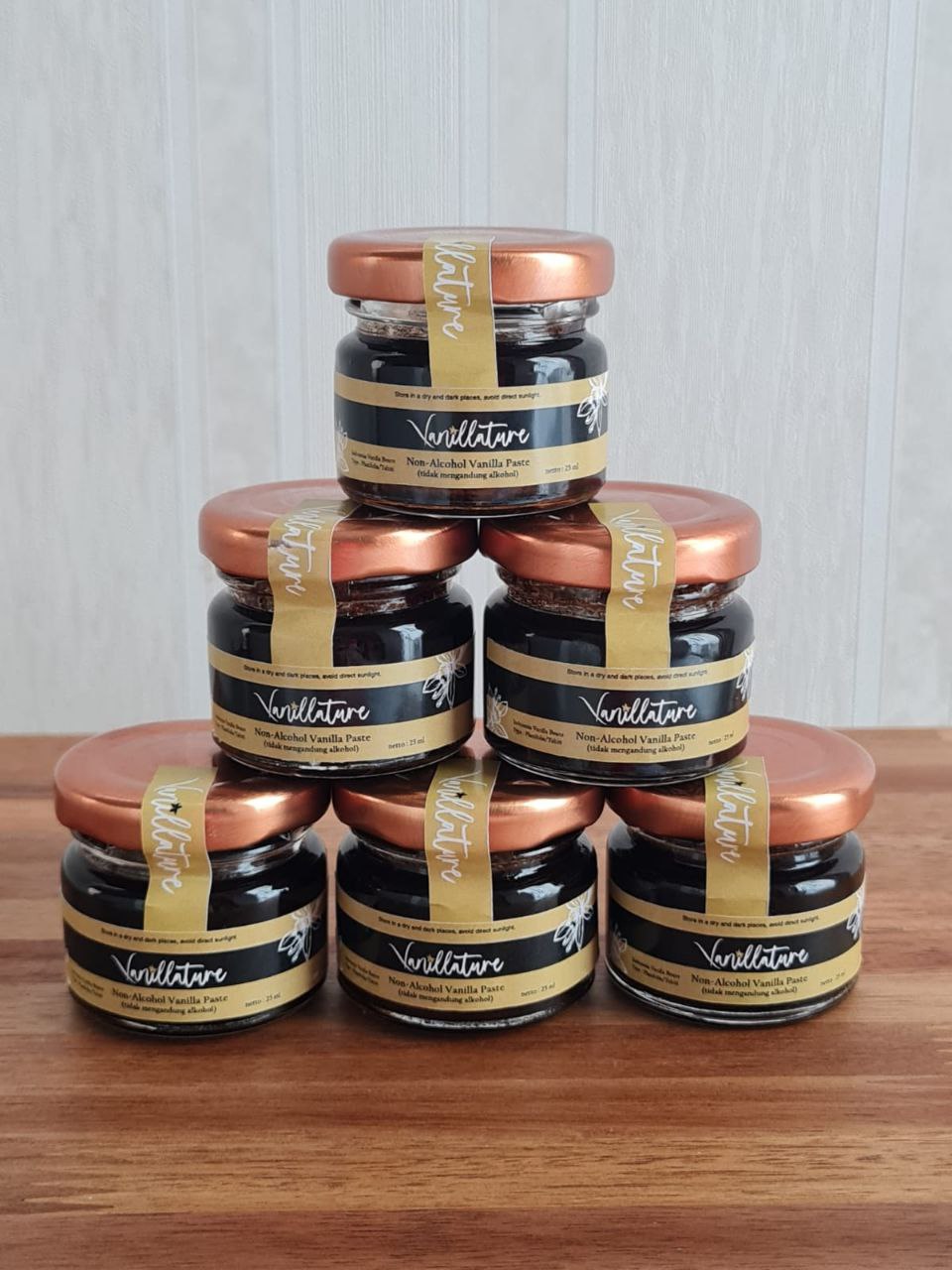
Vanilla bean paste stores for 2 to 3 years when kept in an airtight container away from direct light and heat. Unlike whole beans — which require 30–35% moisture maintenance to stay pliable — paste is shelf-stable in its sugar suspension without refrigeration.
A quality paste is thick but pourable. It coats a spoon. Seeds are evenly distributed rather than settled at the base — a sign of proper formulation and fresh production. The aroma is immediate: warm, floral, and complex, without the sharp alcohol edge of a low-quality extract.
Vanillature paste draws on the same Sumatra Planifolia beans that pass our 5-stage quality sorting process. Each batch is tested to confirm a 2.5%+ vanillin baseline before processing. When you open a jar, the density of specks and the depth of aroma confirm what the numbers already guarantee.
Frequently Asked Questions
Bring Professional Pastry Results to Your Kitchen
Vanillature vanilla bean paste is built on 2.5%+ vanillin Sumatra Planifolia beans — the same beans trusted by 500+ smallholder farmers across North Sumatra. Every jar is thick, seed-dense, and formulated for the 1:1 substitution your recipes call for.
Vanillature holds a 5.0 star rating from 174+ verified buyers on eBay, with additional verified ratings on Shopee and TikTok Shop Indonesia — independently confirmed quality across three separate platforms.
