


Vanilla Knowledge
Crème Anglaise: The Vanilla Custard Sauce That Goes With Everything
Jul
Strip away the cream, the egg yolks, and the sugar, and a perfect crème anglaise recipe vanilla edition is left with exactly one flavour: vanilla. That is why a single Grade A bean — carrying 2.5%+ vanillin — is not a luxury in this sauce. It is the entire point.
What Crème Anglaise Actually Is — and Why Vanilla Cannot Hide Here
Crème anglaise is a stirred egg custard, not a set one. It contains no starch, no cornflour, no gelatine. Only cream, yolks, sugar, and vanilla hold the sauce together. That austerity is the whole challenge.
In a chocolate mousse, cocoa carries the flavour. In a berry coulis, fruit acid dominates. In crème anglaise, vanilla is exposed with nowhere to hide. A thin, synthetic, or poorly cured bean produces a flat, one-dimensional sauce that tastes of effort rather than pleasure.
This is also why the creme anglaise recipe vanilla pairing is so precise in classical French pastry. Escoffier’s 1903 Le Guide Culinaire specifies “fine vanilla” as non-negotiable — the quality instruction, not the quantity one.
Crème anglaise flowing over a dark chocolate pudding — the ribbon stage in action
The Science: How Vanillin Behaves at 82°C
Vanillin (4-hydroxy-3-methoxybenzaldehyde) is volatile — it releases aromatic compounds under gentle heat. Research confirms that custard applications between 75°C and 85°C represent the optimal window for vanillin expression, before degradation accelerates (Havkin-Frenkel & Belanger, 2011).
At exactly 82°C, two things happen simultaneously. The egg proteins thicken the sauce to nappe — the stage where it coats the back of a spoon and a line drawn with a finger holds. And the vanilla compounds reach peak aromatic volatility, filling the kitchen with that deep, heliotropin-laced scent that synthetic vanillin cannot replicate.
Vanillature Sumatra Planifolia Grade A beans test above 2.5% vanillin, against the industry average of 1.5–2.0%. That additional compound density matters acutely in a sauce this simple. More vanillin means more aroma released at temperature — with nothing else in the recipe to compensate for a shortfall.
Heat stability note: Vanillin survives brief cooking well. The danger in crème anglaise is not heat — it is overheating past 85°C, which scrambles egg proteins and destroys texture. Keep one thermometer in the pot and pull the sauce at 82°C, every time.
The Foolproof Method: Step by Step to the Ribbon Stage
Use 500 ml full-fat cream, 6 egg yolks, 80 g caster sugar, and 1 Grade A vanilla bean minimum. Split the bean lengthways and scrape every seed into the cream before heating. Drop the spent pod in too — it still holds aromatic oils.
Heat the cream to 70°C — just below simmering — then remove the pod. Whisk the 6 yolks and sugar together until the mixture ribbons off the whisk, about 90 seconds of firm whisking. This step dissolves the sugar fully and slightly aerates the yolk proteins, which protects them from sudden heat shock.
Pour the warm cream into the yolk mixture slowly, one third at a time, whisking constantly. This tempering step raises the yolks’ temperature gradually. If you pour all 500 ml at once, you scramble the outside while the centre stays cold — and the sauce splits.
Return everything to the pot over medium-low heat. Stir continuously with a silicone spatula, reaching every corner of the base. Watch the thermometer. At 80°C, the sauce begins to thicken noticeably. At 82°C, draw a line across the spoon — if it holds cleanly, the creme anglaise recipe vanilla custard is done. Strain immediately through a fine sieve into a cold bowl.
Digital thermometer showing 82°C — the nappe point where the sauce coats cleanly and vanilla aroma peaks
“When I harvest, I check the bean tip — a small yellow split means the vanillin is fully developed inside. A bean picked one week too early will smell of green, not of sweetness. That green note follows it into any sauce you make, no matter how good your technique is.”
— Pak Irwan, vanilla farmer, Simalungun, North Sumatra, 12 years cultivating Planifolia
Serving Crème Anglaise: 5 Pairings That Prove Its Versatility
The classical French kitchen uses crème anglaise as both sauce and base. Poured warm, it becomes a liquid dessert sauce. Churned cold, it becomes ice cream. Frozen in a mould with gelatine, it becomes a bavarois. One recipe, 5 applications.
- Poached pears: The pear’s acidity cuts the richness of 6-yolk custard perfectly. Serve the pears warm in a shallow pool of sauce.
- Dark chocolate pudding: Bitter cocoa and sweet vanilla are the definitive pairing. Pour cold sauce against a warm pudding for temperature contrast.
- Génoise sponge: A plain sponge becomes something substantial when the sauce is spooned beside it. This is the classic charlotte royale combination.
- Floating islands (île flottante): Poached meringue on crème anglaise is the most naked expression of this sauce — no distraction, pure vanilla flavour.
- Fresh strawberries: Room-temperature sauce with cold macerated berries — simple, seasonal, and the vanilla perfume is at its loudest.
In every pairing, the creme anglaise recipe vanilla element dominates the aftertaste. A bean with 2.5%+ vanillin leaves a 10–15 second aromatic finish that a 1.5% bean simply does not deliver.
Why One Grade A Bean Decides the Entire Sauce
At Vanillature, we test every batch of Grade A beans before dispatch. Grade A moisture sits between 30–35%, which preserves the supple texture and aromatic oils that survive cooking. Grade B beans — dried to 15–25% moisture — suit extraction and baking but lack the wet, oily seed mass that perfumes a custard from the inside.
Vanillature sources from 500+ smallholder farmers in Sumatra and Papua. North Sumatra farms sit at 680 metres above sea level — the elevation and volcanic soil create the terroir that pushes vanillin concentration above the industry average. Indonesia produces approximately 2,300 tonnes of vanilla annually, making it the second-largest producer globally after Madagascar (FAO, 2023).
Each Grade A bean passes a 5-stage quality sorting process before grading is confirmed. For a creme anglaise recipe vanilla preparation, we specify a minimum of 1 Grade A bean per 500 ml cream. For a deeper, more complex profile — particularly when serving the sauce at room temperature where volatile aromatics disperse faster — use 2 beans.
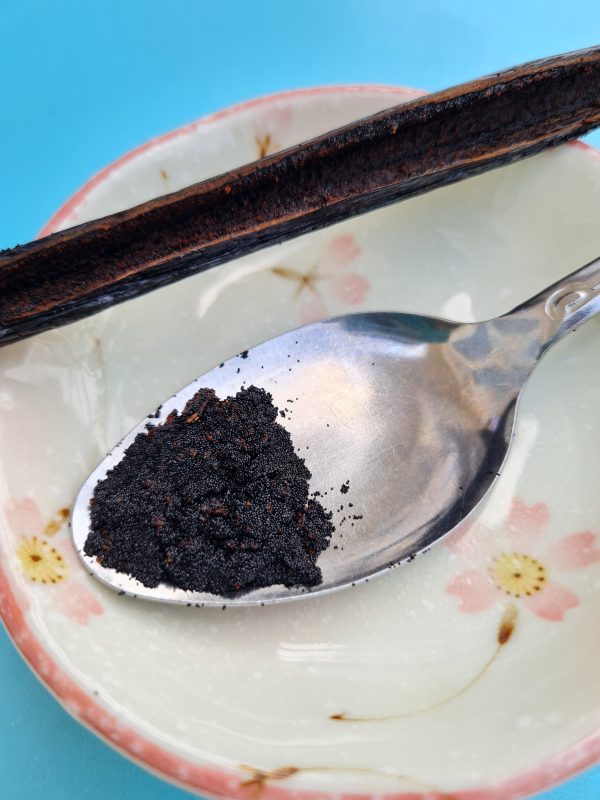
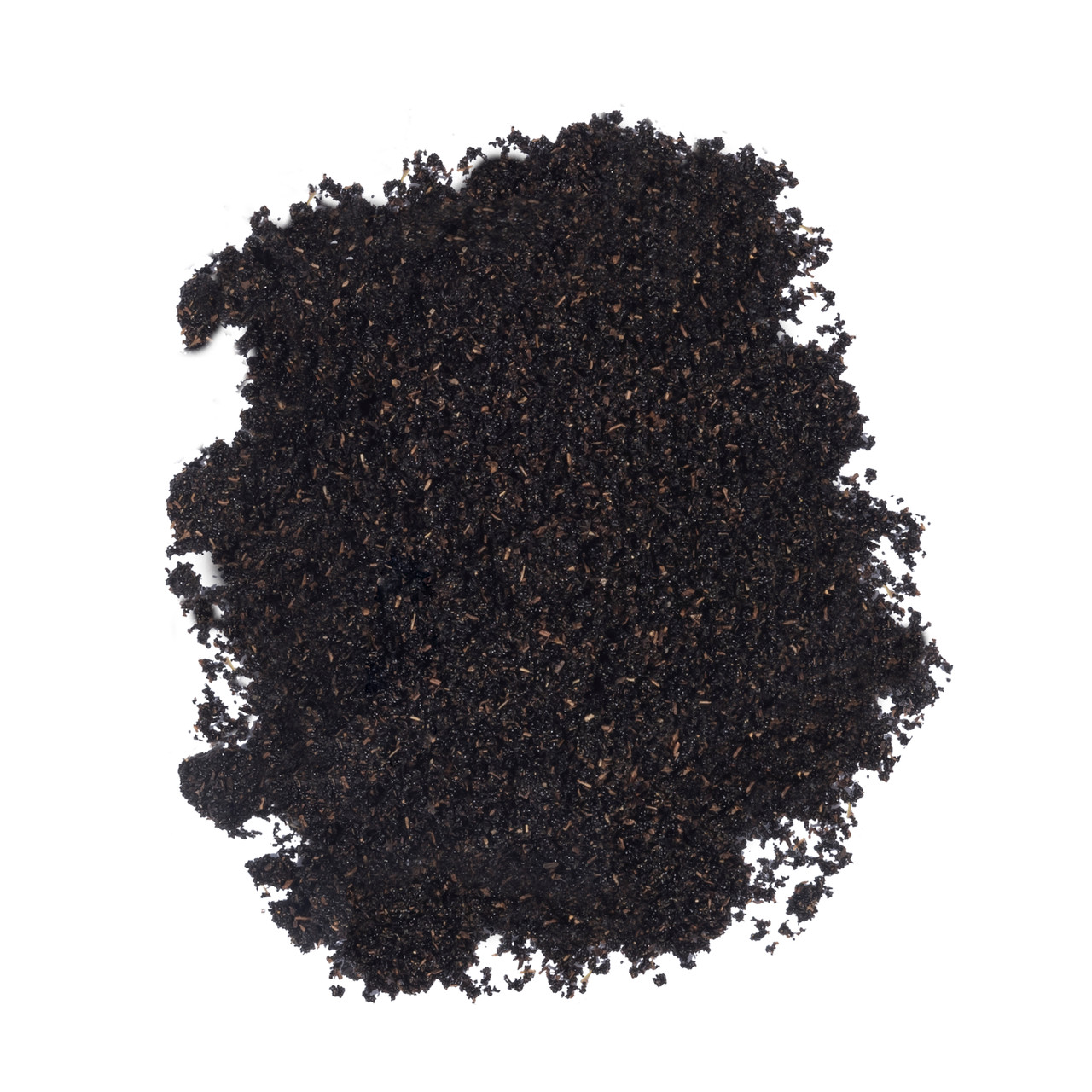
Vanillature Grade A Sumatra Planifolia beans — split open to show the dense, oil-rich seed mass inside
Havkin-Frenkel, D. & Belanger, F.C. (2011). Handbook of Plant and Crop Science: Vanilla. Taylor & Francis. [Cited for vanillin heat stability and classical sauce applications at 75–85°C.] FAO (2023). Crops and Livestock Products — Vanilla production data. Food and Agriculture Organization of the United Nations.
Frequently Asked Questions
The Vanilla That Carries This Sauce
A crème anglaise recipe vanilla pairing has nowhere to hide a mediocre bean. Vanillature Grade A Sumatra Planifolia — 30–35% moisture, 2.5%+ vanillin, harvested at full maturity — delivers the aromatic depth and persistence this sauce demands. Sourced from 500+ smallholder farmers. 5-stage quality sorted. Ready to split and scrape.
Vanillature holds a 5.0 star rating from 174+ verified buyers on eBay, with additional verified ratings on Shopee and TikTok Shop Indonesia — independently confirmed quality across three separate platforms.
