


Vanilla Knowledge
Classic Vanilla Crème Brûlée (With Papua Tahitian Beans)

Jul
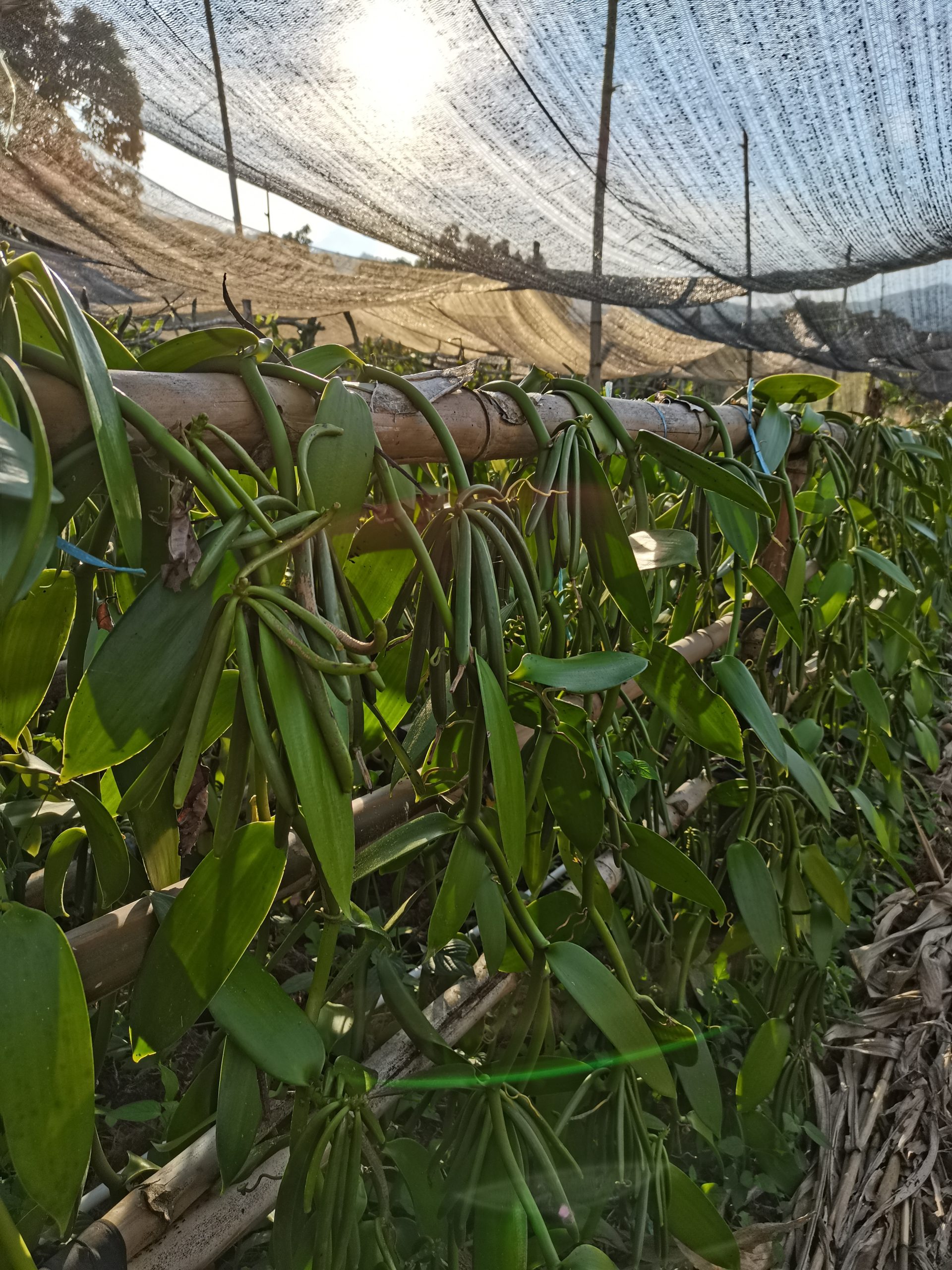
Classic Vanilla Crème Brûlée With Papua Tahitian Beans
There is a specific moment in crème brûlée that nothing else in a kitchen can replicate. You tap the caramel crust. It shatters. Beneath it, cream holds 8 hours of cold-set vanilla infusion. That first spoonful — floral, rich, almost anise-like — is not accidental. It comes from choosing the right bean. A Papua Tahitian bean, split and steeped for 30 minutes in cream heated to exactly 70°C, releases a heliotropin compound at 3–5× the concentration found in standard Planifolia. That difference is what separates a memorable vanilla crème brûlée recipe from a forgettable one.
Bake temperature for a set, silky custard
min
Bake time — edge set, centre still trembling
/ 4 ramekins
Papua Tahitian — optimal flavour ratio
Why Papua Tahitian Beats Planifolia in a Cream Custard
Vanilla Planifolia is the workhorse of the vanilla world. Its 2.5%+ vanillin content (against an industry average of 1.5–2.0%) makes it the strongest choice for baking, ice cream, and heat-intensive applications. But crème brûlée is different.
Crème brûlée relies on a low, gentle bake at 160°C in a water bath. The cream never reaches a hard boil. This slow, humid environment is precisely where Papua Tahitian — Vanilla tahitensis — performs at its peak. Tahitensis carries heliotropin (piperonal) at 3–5× the concentration of Planifolia, according to flavour chemistry research on vanilla bean compounds in cream-based preparations (Havkin-Frenkel & Belanger, 2011). Heliotropin is the compound responsible for the cherry-anise, almost floral sweetness that makes a Tahitian custard taste perfumed and layered.
Heat destroys heliotropin faster than vanillin. At 160°C in a water bath — where the custard’s internal temperature reaches only around 82°C — heliotropin survives the bake intact. Every ramekin captures those floral notes fully.
The Infusion Step: 70°C Is the Exact Temperature
The infusion is where flavour is built or lost. Bring your cream — 500ml of full-fat double cream — to 70°C over medium heat. Use a thermometer. At 70°C, the fat molecules in cream are mobile and receptive. The bean’s compounds cross into the fat phase efficiently.
Split 1 Papua Tahitian bean lengthways with a sharp knife. Scrape every seed into the cream. Drop the pod in too — the pod walls hold secondary compounds that continue releasing during the 30-minute steep. Turn the heat to its lowest setting and hold at 65–70°C for 30 minutes. Do not boil. Boiling destroys heliotropin and flattens the floral note entirely.
After the 30-minute warm steep, remove from heat, press cling film to the surface, and refrigerate the cream with the pod overnight (8–12 hours). Cold infusion extracts an additional layer of floral character that the warm steep alone cannot achieve.
Building the Custard: Ratios and Temperature Control
This vanilla crème brûlée recipe makes 4 ramekins, each 150ml capacity. The ingredient ratios below are tested and non-negotiable for correct set.
- 500ml full-fat double cream
- 1 Papua Tahitian vanilla bean (split, scraped)
- 5 large egg yolks
- 80g caster sugar (plus extra for caramel topping)
- Pinch of fine sea salt
Whisk 5 egg yolks with 80g of caster sugar until the mixture turns pale — approximately 2 minutes by hand. Do not create foam. Foam bakes into bubbles and ruins the surface.
Strain the warm infused cream through a fine sieve into a jug. Pour the cream slowly into the egg mixture, whisking constantly. Slow addition prevents the hot cream from scrambling the yolks. Strain the finished custard one more time through the sieve into a clean jug before pouring into ramekins.
Ramekin Depth, Bake Technique, and the 160°C Rule
Ramekin depth changes everything in this vanilla crème brûlée recipe. Use ramekins that are 150ml capacity and no deeper than 4cm. A shallower custard sets evenly at 160°C without the edges overcooking before the centre firms. Deeper ramekins require longer bake times that push the egg proteins too far.
Preheat to 160°C (fan-forced 145°C). Place 4 ramekins in a deep roasting tin. Boil a full kettle.
Pour custard into ramekins, filling to 5mm below the rim. Pour boiling water into the roasting tin until it reaches halfway up the sides of the ramekins. Bake for 35–40 minutes.
At 35 minutes, open the oven and gently nudge the tin. The outer 2cm of each custard should be completely set. The central 3cm should wobble like set jelly — not liquid, not rigid. Pull at this point. Residual heat firms the centre during cooling.
Remove ramekins from the water bath. Cool to room temperature (about 45 minutes), then refrigerate uncovered for a minimum of 4 hours. Overnight produces a better-set, more flavourful result.
Caramelising Evenly: The Torch Method vs Grill
Caramelising evenly separates a professional crème brûlée from a home attempt. Sprinkle exactly 1 level teaspoon (4g) of caster sugar across each custard surface. Tilt the ramekin to distribute it uniformly — no thick edges, no bare patches.
A kitchen torch is the superior tool. Hold the flame 4–5cm above the surface. Move in slow, overlapping circles. The sugar passes through pale gold at around 160°C, then amber at 180°C. Pull the torch away the instant you see the first sign of dark brown at any point. The crust continues to colour from residual heat for 5–8 seconds after the flame moves away.
If you use a grill instead, position the ramekins 8cm below the element on maximum heat. Watch continuously — the sugar can go from pale to burnt in under 90 seconds. The torch gives far greater control and is the method we recommend for this vanilla crème brûlée recipe.
“With Tahitian vanilla, I always tell people — do not rush the infusion. Give the cream thirty minutes with the bean, then leave it overnight in the cold. By morning, the aroma is completely different. It is like the bean has told all of its story into the cream.”
— Bu Marlina, vanilla farmer, Papua, 8 years cultivating Tahitian variety
Where to Source Papua Tahitian Beans for This Recipe
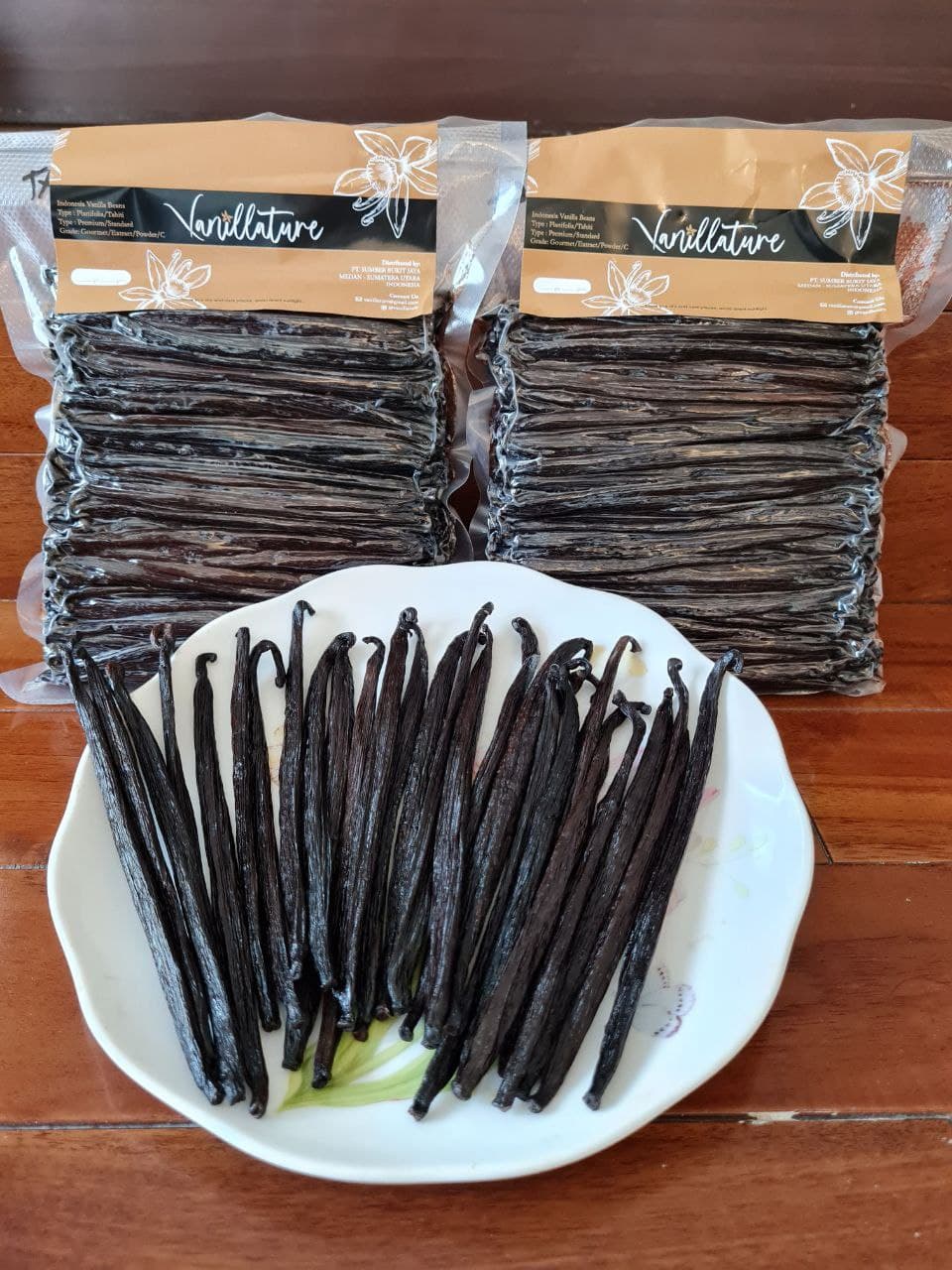
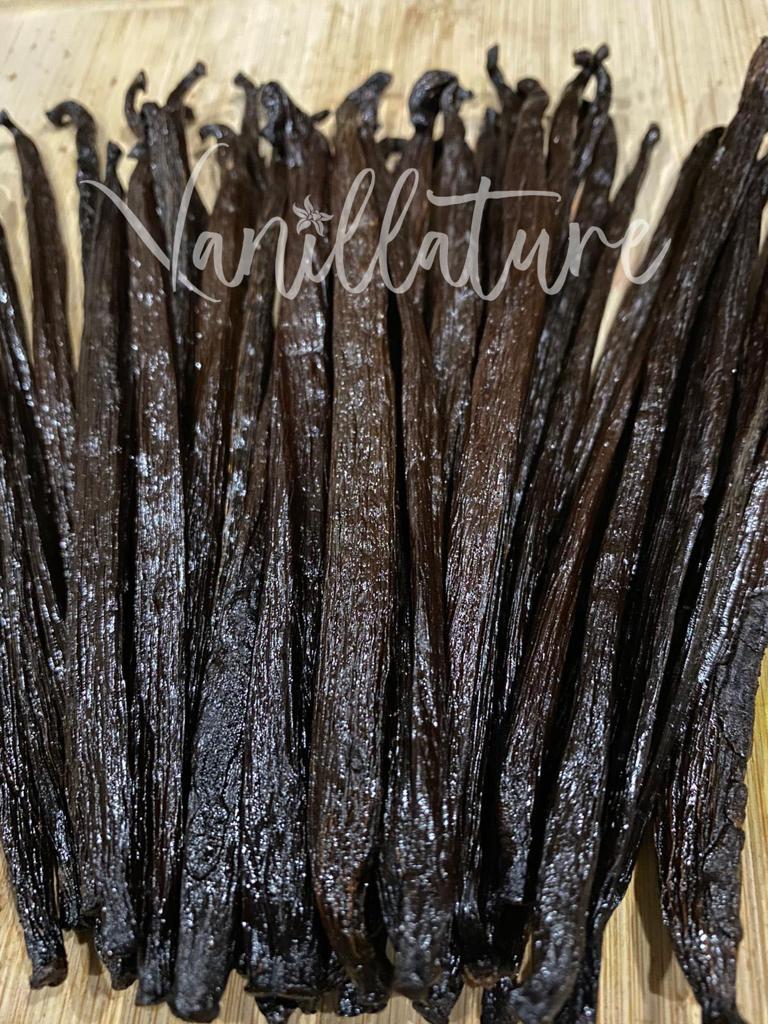
The flavour outcome of this vanilla crème brûlée recipe depends directly on bean quality. Vanillature’s Papua Tahitian beans come from Bu Marlina and 500+ smallholder farming partners across Sumatra and Papua. Every bean passes a 5-stage quality sorting process before it ships.
At Vanillature, we test every batch. Papua Tahitian beans consistently carry heliotropin at 3–5× Planifolia levels, making them the definitive choice for custard applications. For comparison, our Crystal Vanilla — a Planifolia-derived grade — tests at 3.5–4% vanillin on the surface crystals alone. Both are exceptional products. For crème brûlée, Tahitian is the correct choice.
Frequently Asked Questions
Shop Papua Tahitian Vanilla Beans
Sourced directly from Bu Marlina and our farming partners in Papua. Tested, sorted, and shipped to your kitchen.
