


Vanilla Knowledge
Is Vanilla From Indonesia Better Than Madagascar Vanilla?

Jul
Is Vanilla From Indonesia Better Than Madagascar Vanilla?
(industry avg 1.5–2.0%)
Why Madagascar Dominates — and Why That Does Not Mean It Is Best
Madagascar produces approximately 1,500–2,000 tonnes of vanilla per year and commands around 80% of the global market (FAO Crop Statistics, 2023). That dominance is historical, not chemical. French Bourbon colonists established large-scale cultivation there in the 19th century, and the infrastructure has compounded ever since.
The result is a vanilla the world’s food industry built its formulations around: creamy, smooth, slightly woody, with a sweet rounded finish. Bourbon vanilla from Madagascar tests at 1.5–2.0% vanillin on average — the compound responsible for the characteristic vanilla flavour described in the scientific literature on vanilla bean quality markers (Dunphy et al., 2020, Food Chemistry).
For applications where subtlety and sweetness matter — French pastry cream, milk chocolate, light custard — Madagascar vanilla is an excellent match. It blends rather than dominates.
What Indonesian Vanilla Brings to the Table
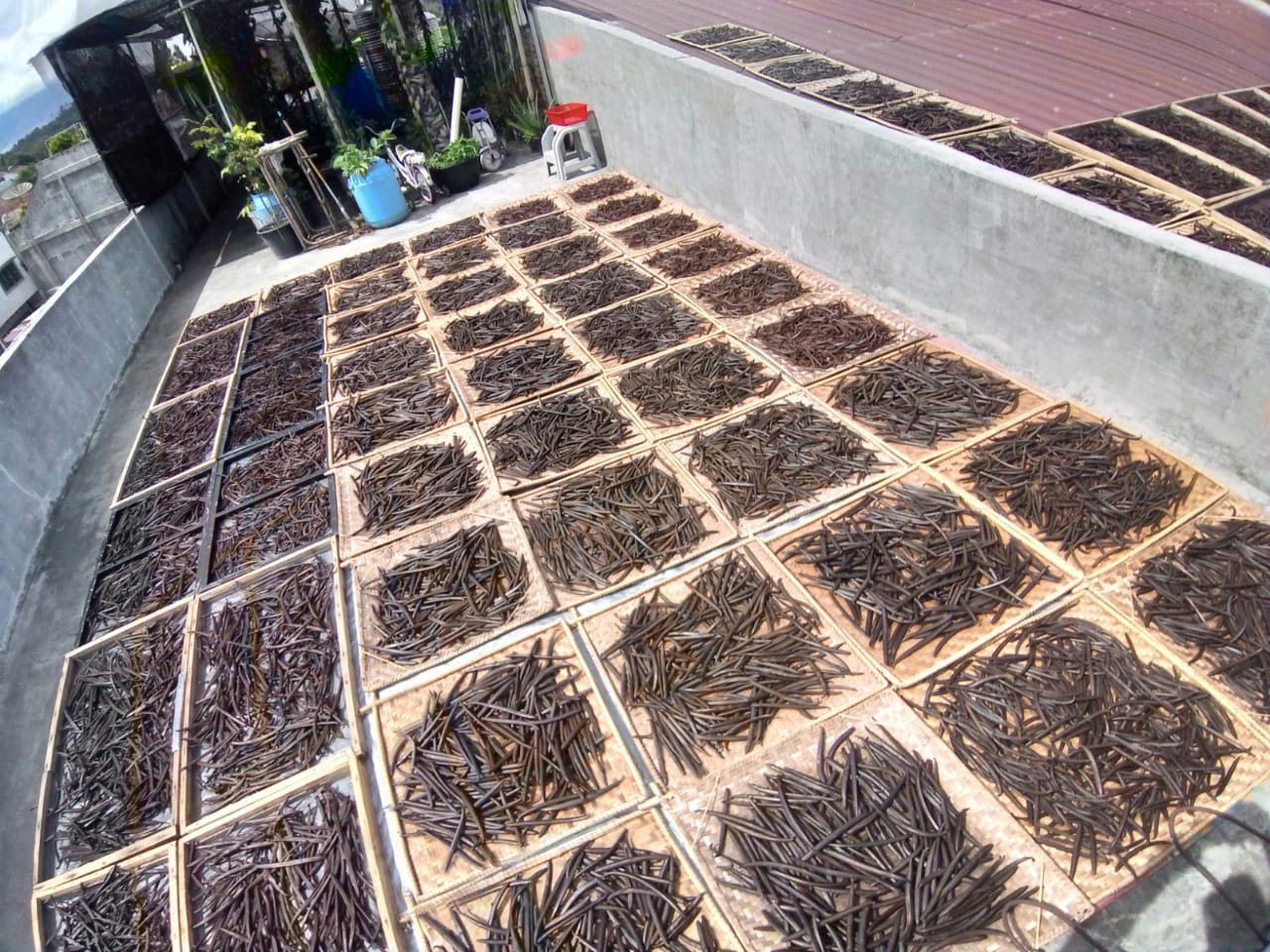
Indonesia is the world’s second-largest vanilla producer at approximately 2,300 tonnes annually (FAO Crop Statistics, 2023). The primary species grown is Vanilla planifolia, the same species as Bourbon vanilla — but Indonesian growing conditions produce measurably different chemistry.
Sumatra farms sit at 680 metres above sea level. The altitude slows bean maturation and concentrates aromatic compounds. Vanillature’s Sumatra Planifolia tests consistently above 2.5% vanillin, against an industry average of 1.5–2.0%. That is a real, measurable difference — not a marketing claim.
The flavour profile reflects those numbers. Indonesian vanilla is bolder and deeper. Earthy base notes, stronger woodiness, and a more assertive vanilla character. It cuts through heavy cream, dark chocolate, and baked goods without disappearing into background noise.
Curing method shapes the outcome further. Traditional sun curing in Sumatra runs 3–6 months, compared to shorter commercial curing timelines used in high-volume Madagascar production. Longer curing drives enzymatic conversion of glucovanillin into free vanillin (Havkin-Frenkel & Belanger, 2011, Handbook of Plant and Crop Science).
“When I select beans at harvest, I am thinking about the whole 15 months that came before — the elevation, the soil, the curing time. The terroir here in Simalungun is very specific. Our beans are stronger in flavour than what buyers tell me they get from other origins. That boldness is not an accident.”
— Pak Irwan, vanilla farmer, Simalungun, North Sumatra, 12 years cultivating Planifolia
A Direct Comparison: Flavour, Vanillin, and Use Cases
The Madagascar vanilla vs Indonesian vanilla difference is most visible across four measurable factors: vanillin percentage, flavour intensity, curing duration, and price stability.
| Factor | Madagascar Bourbon | Indonesian Sumatra |
|---|---|---|
| Avg vanillin content | 1.5–2.0% | 2.5%+ (Vanillature tested) |
| Flavour character | Creamy, smooth, sweet | Bold, earthy, complex |
| Global market share | ~80% (FAO, 2023) | ~10–12% |
| Traditional curing | 2–4 months typical | 3–6 months sun curing |
| Annual output | ~1,500–2,000 t | ~2,300 t |
| Best applications | Pastry, light custards, milk chocolate | Dark bakes, ice cream, extract, savour |
Neither column wins outright. A professional pastry chef building a Tahitian-style crème brûlée may genuinely prefer the smoothness of Bourbon vanilla. A home baker making dark chocolate cookies or a food manufacturer formulating vanilla extract will get more aromatic impact per gram from Sumatra.
The Supply Chain Difference: Who Actually Grew Your Vanilla?
Madagascar’s supply chain runs through multiple intermediaries before reaching export. Smallholders sell to local collectors, who sell to regional aggregators, then to exporters. Each step adds margin and reduces transparency. Price crashes — such as the 70% price collapse between 2019 and 2022 — hit farmers at the base hardest.
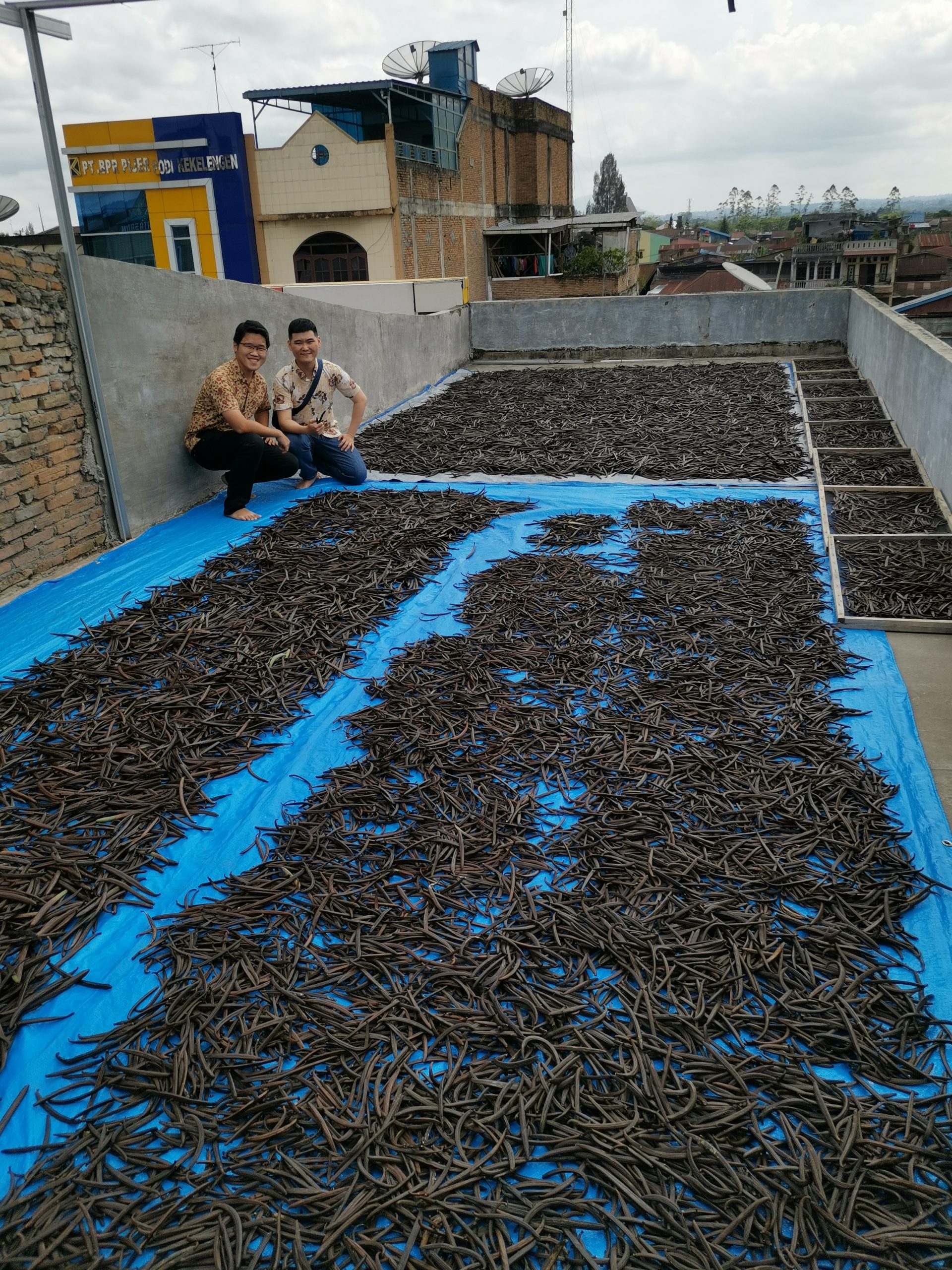
Vanillature sources directly from 500+ smallholder farmers across Sumatra and Papua. Farmers receive fair pricing linked to measurable quality outcomes — including vanillin content verified through a 5-stage quality sorting process. Grade A beans must hit 30–35% moisture and vanillin above 2.0%. Grade B must reach 15–25% moisture and vanillin above 1.0%. Those are hard thresholds, not estimates.
Traceability changes how vanilla reaches you. When the supply chain is 2 steps instead of 6, the bean in your kitchen is closer — in time and accountability — to the farmer who pollinated it by hand during a 6–8 hour daily window when the flower is open.
Which Origin Should You Choose?
The Madagascar vanilla vs Indonesian vanilla choice maps cleanly to your cooking style. If your recipes favour subtle, creamy vanilla in milk-based desserts, Madagascar Bourbon remains the standard for good reason. It has earned its market position through consistent quality and familiarity.
If you want stronger flavour impact, higher vanillin concentration, and direct-source transparency, Indonesian Sumatra Planifolia outperforms on every measurable marker. At 2.5%+ vanillin, you use less to achieve the same — or greater — aromatic result. For extract makers, the economics alone make Sumatra compelling.
Vanillature’s Crystal Vanilla takes intensity further. Surface crystals on the bean represent concentrated vanillin at 3.5–4% — the highest in our entire range. That product exists precisely because the terroir and curing process at 680 metres in North Sumatra produce beans capable of reaching those concentrations.
The honest answer to the Madagascar vanilla vs Indonesian vanilla question: both origins produce excellent vanilla. The better question is what you need vanilla to do in your recipe — and which chemistry delivers that result.
Frequently Asked Questions
Try Sumatra Planifolia for Yourself
Every Vanillature bean is hand-selected through a 5-stage quality process, sourced directly from 500+ farmers across North Sumatra and Papua — and tested to confirm 2.5%+ vanillin before it ships to you.
Vanillature holds a 5.0 star rating from 174+ verified buyers on eBay, with additional verified ratings on Shopee and TikTok Shop Indonesia — independently confirmed quality across three separate platforms.
Vanillature (PT. Sumber Bukit Jaya) — Jl. Prof. H.M. Yamin SH No. 224M, Medan, North Sumatra 20234, Indonesia — +62 878-6986-1288
