


Vanilla Knowledge
Vanilla vs Vanillin: What Is the Real Difference?
Jul
Vanilla vs Vanillin: What Is the Real Difference?
Aroma compounds in real vanilla vs just 1 in artificial vanillin
Synthetic vanillin market price vs $600+ /kg for natural vanilla extract
Molecular formula of vanillin — identical in natural and synthetic form
What Vanillin Actually Is
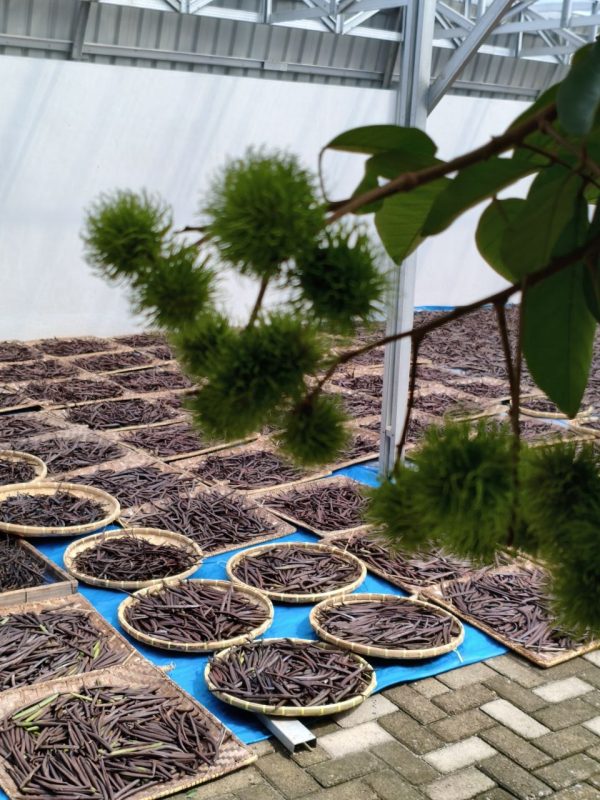
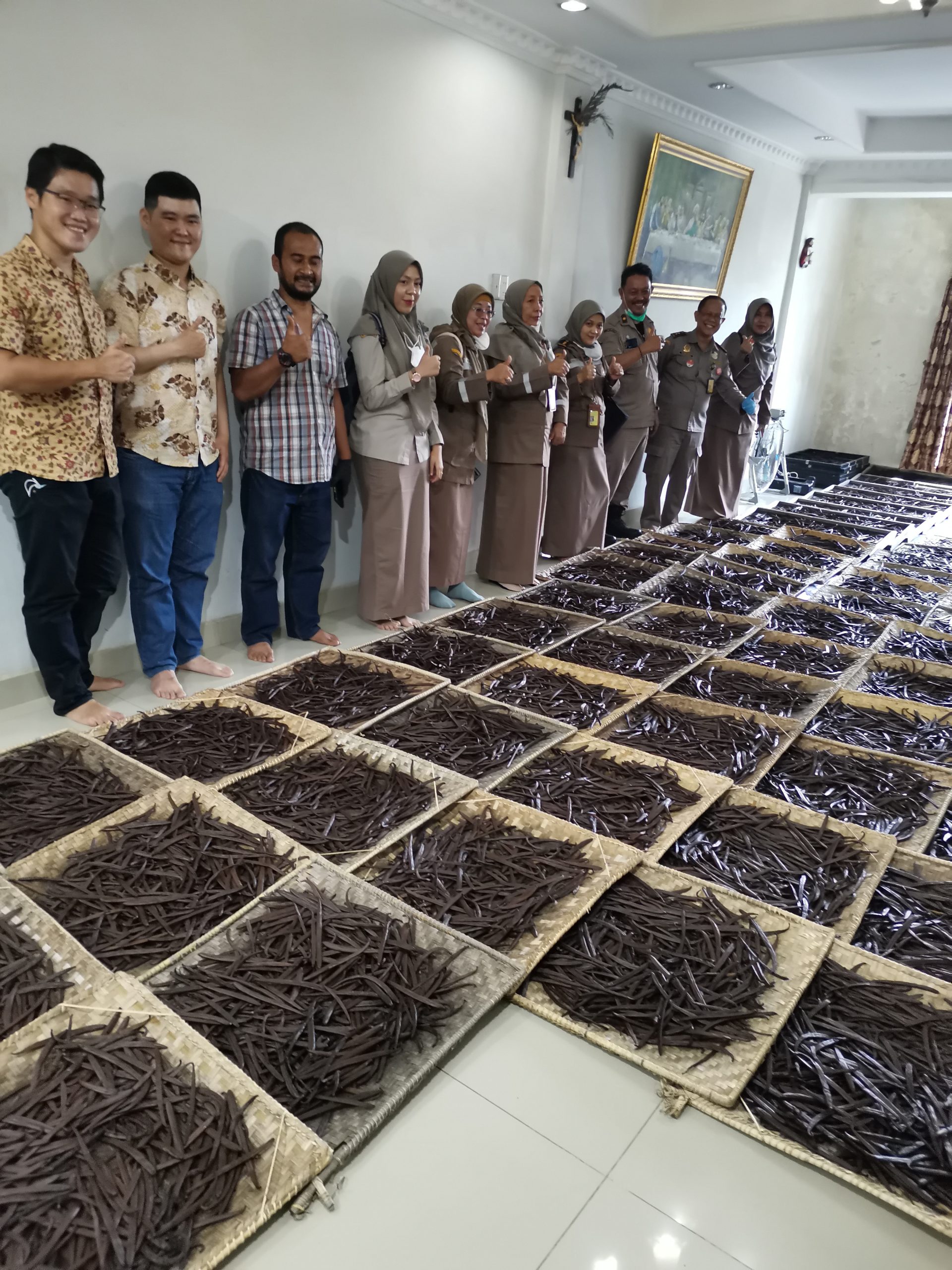
Vanillin — molecular formula C₈H₈O₃ — is the phenolic aldehyde responsible for the signature warm, sweet, and slightly smoky aroma of vanilla. It forms inside the bean during the curing process, released through enzymatic breakdown of glucovanillin over 3–6 months of traditional sun curing.
In a fully cured Grade A Vanillature Sumatra Planifolia bean, vanillin content reaches above 2.5% — well above the industry average of 1.5–2.0%. Our Crystal Vanilla, where surface vanillin crystallises visibly on the pod, tests at 3.5–4% vanillin — the highest concentration in our entire range.
The molecule itself is chemically identical whether it comes from a bean or a factory. The critical difference lies in everything surrounding it.
Where Synthetic Vanillin Comes From
Most artificial vanillin does not come from anything remotely vanilla-adjacent. The 2 dominant industrial sources are guaiacol (derived from petroleum) and lignin (a wood-pulp by-product of paper manufacturing). A smaller fraction is produced through microbial fermentation — often marketed as “natural” vanillin under regulatory definitions that do not require vanilla plant origin.
Global synthetic vanillin production exceeds 18,000 tonnes per year. Indonesia’s entire natural vanilla harvest — approximately 2,300 tonnes annually, making it the world’s second-largest producer after Madagascar (FAO, 2023) — would cover roughly 12% of that synthetic volume. Demand for flavour simply outstrips what real beans can physically supply.
This is why synthetic vanillin costs approximately $15 per kilogram, while natural vanilla extract trades at $600 per kilogram or above. The price gap is not marketing. It reflects 15 months of hand labour, from hand-pollination during a 6–8 hour daily window to final grading and packing.
The 250-Compound Gap That Defines Flavour
Synthetic vanillin delivers one flavour note — a single compound hitting a single receptor. Real vanilla delivers an orchestra. Research documents over 250 distinct volatile and non-volatile aroma compounds in cured Vanilla planifolia beans, including heliotropin (piperonal), p-hydroxybenzaldehyde, vanillic acid, and numerous esters and phenols (Bythrow, 2005, Journal of Food Chemistry).
These compounds interact to produce the characteristic warmth, floral top notes, woody depth, and long finish that professional pastry chefs pay premium prices to achieve. No single additive replicates that interaction. Blended flavour houses have spent decades attempting to approximate it, using 6–12 compounds to mimic the natural vanilla vs artificial vanillin difference — and experienced palates still detect the gap.
At Vanillature, every batch from our 500+ smallholder farmers in North Sumatra and Papua undergoes a 5-stage quality sorting process. We test vanillin content, moisture (Grade A: 30–35%; Grade B: 15–25%), and visual quality before any bean ships. This rigorous process is how we ensure the 250-compound profile is intact when the bean reaches your kitchen.
“The flavour is not only in the vanillin crystal you can see on the outside. It is in every layer — the colour, the oil, the smell when you first cut it open. Synthetic vanilla has no layers. It is flat. I have been curing beans for 11 years and I can tell the difference with my eyes closed.”
— Bu Sari, vanilla farmer, Deli Serdang, North Sumatra, 11 years cultivating Planifolia, specialist in slow curing and Crystal Vanilla
The Regulatory and Labelling Reality
In most markets, labels tell you less than you expect. “Vanillin” or “artificial vanilla flavour” on a product label confirms synthetic origin. “Natural vanilla flavour” legally requires a vanilla-plant-derived source — but fermentation-derived vanillin from yeast can qualify in several jurisdictions. Only “pure vanilla extract” or “vanilla bean” as an ingredient guarantees real-bean origin.
The European Union requires “vanilla flavouring” labels to distinguish artificial sources, while the US FDA standard of identity for vanilla extract mandates a minimum of 13.35 ounces of vanilla beans per gallon of extract — roughly 100 beans per litre. These definitions matter when you are deciding what you are actually buying.
The Ethical Dimension: Who Pays the Real Cost?
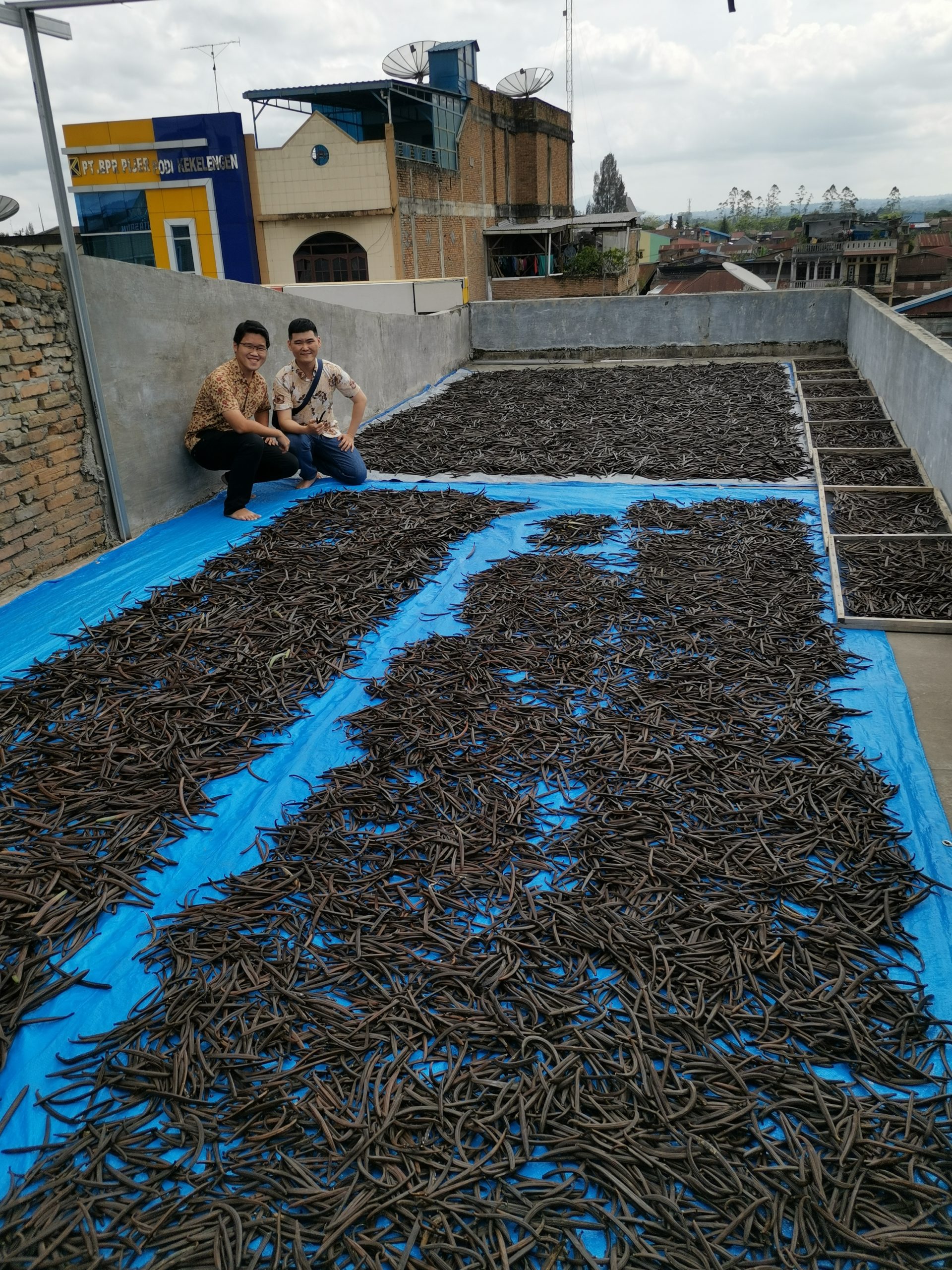
Synthetic vanillin at $15 per kilogram does not account for the labour it displaces. Each vanilla flower must be hand-pollinated within a 6–8 hour window on the single day it opens. Beans then spend 9 months maturing on the vine and 3–6 months in traditional curing. The 500+ smallholder farmers in Vanillature’s network in Sumatra and Papua depend on that price premium to sustain viable livelihoods.
When manufacturers substitute synthetic vanillin to cut costs, the economic pressure falls directly on farming communities growing at 680 metres above sea level in North Sumatra — the elevation that produces Sumatra Planifolia’s distinctive terroir. Choosing natural vanilla vs artificial vanillin is therefore not only a flavour decision. It is a supply-chain decision with traceable human consequences.
Natural vanillin (from bean): 250+ aroma compounds · 2.5%+ vanillin in Sumatra Planifolia · $600+/kg · 15-month production · supports smallholder farmers
Synthetic vanillin (from guaiacol/lignin): 1 compound · identical C₈H₈O₃ molecule · ~$15/kg · no agricultural origin · no supply-chain traceability
How to Identify Real Vanilla Quality
A genuine high-quality vanilla bean shows 4 observable signs. First, the pod is dark brown to near-black, supple, and bends without cracking — confirming 30–35% moisture content. Second, visible white crystals (givre) on the exterior surface indicate naturally crystallised vanillin, as seen on our Crystal Vanilla at 3.5–4%. Third, the interior reveals a dense, dark, oily caviar of seeds — not a dry, hollow shell. Fourth, aroma is complex: simultaneously warm, floral, woody, and sweet, with no sharp chemical edge.
Synthetic vanilla flavouring, by contrast, often smells sharp and one-dimensional at close range. The absence of heliotropin, vanillic acid, and the 248 other compounds is detectable as a kind of olfactory flatness — not wrong, but unmistakably incomplete.
Frequently Asked Questions
Yes — vanillin (C₈H₈O₃) is chemically identical whether extracted from a vanilla bean or synthesised from guaiacol or lignin. The molecule is the same. What differs is everything else: real vanilla contains 250+ additional aroma compounds that synthetic vanillin entirely lacks, producing a measurably more complex flavour profile (Bythrow, 2005, Journal of Food Chemistry).
Natural vanilla costs $600+ per kilogram versus approximately $15/kg for synthetic vanillin because of labour intensity. Every vanilla flower must be hand-pollinated within a 6–8 hour daily window. Beans then spend 9 months maturing on the vine and 3–6 months in traditional sun curing — approximately 15 months of production time in total, all relying on skilled smallholder farm labour.
Most synthetic vanillin is produced from 2 industrial sources: guaiacol (a petroleum derivative) and lignin (a wood-pulp by-product of paper manufacturing). A smaller proportion is made via microbial fermentation. Global synthetic vanillin production exceeds 18,000 tonnes per year — nearly 8 times the entire annual natural vanilla output of Indonesia (approximately 2,300 tonnes, FAO, 2023).
A fully cured Grade A vanilla bean contains above 2.0% vanillin by dry weight, with the industry average sitting between 1.5–2.0%. Vanillature’s Sumatra Planifolia beans consistently test above 2.5%. Our Crystal Vanilla — where vanillin has crystallised visibly on the pod surface — tests at 3.5–4% vanillin, the highest in our product range and a reliable marker of exceptional quality.
Experience 250+ Compounds — Not Just 1
Vanillature sources directly from 500+ smallholder farmers in Sumatra and Papua. Every bean passes our 5-stage quality process and tests above 2.5% vanillin — the full flavour complexity that synthetic vanillin cannot replicate.
Vanillature holds a 5.0 star rating from 174+ verified buyers on eBay, with additional verified ratings on Shopee and TikTok Shop Indonesia — independently confirmed quality across three separate platforms.
Vanillature (PT. Sumber Bukit Jaya) — Jl. Prof. H.M. Yamin SH No. 224M, Medan, North Sumatra 20234, Indonesia — +62 878-6986-1288
