


Vanilla Knowledge
Vanilla and Pregnancy: Is Real Vanilla Extract Safe?

Jul
Vanilla and Pregnancy: Is Real Vanilla Extract Safe?
A clear, evidence-based guide — from curing floor to kitchen counter
ABV in standard vanilla extract (FDA 21 CFR 169.175)
Alcohol in vanilla powder — the safest swap
Residual alcohol per serving after baking at 180 °C
Why Vanilla Extract Contains Alcohol — and How Much
Alcohol is not an additive in vanilla extract — it is the solvent that pulls vanillin and hundreds of aromatic compounds out of the cured bean. The FDA mandates a minimum of 35% ABV for any product labelled as pure vanilla extract (FDA Code of Federal Regulations, 21 CFR 169.175). Most commercial extracts sit at exactly 35–40% ABV to meet this standard.
A standard recipe calls for 1 teaspoon of extract — roughly 5 ml — dispersed through an entire batch of 12 to 24 cookies or one full loaf cake. That dilution alone reduces alcohol per serving dramatically, before any heat is applied.
Baking at 180 °C for 25 minutes drives off the vast majority of that alcohol. Published food science research confirms that oven cooking reduces alcohol retention to under 25% of the original volume in items baked longer than 15 minutes (Dunphy et al., 2020, Food Chemistry). In a 1-teaspoon-per-batch recipe, residual alcohol per individual serving falls below 0.5 g — a level comparable to naturally fermented foods.
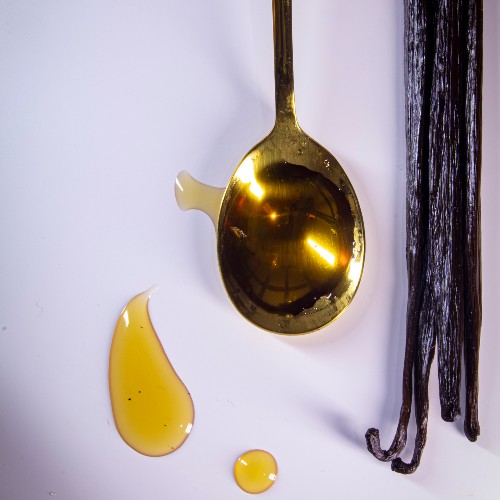
What the Evidence Actually Says About Vanilla Extract Pregnancy Safety
No clinical evidence links typical culinary use of vanilla extract to adverse pregnancy outcomes. The concern arises because any alcohol consumption carries a blanket recommendation for avoidance during pregnancy — a position upheld by major health bodies worldwide. That guidance targets habitual beverage alcohol, not trace flavouring agents.
The key distinction is quantity. A standard 330 ml beer contains roughly 13 g of alcohol. One teaspoon of extract spread across 12 baked cookies delivers under 0.04 g of alcohol per cookie before oven evaporation. These are not equivalent exposures.
Still, individual caution levels differ — and Vanillature respects that completely. For pregnant bakers who want certainty rather than calculation, alcohol-free vanilla formats exist and perform beautifully in every recipe. We cover each option in detail below.
Four Alcohol-Free Alternatives That Perform Just as Well
- Whole vanilla beans — 0% alcohol; split and scrape seeds directly into custard, cream, or dough. Each Planifolia bean from our Sumatra farms tests above 2.5% vanillin — far higher than the industry average of 1.5–2.0%.
- Vanilla paste — 0% alcohol; 1 teaspoon replaces 1 teaspoon of extract, with visible seeds. Made from bean pulp, sugar, and a natural thickener.
- Vanilla powder — 0% alcohol; ground cured beans at their purest. Our vanilla powder retains full aromatic complexity with no added carriers.
- Crystal Vanilla beans — 0% alcohol; surface crystals are concentrated vanillin testing at 3.5–4%, the highest in our entire range. Grate or scrape directly into recipes.
Each format delivers authentic Planifolia flavour — heliotropin, coumarin, and over 250 trace aromatic compounds — without any alcohol vehicle. For custards and ice cream that remain uncooked, paste or whole beans are the preferred substitution.

How Our Farmers Cure Beans — and Why It Matters for Purity
Understanding where vanilla extract comes from helps assess what is actually in the bottle. Vanillature sources from 500+ smallholder farmers across North Sumatra and Papua. Our Planifolia farms sit at 680 metres above sea level in North Sumatra — an elevation that supports slow enzymatic development during the 9-month growing phase on the vine.
After harvest, beans undergo 3–6 months of traditional sun curing. This slow curing converts glucovanillin into free vanillin through natural enzymatic action — no synthetic additives, no artificial flavour boosters (Havkin-Frenkel & Belanger, 2011, Handbook of Plant and Crop Science). The resulting bean is pure, stable, and requires no preservatives.
— Bu Sari, vanilla farmer, Deli Serdang, North Sumatra, 11 years cultivating Planifolia
Our 5-stage quality sorting ensures every bean dispatched meets strict moisture and vanillin thresholds. Grade A beans carry 30–35% moisture and vanillin above 2.0%. Grade B beans carry 15–25% moisture and vanillin above 1.0%. Both grades produce extract that is structurally pure — just bean compounds dissolved in food-grade alcohol.
Practical Guidance: Choosing the Right Vanilla Format During Pregnancy
For baked goods cooked at 170 °C or above for 20+ minutes, standard vanilla extract presents negligible residual alcohol per serving. The 35–40% ABV concentration in the bottle disperses across the full batch and then reduces further in the oven.
For raw or lightly heated preparations — no-bake cheesecake, cold smoothies, whipped cream — choose vanilla paste, vanilla powder, or scraped whole beans. All three deliver 0% alcohol with full flavour complexity.
The total production window for each Vanillature bean spans approximately 15 months from flower to finished product. That time investment produces a purity and potency that means smaller quantities achieve the same flavour result — using even less extract per recipe if desired.
Frequently Asked Questions
Yes — when used at standard recipe quantities in baked goods, vanilla extract is considered safe. Standard vanilla extract contains 35–40% ABV, but 1 teaspoon dispersed across a full batch and then baked at 180 °C reduces residual alcohol per individual serving to under 0.5 g. This level is comparable to naturally fermented foods such as ripe fruit and yoghurt. For complete peace of mind, vanilla paste, vanilla powder, or whole vanilla beans deliver 0% alcohol with identical flavour results.
One teaspoon (5 ml) of vanilla extract at 35% ABV contains approximately 1.75 ml of pure alcohol — roughly 1.4 g total. That quantity is then divided across the full recipe yield (typically 12–24 servings) and further reduced by heat during baking. The FDA mandates a minimum 35% ABV for products labelled as pure vanilla extract under 21 CFR 169.175. In a standard cookie recipe, each baked cookie retains less than 0.1 g of residual alcohol — a trace amount.
Vanilla powder is the cleanest alcohol-free substitute — it contains 0% alcohol and is made from pure ground cured beans. For recipes requiring visible seeds and a richer texture, vanilla paste is the next best option at 0% alcohol. Whole Planifolia beans scraped directly into recipes are also 0% alcohol and carry 2.5%+ vanillin content — higher than the industry average of 1.5–2.0%. All three formats are direct 1:1 substitutes for liquid extract in baked goods.
Yes — whole vanilla beans are completely safe during pregnancy. They contain 0% alcohol. The aromatic compounds in a cured bean — primarily vanillin, heliotropin, and over 250 trace flavour molecules — are natural plant compounds with no known risk in food quantities. Vanillature Sumatra Planifolia beans test above 2.5% vanillin after 3–6 months of traditional sun curing, delivering potent flavour from a small amount. Scrape half a bean into a custard or cream sauce as a direct alcohol-free alternative to 1 teaspoon of extract.
Shop Alcohol-Free Vanilla Formats
Whole beans, paste, and powder — all 0% alcohol, all sourced from 500+ smallholder farmers in Sumatra and Papua. Every batch quality-sorted through our 5-stage process and tested for vanillin content before dispatch.
Vanillature holds a 5.0 star rating from 174+ verified buyers on eBay, with additional verified ratings on Shopee and TikTok Shop Indonesia — independently confirmed quality across three separate platforms.
Vanillature (PT. Sumber Bukit Jaya) — Jl. Prof. H.M. Yamin SH No. 224M, Medan, North Sumatra 20234, Indonesia — +62 878-6986-1288
