


Vanilla Knowledge
The History of Vanilla: From Aztec Royalty to Your Kitchen Cupboard

Jul
Vanilla has been cultivated as a flavouring since approximately 900 CE, making it one of the oldest continuously used spices in human history. Long before it reached European kitchens or Indonesian farms, it belonged entirely to the Totonac people of Mexico’s Gulf Coast — and the full history of vanilla spice is a story of empire, botany, and a single teenager’s discovery that changed global agriculture forever.
The Totonac Origin: 1,100 Years of Cultivation
The Totonac people of Veracruz, Mexico, cultivated vanilla orchids — Vanilla planifolia — from around 900 CE. They called it xanath, meaning “black flower.” The vine grew wild across the humid lowlands, but the Totonac actively farmed it, training the orchid up host trees and harvesting the cured pods for ritual and trade.
When the Aztec Empire conquered the Totonac in the 15th century, they extracted vanilla as tribute. Aztec ruler Itzcoatl demanded annual deliveries of vanilla pods alongside cacao, cotton, and rubber. Vanilla entered Aztec xocolatl — the bitter ceremonial cacao drink — and became a flavouring reserved for royalty and warriors.
Hernán Cortés and the European Introduction, 1519
In 1519, Spanish conquistador Hernán Cortés observed vanilla in the court of Emperor Moctezuma II. He noted the flavouring in xocolatl served in golden cups. Cortés returned to Spain with vanilla pods alongside cacao, and the combination of chocolate and vanilla quickly captivated European courts.
For nearly 300 years after 1519, Mexico remained the world’s only vanilla source. The pollination biology of Vanilla planifolia made cultivation outside Mexico impossible. The orchid’s only native pollinator — the Melipona bee — did not exist anywhere else on Earth. Every attempt to grow vanilla in Europe, Africa, or Asia produced flowers but no beans.
Edmond Albius and the 1841 Hand-Pollination Breakthrough
The history of vanilla spice changed permanently in 1841. On the French island of Réunion, a 12-year-old enslaved boy named Edmond Albius developed the hand-pollination technique that unlocked global vanilla cultivation. Using a thin stick, he manually transferred pollen from the anther to the stigma within the flower’s single daily window — a method workers still use today.
At Vanillature, our farmers hand-pollinate every blossom individually. Each Vanilla planifolia flower opens for just 6 to 8 hours per day, between 6 am and 9 am. Miss that window, and the flower drops unpollinated. Albius understood this constraint instinctively — and solved it with a technique requiring no tools beyond a bamboo sliver and a steady hand.
Within a decade of Albius’s discovery, French colonial administrators transferred vanilla cultivation to Madagascar, Réunion, and the Comoros Islands. The spice trade shifted permanently. Mexico’s 300-year monopoly ended.
“When I teach younger farmers here in Simalungun, I always tell them: the flower decides the schedule, not us. You must be there at 6 am, every morning, for weeks. That discipline is what turns a vine into vanilla.”
— Pak Irwan, vanilla farmer, Simalungun, North Sumatra, 12 years cultivating Vanilla planifolia
Colonial Trade Routes and the Spread to Southeast Asia
Dutch and British colonial networks carried vanilla eastward through the 19th century. Dutch botanists introduced Vanilla planifolia to the Dutch East Indies — today’s Indonesia — in the 1880s. Sumatra’s equatorial climate, volcanic soil, and elevation provided near-ideal growing conditions. North Sumatra farms sit at approximately 680 metres above sea level, producing the humidity and temperature variation that drives deep vanillin development.
The history of vanilla spice in Indonesia accelerated through the 20th century. Post-independence Indonesian farmers adopted hand-pollination at scale, and cultivation spread from Java to Sumatra and eventually Papua. According to FAO data on vanilla historical production and global supply chain development (FAO, 2023), Indonesia now produces approximately 2,300 tonnes annually — the second-largest producer globally, behind Madagascar.
Global vanilla trade routes: Mexico → Réunion → Madagascar → Indonesia
Why Indonesia Now Matters Most in the History of Vanilla Spice
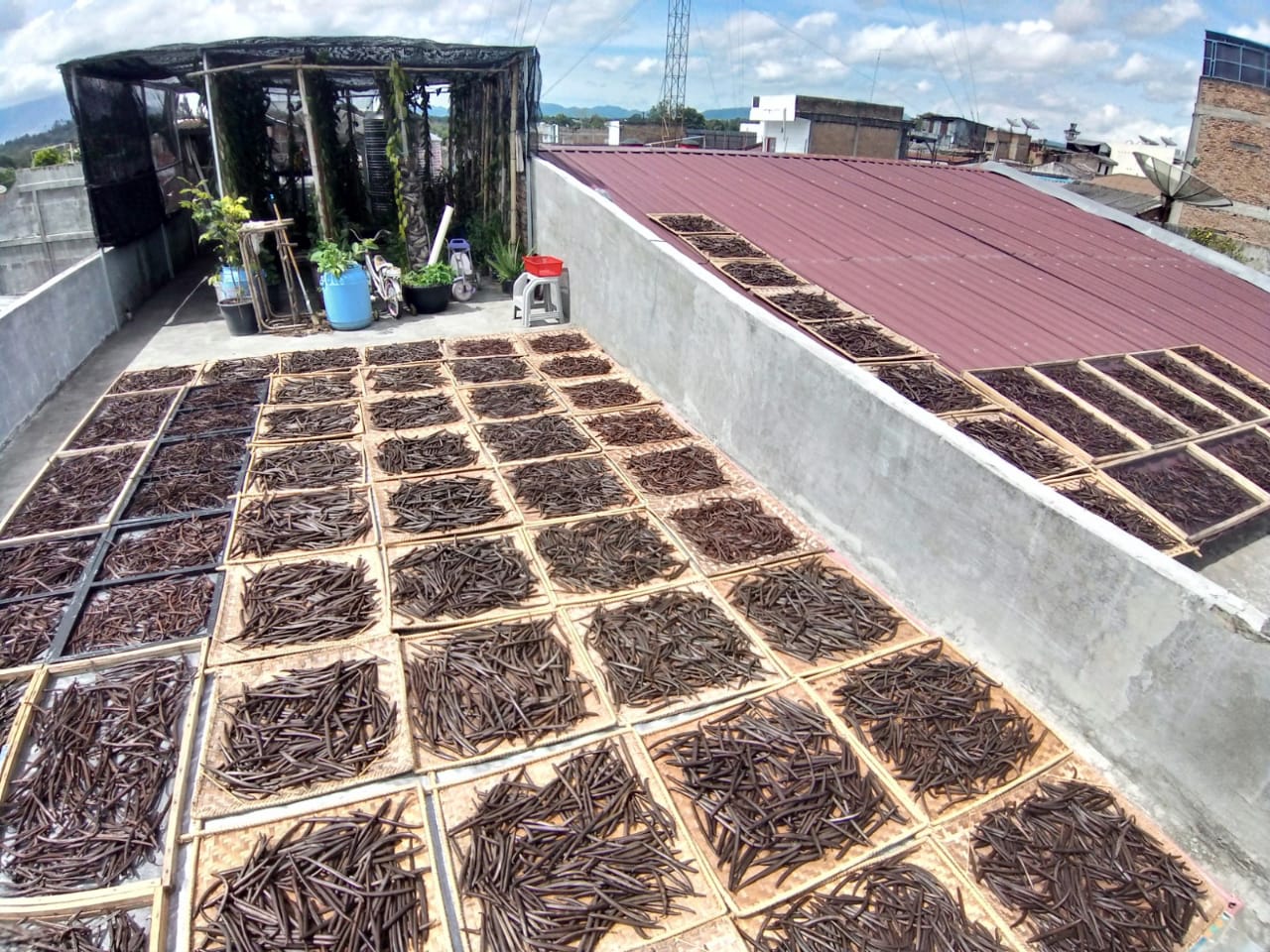
Madagascar dominates vanilla volume. Indonesia leads on quality consistency. Sumatran Vanilla planifolia tested at Vanillature consistently exceeds 2.5% vanillin content — above the global industry average of 1.5–2.0% (Bythrow, 2005, Journal of Food Chemistry). That gap is not accidental. It reflects 9 months of vine maturation, followed by 3 to 6 months of traditional sun curing — a total of approximately 15 months from flower to finished bean.
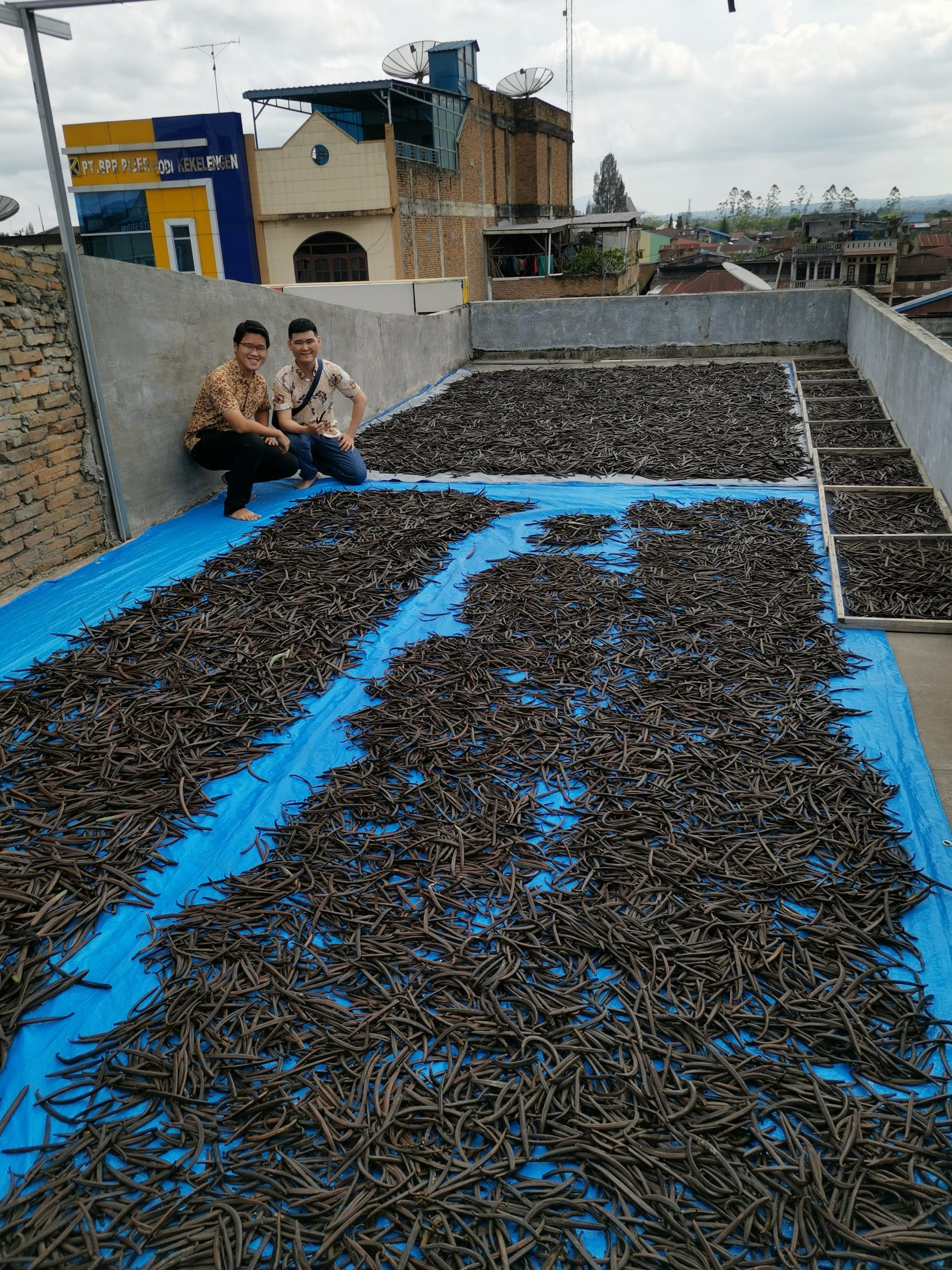
Vanillature sources directly from 500+ smallholder farmers across North Sumatra and Papua. Every batch passes a 5-stage quality sorting process. Grade A beans maintain 30–35% moisture and above 2.0% vanillin. Grade B beans hold 15–25% moisture and above 1.0% vanillin. Both grades trace directly to farmers like Pak Irwan, whose families have refined these techniques across multiple generations.
The full history of vanilla spice stretches over 1,100 years — from Totonac forest gardens to Aztec courts to French colonial islands to the volcanic highlands of Sumatra. Each chapter added a technique, a trade route, or a discovery. The flavour in your kitchen today carries all of it.
Frequently Asked Questions: History of Vanilla Spice
The Totonac people of Veracruz, Mexico, first cultivated vanilla as a flavouring around 900 CE — making it a crop with over 1,100 years of documented cultivation history. The Totonac called the orchid xanath and used it in trade and ritual long before Aztec or European contact.
Edmond Albius, a 12-year-old enslaved boy on the French island of Réunion, developed the hand-pollination method in 1841. Before his discovery, vanilla could only be grown in Mexico, because its native Melipona bee pollinator existed nowhere else. Albius’s technique — transferring pollen manually during the flower’s 6-to-8-hour daily open window — made global vanilla cultivation possible and ended Mexico’s 300-year monopoly.
Dutch colonial botanists introduced Vanilla planifolia to the Dutch East Indies — present-day Indonesia — in the 1880s, decades after Edmond Albius made hand-pollination viable outside Mexico. Cultivation expanded through the 20th century across Java, Sumatra, and Papua. Indonesia now produces approximately 2,300 tonnes annually, ranking second globally behind Madagascar (FAO, 2023).
Indonesian Vanilla planifolia, particularly from North Sumatra at 680 metres elevation, consistently tests above 2.5% vanillin content — compared to a global industry average of 1.5–2.0% (Bythrow, 2005, Journal of Food Chemistry). That quality results from 9 months of vine maturation, 3 to 6 months of traditional sun curing, and a total production cycle of approximately 15 months from hand-pollinated flower to finished bean.
Source Vanilla With This History Behind It
Every Vanillature bean comes from 500+ smallholder farmers in Sumatra and Papua — the latest chapter in a 1,100-year cultivation story. Each batch is hand-pollinated, sun-cured, and quality-sorted across 5 stages before it reaches you.
Vanillature holds a 5.0 star rating from 174+ verified buyers on eBay, with additional verified ratings on Shopee and TikTok Shop Indonesia — independently confirmed quality across three separate platforms.
Vanillature (PT. Sumber Bukit Jaya) — Jl. Prof. H.M. Yamin SH No. 224M, Medan, North Sumatra 20234, Indonesia — +62 878-6986-1288
