


Vanilla Knowledge
Indonesia Vanilla Supplier vs Vietnam Vanilla: Which Origin Should Your Business Choose?
Aug
Indonesia produces approximately 2,300 tonnes of vanilla annually — ranking second globally after Madagascar — while Vietnam’s output has grown to roughly 1,000 tonnes and is climbing fast (FAO Crop Statistics, 2023). For commercial buyers weighing an Indonesia vanilla supplier vs Vietnam, the choice is not simply price versus quality. It is about vanillin content, certification documentation, supply continuity, and the traceability your customers increasingly demand.
Indonesia annual production — #2 globally (FAO, 2023)
Vanillin in Sumatra Planifolia — vs. industry avg 1.5–2.0%
Vietnam annual production — rising but less documented
Production Scale and Supply Reliability
Indonesia’s vanilla sector has operated at commercial export scale for over four decades. The country’s 2,300-tonne annual output is distributed across established growing regions — Sumatra, Java, Sulawesi, and Papua — giving buyers access to volume buffers that smaller origins cannot match (FAO Crop Statistics, 2023).
Vietnam’s production reached approximately 1,000 tonnes in recent years, concentrated primarily in the Central Highlands provinces of Lâm Đồng and Đắk Lắk. Growth has been rapid, but supply volatility remains higher. Many Vietnamese exporters entered the market only in the last decade, so documented crop-year histories are thinner and long-term supply agreements are harder to structure with confidence (USDA Foreign Agricultural Service, 2024).
For a food manufacturer placing 500 kg orders on a quarterly schedule, supply predictability matters as much as unit price. Indonesia’s infrastructure — established cold-chain logistics out of Belawan port in Medan and Tanjung Priok in Jakarta — supports consistent lead times that newer Vietnamese export networks are still building toward.
Vanillin Content: The Chemistry That Separates Origins
Vanillin concentration is the single most important quality marker for industrial buyers. It determines flavour intensity, batch-to-batch consistency, and the cost efficiency of your formulation — more vanillin per gram means less bean required per litre of extract.
Sumatra Planifolia from farms at 680 metres above sea level in North Sumatra consistently tests above 2.5% vanillin — against an industry average of 1.5–2.0% (Dunphy et al., 2020, Food Chemistry). Vietnamese vanilla, grown primarily at lower elevations under different humidity profiles, typically falls within the 1.5–2.0% range. That gap is meaningful when you are scaling to thousands of kilograms per year.
The elevation and volcanic soil composition of North Sumatra’s growing zones concentrate aromatic precursors during the 9-month maturation period on the vine. Vietnam’s Central Highlands terrain produces a clean, lighter profile that suits certain applications — but buyers specifying premium extract or paste require the higher vanillin density that Sumatra delivers.
“The mountain air here in Simalungun slows the bean down. It stays on the vine the full 9 months and builds something you cannot rush. When I sort for Grade A, I am looking for that deep brown colour and the oil you can feel through the skin — that is where the vanillin lives.”
— Pak Irwan, vanilla farmer, Simalungun, North Sumatra, 12 years cultivating Planifolia
Certification and Documentation: The Compliance Gap
For any buyer supplying the EU or US market, regulatory documentation is non-negotiable. Indonesia holds well-established export registration with the US FDA and operates under the EU’s REX (Registered Exporter) system, which allows exporters to self-certify origin for duty preference claims. These frameworks are mature and audited regularly.
Vietnam’s vanilla export sector is expanding fast, but certification coverage is uneven. Many of the smaller Vietnamese exporters that appeared after 2018 lack full FDA registration or REX eligibility. USDA FAS data confirms that while Vietnam’s spice export value grew 34% between 2020 and 2023, documentation compliance rates among smaller operators remain inconsistent (USDA Foreign Agricultural Service, 2024). For a buyer who needs clean paperwork for a retail listing or EU customs clearance, that gap creates risk.
Price Point: Where Vietnam Has a Real Advantage
Vietnam’s primary competitive advantage is price. Lower labour costs and faster-growing production infrastructure allow Vietnamese vanilla to enter the market at rates 15–25% below comparable Indonesian Grade B product in most benchmark periods. For applications where vanillin content above 1.5% is sufficient — standard food manufacturing, fragrance blending, lower-tier extract — Vietnamese vanilla delivers acceptable value.
The calculation changes for premium food manufacturing. When your product positioning depends on “Indonesian vanilla” on the label, or your extract specification requires vanillin above 2.0%, Indonesian Grade A becomes cost-competitive on a per-unit-vanillin basis. Paying more per kilogram for beans that test at 2.5%+ vanillin means using fewer beans per batch than cheaper product testing at 1.6%.
Direct Comparison: Indonesia vs Vietnam for Commercial Buyers
| Criteria | Indonesia (Sumatra) | Vietnam |
|---|---|---|
| Annual production | ~2,300 tonnes #2 global | ~1,000 tonnes Growing |
| Vanillin (Grade A) | 2.5%+ (Sumatra Planifolia) | 1.5–2.0% typical |
| FDA registration | Established | Varies by exporter |
| EU REX eligibility | Active | Partial — smaller exporters often unregistered |
| Price per kg | Higher — justified by vanillin density | Lower — 15–25% below Grade B Indonesian |
| Supply track record | 40+ years export infrastructure | <15 years at commercial scale |
| Traceability | 500+ farmer network, batch-level data available | Limited for most smaller exporters |
The Vanillature Standard: A Vetted Indonesia Vanilla Supplier
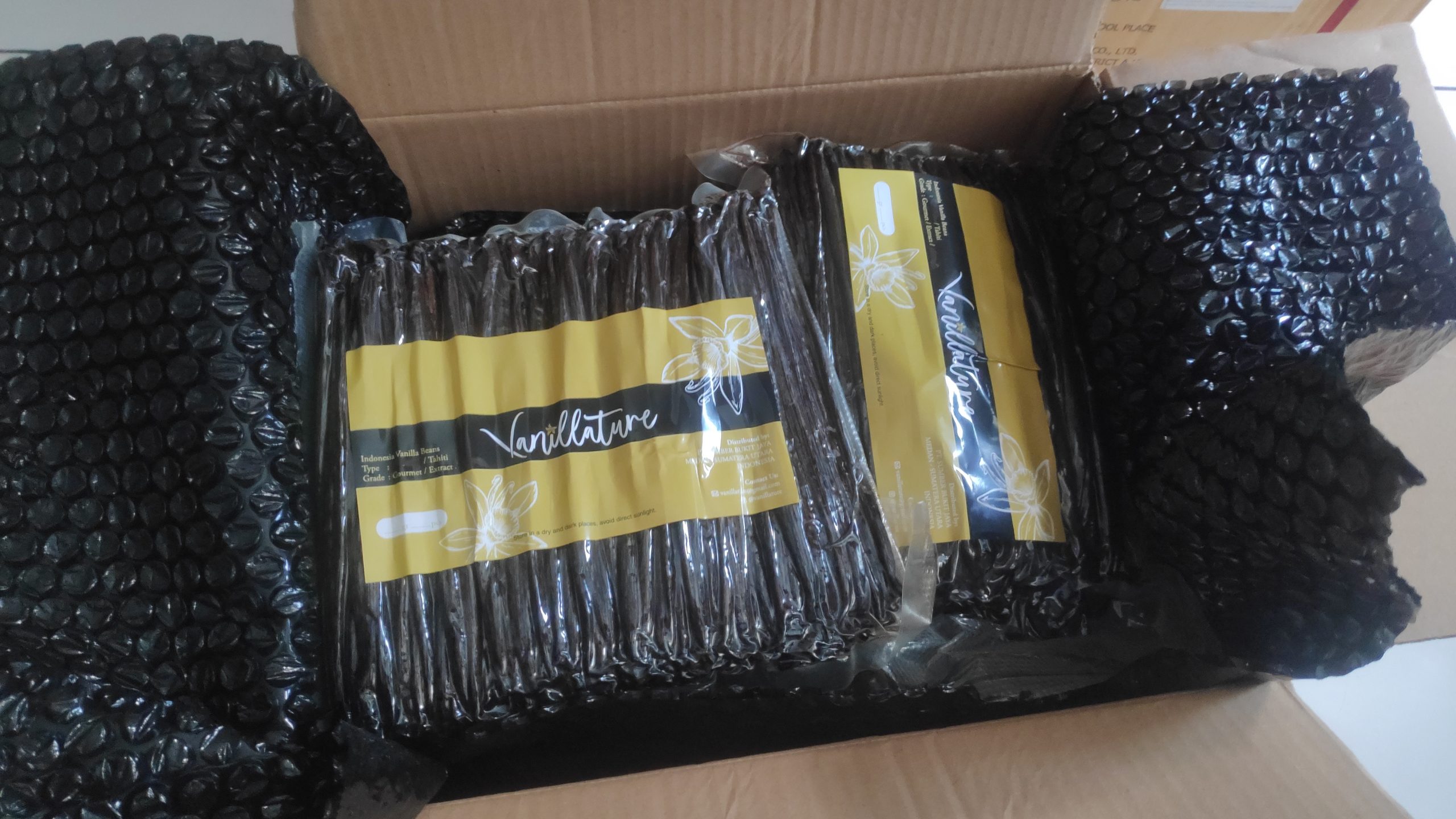
At Vanillature, we source from 500+ smallholder farmers across North Sumatra and Papua. Every batch passes a 5-stage quality sorting process. Grade A beans carry moisture of 30–35% and vanillin above 2.0%; our best Sumatra Planifolia lots consistently exceed 2.5%.
We hold current FDA food facility registration, REX EU exporter status, and issue full phytosanitary documentation with every commercial shipment. Our Crystal Vanilla — named for the surface vanillin crystals that form during 3–6 months of traditional sun curing — reaches 3.5–4% vanillin, the highest concentration in our product range and among the highest documented for any Indonesian origin.
Buyers comparing an Indonesia vanilla supplier vs Vietnam on price alone will find Vietnam cheaper on the invoice. Buyers comparing on total landed cost, formulation efficiency, compliance overhead, and brand story will find the premium Indonesian option pays for itself across a full production run.
Frequently Asked Questions
Source Indonesian Vanilla With Full Documentation
Vanillature supplies
