


Vanilla Knowledge
How to Request a Vanilla Sample from an Indonesian Supplier (And What to Look For)
Aug
How to Request a Vanilla Sample from an Indonesian Supplier — And What to Look For
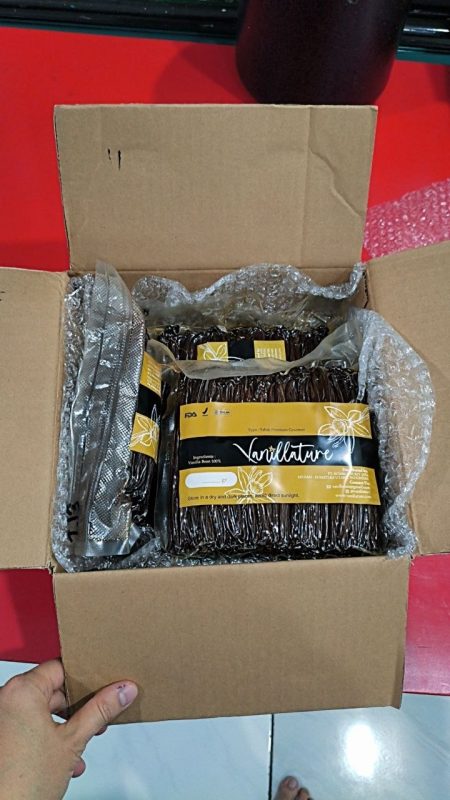
Grade A moisture content — the benchmark to verify in any sample
Vanillin minimum for Grade A — confirm by scent and visual inspection
Quality sort every Vanillature batch passes before a sample ships
Why Requesting a Sample Is Standard Practice — Not a Favour
Indonesia produces approximately 2,300 tonnes of vanilla annually, making it the world’s second-largest producer after Madagascar (FAO, 2023). That volume means enormous variation in quality within a single origin. Requesting a vanilla sample from an Indonesian supplier is not a special ask — it is the professional baseline for any buyer purchasing more than 1 kg.
Quality benchmarks are well-documented. Dunphy et al. (2020) Food Chemistry established that moisture content and vanillin concentration are the two primary markers separating premium from commodity-grade vanilla beans. Any supplier unwilling to send a pre-shipment sample is signalling that their product cannot survive close inspection.
What to Specify When You Request the Sample
A vague sample request produces a vague result. Give your supplier 4 specific parameters before anything ships.
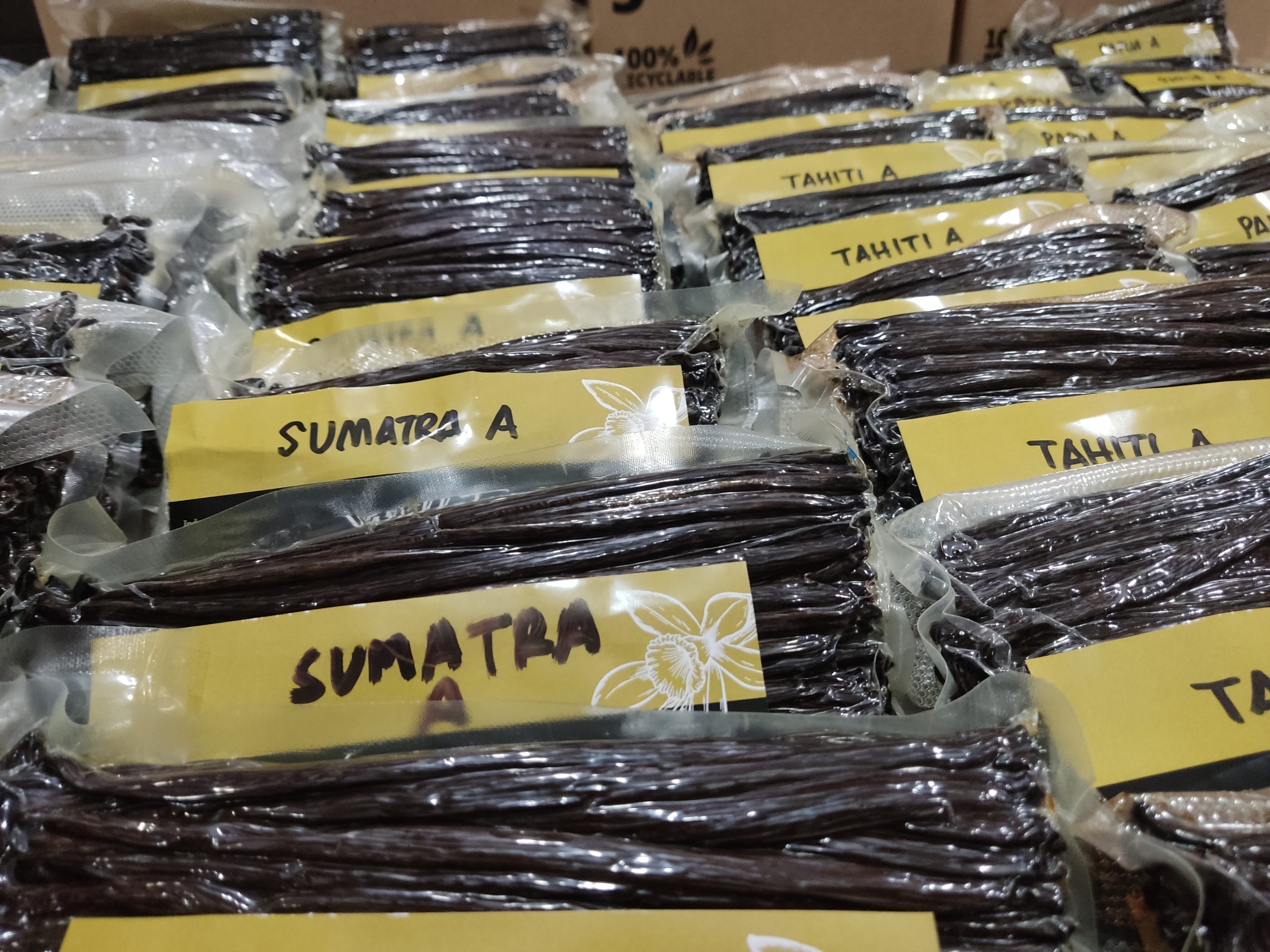
- Grade: State Grade A (15 cm+ beans, 30–35% moisture, 2.0%+ vanillin) or Grade B (15–25% moisture, 1.0%+ vanillin). The two grades serve completely different applications.
- Origin: Specify Sumatra Planifolia, Papua Planifolia, or Tahitian (Tahitensis) if relevant. Origin shapes flavour profile — Sumatra Planifolia from 680 m elevation carries a distinctly richer, woodier note than lowland beans.
- Quantity: Request 3–5 beans minimum. Fewer than 3 beans give you no statistical confidence. A single bean can be an outlier in either direction.
- Intended use: Tell the supplier whether you are extracting, baking, or producing paste. This determines which grade and moisture level matters most for your process.
At Vanillature, buyers cover the shipping cost of sample requests — the beans themselves are provided free of charge. That structure keeps sampling open to serious enquiries of any scale, from a boutique pastry kitchen ordering 500 g through to an industrial extractor evaluating a 50 kg trial.
What Happens Before Your Sample Leaves the Warehouse
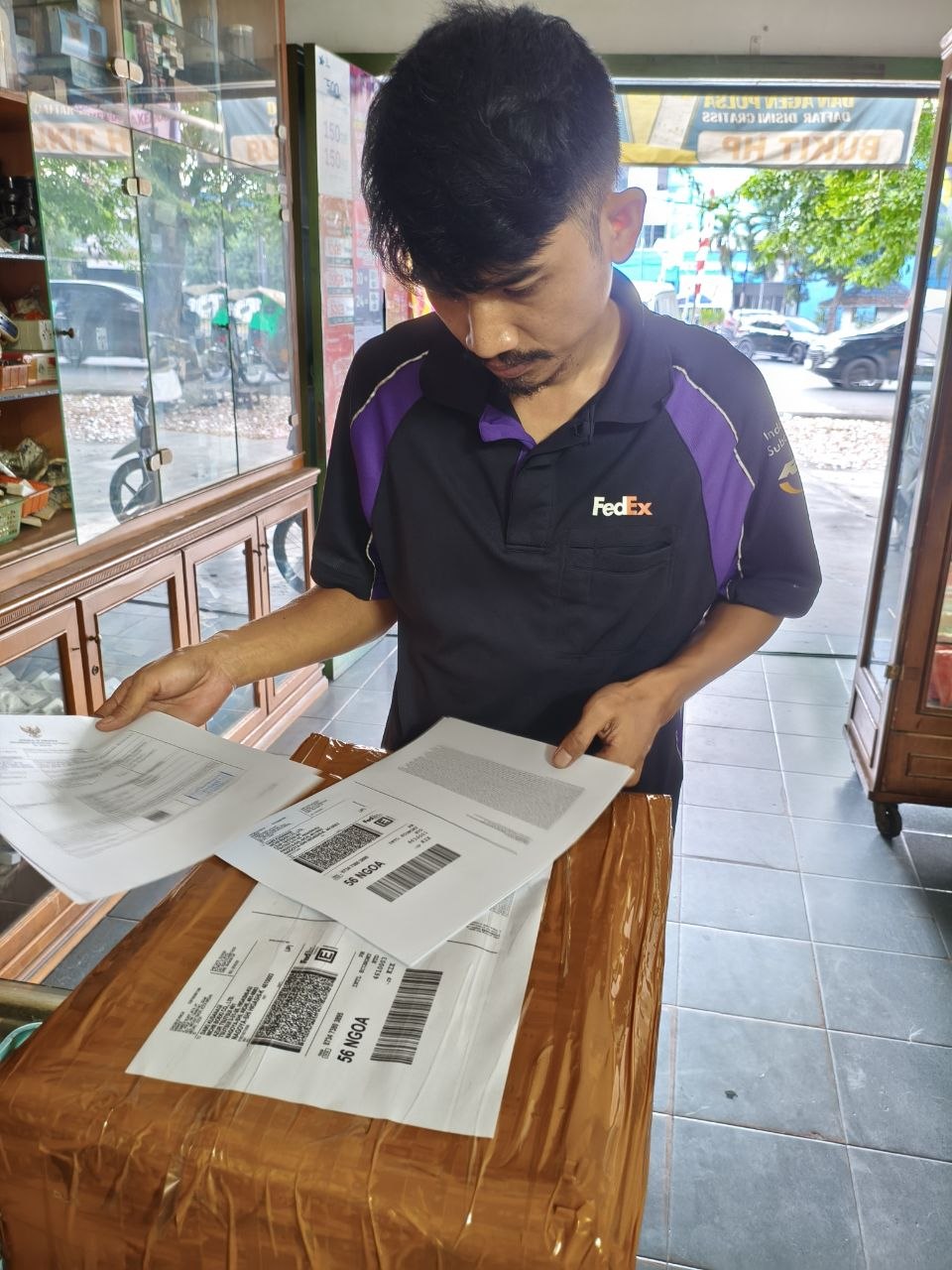
Every Vanillature sample passes through a 5-stage quality sort before it ships. That process checks length (Grade A must be 15 cm or longer), moisture within the 30–35% window, surface appearance, bean flexibility, and vanillin scent intensity. Beans that fail any single stage are rerouted to Grade B — they do not enter Grade A sample or bulk stock.
Our Sumatra Planifolia beans consistently test above 2.5% vanillin content, against an industry average of 1.5–2.0% (Dunphy et al., 2020, Food Chemistry). That difference is measurable with standard HPLC testing, and it is detectable by a trained nose during sample evaluation without any lab equipment at all.
“When I select beans for the Grade A sort, I reject anything I wouldn’t be confident labelling myself. The moisture has to sit between 30 and 35 percent — too dry and the aroma compounds are already fading. I’ve been doing this for 9 years and that window never changes.”
— Pak Rudi, vanilla farmer, Tapanuli, North Sumatra, 9 years cultivating Planifolia
How to Evaluate the Sample When It Arrives
Most buyers who request a vanilla sample from an Indonesian supplier focus on appearance and ignore the 4 tests that actually separate good beans from exceptional ones. Work through each in order.
1. Flexibility test. Grade A beans at 30–35% moisture bend without cracking. Hold a bean between two fingers and flex it through a 90-degree arc. A snap or crack means the bean dried below Grade A moisture — likely below 25%, which is Grade B territory.
2. Length measurement. Grade A beans measure 15 cm or longer. Measure 3 beans from your sample. If the average falls below 15 cm, the supplier is shipping Grade B beans at Grade A pricing — a common misrepresentation in the Indonesian vanilla export market.
3. Vanillin scent assessment. Slice one bean lengthwise. The interior should release a deep, warm, intensely sweet scent with no acrid or fermented undertones. Vanillin concentration above 2.0% is unmistakably full and round on the nose. A thin, flat, or sour aroma signals inadequate curing — traditional sun curing runs 3–6 months, and shortcuts show immediately in the scent profile.
4. Visual surface check. Healthy Grade A beans show an oily, dark brown to near-black surface. Any grey or dry patches indicate moisture loss during transit or storage. Surface oil is a reliable proxy for internal vanillin concentration — beans that have dried out have already lost volatile aromatic compounds.
[Image: close-up of Grade A vanilla beans showing oily surface, consistent dark colour, and flexibility demonstration]
Red Flags to Watch For in Any Vanilla Sample
Experienced buyers who regularly source vanilla samples from Indonesian suppliers know the warning signs. Four consistently indicate a supplier problem, not a transit issue.
- Ammonia or vinegar scent: Signals over-fermented beans or a curing process that was shortened and corrected chemically. Disqualify immediately.
- Beans under 13 cm labelled Grade A: Length is a fixed Grade A specification. A supplier who misrepresents length will misrepresent vanillin content.
- Moisture below 25%: Beans at this level have lost significant volatile aromatics. They will produce weak extract and flat flavour in baked applications.
- Inconsistent colour across 3 beans: One black and two brown beans from the same “Grade A” sample means the sort was not conducted rigorously. Consistent 5-stage sorting produces consistent colour within a grade.
Making the Decision After Sample Review
A vanilla sample from an Indonesian supplier only serves its purpose if you act on the data it provides. If 3 of your 4 evaluation tests pass, the supplier’s stock is likely reliable at scale. If 2 or more tests fail, no pricing discount justifies continuing — the quality deficits compound in extraction, baking, and finished product.
Vanillature ships samples to buyers across Australia, the United States, Japan, the UAE, and the European Union. The 5-stage sort, the Sumatra origin at 680 metres elevation, and a consistent vanillin floor of 2.5%+ mean that what arrives in your sample envelope represents exactly what a bulk order will deliver. We hold 5.0 stars from 174+ verified buyers — that rating reflects repeat purchases, which only happen when the sample matches the shipment.
Frequently Asked Questions
Contact Vanillature directly via the wholesale enquiry form, specifying grade (Grade A or B), origin (Sumatra Planifolia or Tahitian), quantity, and intended use. Vanillature provides the sample beans at no charge — buyers cover the shipping cost. Minimum useful sample size is 3 beans, which gives enough material to complete all 4 standard evaluation tests: flexibility, length (15 cm+ for Grade A), vanillin scent, and visual surface check.
Grade A vanilla beans must have 30–35% moisture content. This range, confirmed as a primary quality marker by Dunphy et al. (2020, Food Chemistry), keeps volatile aromatic compounds — including vanillin above 2.0% — intact and ensures the beans remain flexible rather than brittle. Moisture below 25% indicates the bean has dried into Grade B territory and will produce weaker flavour in both extraction and baking applications.
Vanillature Sumatra Planifolia consistently tests above 2.5% vanillin content — well above the industry average of 1.5–2.0%. Grade A certification requires a minimum of 2.0% vanillin. At 2.5%+, the scent profile is deep, warm, and intensely sweet when the bean is sliced — no lab equipment required to confirm the difference. Vanillature Crystal Vanilla reaches 3.5–4% vanillin, identifiable by white surface crystals that form during extended curing.
Every Vanillature sample — and every bulk shipment — passes a 5-stage quality sort before dispatch. The 5 stages assess bean length (15 cm minimum for Grade A), moisture content within the 30–35% window, surface appearance, flexibility, and vanillin scent intensity. Beans failing any single stage are reclassified to Grade B. This process, applied consistently across 500+ partner farmers’ harvests, is what produces the uniform quality that repeat buyers confirm across 174+ verified five-star reviews.
Request Your Vanillature Sample Today
Tell us your grade, origin preference, and intended use — we’ll prepare a 5-stage sorted sample from our current Sumatra Planifolia or Tahitian stock. Buyer covers shipping. Beans are on us.
Vanillature holds a 5.0 star rating from 174+ verified buyers on eBay, with additional verified ratings on Shopee and TikTok Shop Indonesia — independently confirmed quality across three separate platforms.
Vanillature (PT. Sumber Bukit Jaya) — Jl. Prof. H.M. Yamin SH No. 224M, Medan, North Sumatra 20234, Indonesia — +62 878-6986-1288
