


Vanilla Knowledge
The Vanilla Orchid: The Only Fruit-Bearing Orchid in the World
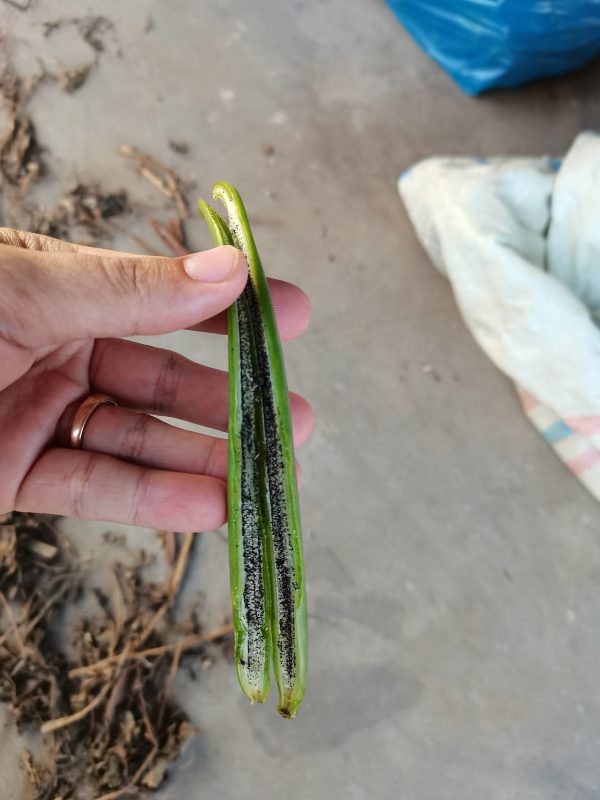
Aug
The Vanilla Orchid: The Only Fruit-Bearing Orchid in the World
Orchid species on Earth — only 1 bears an edible fruit
Daily pollination window — the flower opens once and closes forever
Bean maturation on the vine after successful pollination
One Orchid Among Twenty-Five Thousand
Botanists have classified over 25,000 distinct orchid species worldwide (FAO, 2023). They range from thumb-sized epiphytes in cloud forests to sprawling terrestrial plants in Australian grasslands. Not one of them produces anything a human can eat — except Vanilla planifolia.
This single vine-climbing orchid generates the vanilla bean: technically a seed pod, botanically a fruit. Its vanillin compound — the molecule responsible for that unmistakable aroma — occurs nowhere else in nature at comparable concentration. At Vanillature, our Sumatra-grown beans test consistently above 2.5% vanillin, against an industry average of 1.5–2.0%.
The vanilla orchid plant’s uniqueness is not poetic licence. It is a measurable botanical fact. Every other orchid produces only flowers, leaves, and roots — nothing edible, nothing harvestable at scale.
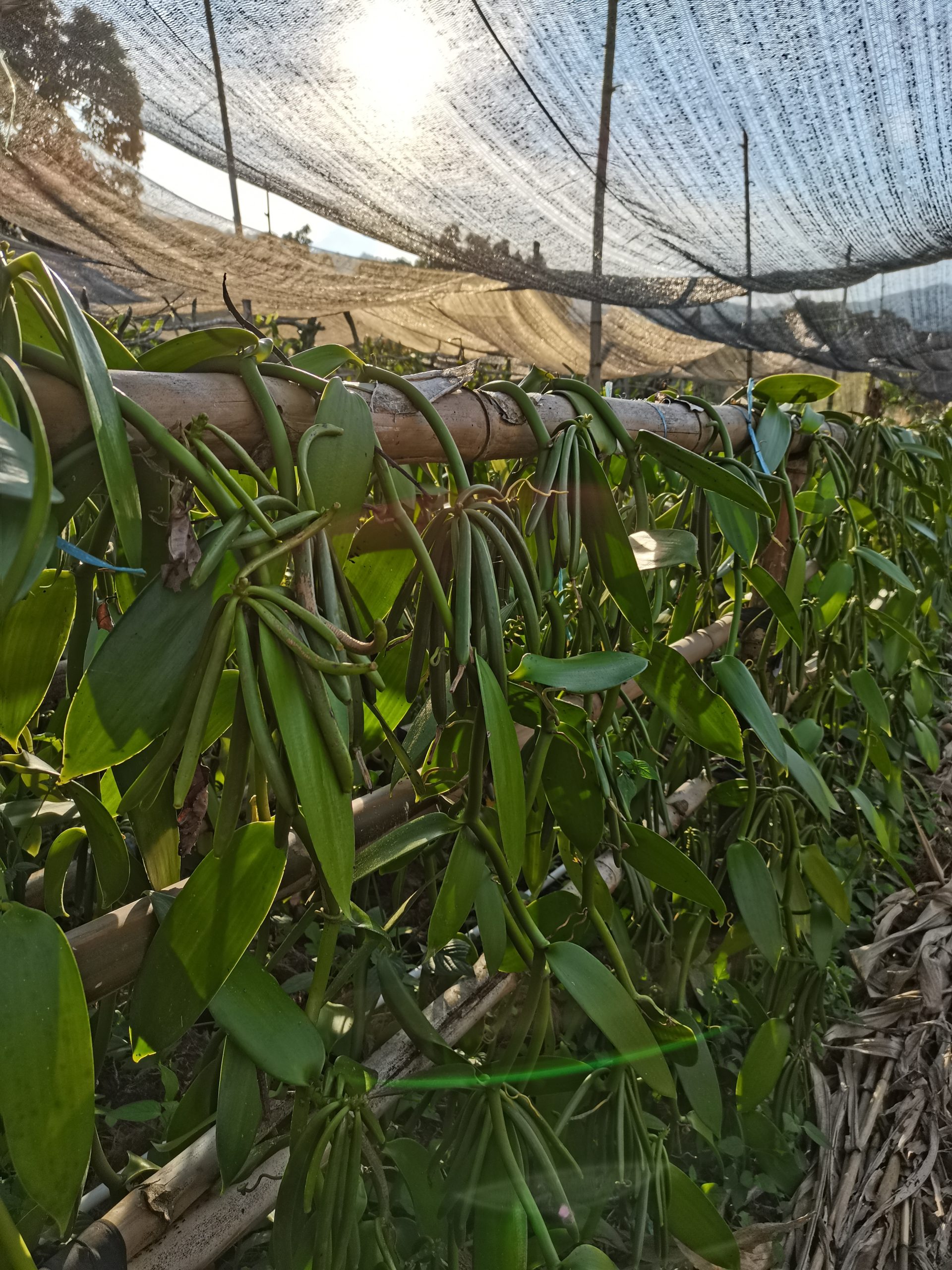
The Totonac People: First Cultivators of the Vanilla Orchid
The Totonac people of what is now Veracruz, Mexico, cultivated the vanilla orchid plant for centuries before European contact. They called it xanat, and used it ceremonially and medicinally long before it became a culinary ingredient. Spanish explorers encountered vanilla in the 1520s and carried it back to Europe, where its popularity spread rapidly over the following two centuries.
For over 300 years after its introduction to Europe, vanilla could only be grown in Mexico. The reason was biological: Vanilla planifolia requires a very specific native pollinator — the Melipona bee, a stingless species endemic to Mexico — alongside certain hummingbird species. These pollinators existed nowhere else in the world.
Every attempt to grow the vanilla orchid plant outside Mexico produced flowering vines that bore no fruit. Growers in the Dutch East Indies, French colonies, and British territories watched their orchids bloom beautifully and produce nothing. The plant’s secret was entirely in its pollinator.
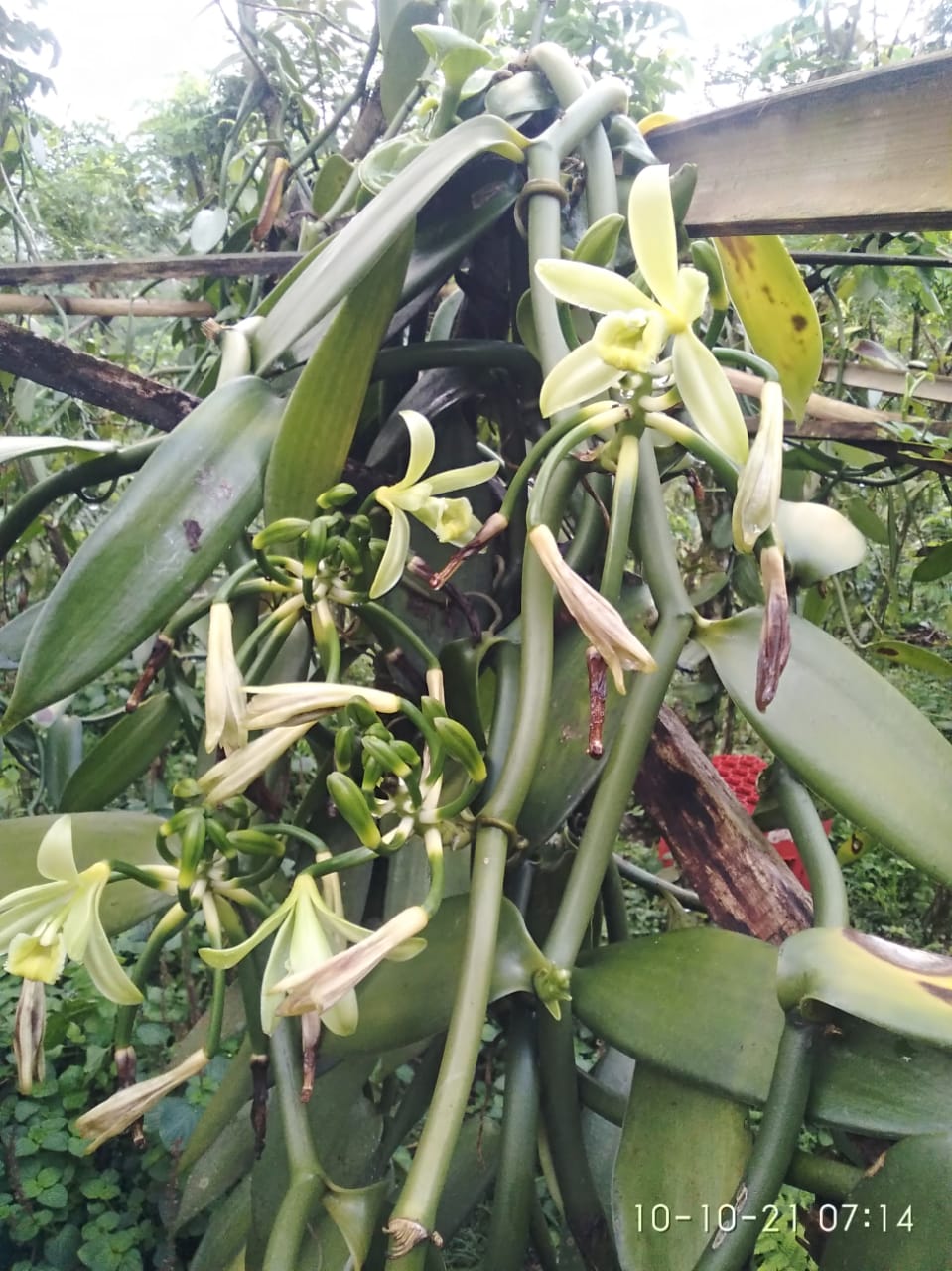
A 12-Year-Old’s Discovery That Changed Global Vanilla Forever
In 1841, on the French island of Réunion, a 12-year-old enslaved boy named Edmond Albius devised a technique for hand-pollinating the vanilla orchid flower. Using a thin stick and his thumb, he transferred pollen from the anther to the stigma of the same flower in a single deft movement. The technique took under 2 seconds per flower and required no specialist tools.
Albius’s method worked because the vanilla orchid flower stays open for only 6 to 8 hours — from approximately 6 a.m. to midday — before closing permanently. Miss that window on any given flower, and that flower never produces a bean. His technique unlocked vanilla cultivation across every tropical region on Earth.
Today, every vanilla bean grown outside Mexico — including every bean Vanillature produces in North Sumatra and Papua — is the product of this same hand-pollination method. Nothing has replaced it in 185 years. The 6–8 hour window remains absolute.
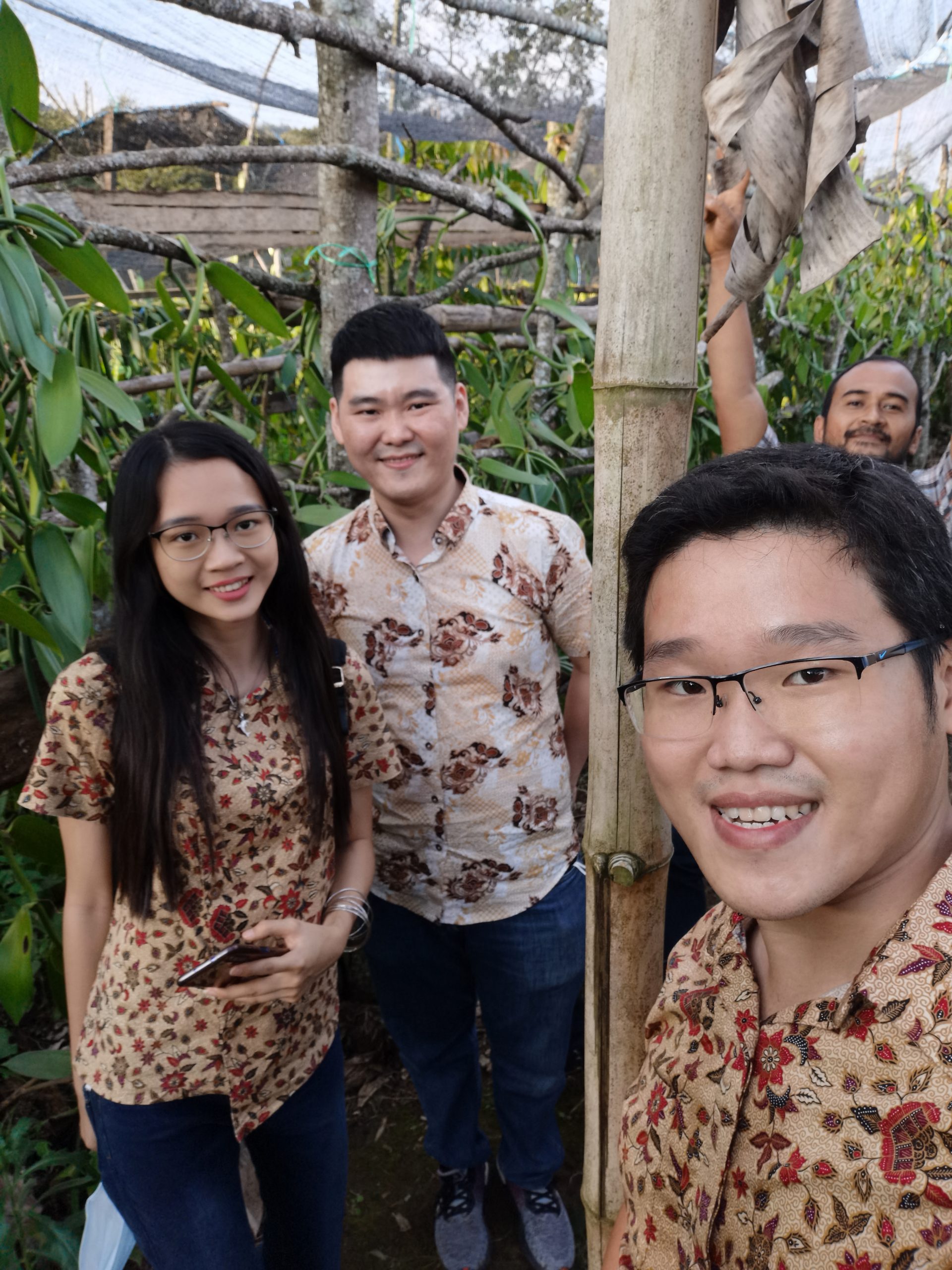
How the Vanilla Orchid Plant Reached Indonesia
Colonial-era Dutch traders introduced Vanilla planifolia cuttings to the Dutch East Indies — present-day Indonesia — during the 19th century. The volcanic soils, equatorial humidity, and consistent rainfall of the archipelago proved ideal for the vine’s growth. Indonesia now produces approximately 2,300 tonnes of vanilla annually, ranking second globally after Madagascar (FAO, 2023).
Vanillature sources from 500+ smallholder farmers across North Sumatra and Papua. Our North Sumatra farms sit at 680 metres above sea level — an elevation that slows bean maturation slightly and concentrates aromatic compounds within the pod. Beans spend 9 months on the vine before harvest, followed by 3–6 months of traditional sun curing.
The entire production cycle from pollinated flower to finished cured bean takes approximately 15 months. That timeline is non-negotiable. It is written into the biology of the vanilla orchid plant itself.
“When I first learned to pollinate, my father told me the flower only gives you one chance each day. You come back the next day, the flower is gone. That is why we start before sunrise and check every vine by 9 a.m. In 14 years, I have never found a shortcut.”
— Pak Budi, vanilla farmer, North Sumatra, 14 years cultivating Planifolia
Why Hand-Pollination Produces Better Vanilla
Hand-pollination is labour-intensive — a skilled farmer can pollinate 1,000 to 1,500 flowers per day during peak season — but it confers a measurable advantage. The farmer controls exactly which flowers receive pollen, allowing selection of the healthiest blooms on the strongest vines. Weak or malformed flowers are skipped entirely.
This selectivity directly influences bean quality. A vine that carries fewer, better-supported pods produces beans with higher moisture at harvest — Vanillature’s Grade A beans hit 30–35% moisture and test above 2.0% vanillin. Beans on overcrowded vines compete for resources and fall short of that benchmark.
The vanilla orchid plant rewards attention and patience. Every stage — hand-pollination within a 6–8 hour window, 9 months on the vine, months of curing — reflects a plant that has never simplified its own biology to accommodate human convenience. We work on its schedule, not ours.
Image: Grade A vanilla beans after 9-month vine maturation, North Sumatra
[Replace with product photography — recommended dimensions: 820×460px]
The Vanilla Orchid Plant Today: A Fragile Global Supply Chain
Despite its global reach, the vanilla orchid plant remains one of the world’s most labour-intensive crops. There is no mechanised pollination, no shortcut to the 9-month maturation period, and no substitute for experienced hands during the curing phase. These biological constraints make vanilla the second most expensive spice on Earth after saffron.
Price volatility plagues the market because vanilla production concentrates in just a few tropical regions. Climate events in any one region — a cyclone in Madagascar, drought in Indonesia — immediately affect global supply. Vanillature’s direct relationships with 500+ Sumatran and Papuan farmers, all practising traditional cultivation methods, provide supply-chain stability that bulk commodity traders cannot match.
The vanilla orchid plant has not changed. What changes is the quality of attention given to each vine, each flower, each bean. At Vanillature, we test every batch through a 5-stage quality sorting process before any bean reaches a customer. That standard begins at 6 a.m., in a field, with a farmer watching a flower open.
Frequently Asked Questions
Yes — of the 25,000 orchid species classified by botanists worldwide, only Vanilla planifolia and its close relatives in the Vanilla genus produce an edible fruit. The commercially significant species is Vanilla planifolia, native to Mexico and now cultivated across tropical regions including Indonesia, which produces approximately 2,300 tonnes annually. No other orchid genus yields a harvestable food product (FAO, 2023).
Outside Mexico, the vanilla orchid plant’s natural pollinators — the Melipona stingless bee and specific hummingbird species — do not exist. Every vanilla-growing region outside Mexico relies entirely on human hand-pollination, a technique developed in 1841 by Edmond Albius. The pollination window is only 6 to 8 hours per flower per day, from approximately 6 a.m. to midday. After that window closes, the flower drops and produces no bean.
A successfully pollinated vanilla orchid flower takes 9 months to develop into a mature bean on the vine. After harvest, traditional curing adds a further 3 to 6 months before the bean is ready for sale. The full production cycle — from pollinated flower to finished cured bean — takes approximately 15 months. This timeline is fixed by the plant’s biology and cannot be shortened without reducing quality.
Both Madagascar and Indonesia grow Vanilla planifolia from the same species, but terroir produces measurable differences. Vanillature’s North Sumatra farms sit at 680 metres above sea level — higher elevation than most Madagascar growing regions — which concentrates aromatic compounds within the bean. Sumatra Planifolia from Vanillature consistently tests above 2.5% vanillin content, compared to an industry average of 1.5–2.0%. Indonesia ranks second globally in vanilla production at approximately 2,300 tonnes annually (FAO, 2023).
Sources cited: FAO (Food and Agriculture Organization of the United Nations), 2023 — vanilla orchid botanical classification and global distribution data. Bythrow (2005), Journal of Food Chemistry — vanillin compound research. Havkin-Frenkel & Belanger (2011), Handbook of Plant and Crop Science — traditional curing methodology.
Taste the World’s Only Fruit-Bearing Orchid
Vanillature vanilla beans come from 500+ smallholder farmers in North Sumatra and Papua — hand-pollinated within a 6–8 hour window, vine-matured for 9 months, and cured for up to 6 months. Every batch passes a 5-stage quality sort before it reaches you.
Vanillature holds a 5.0 star rating from 174+ verified buyers on eBay, with additional verified ratings on Shopee and TikTok Shop Indonesia — independently confirmed quality across three separate platforms.
Vanillature (PT. Sumber Bukit Jaya) — Jl. Prof. H.M. Yamin SH No. 224M, Medan, North Sumatra 20234, Indonesia — +62 878-6986-1288
