


Vanilla Knowledge
How to Read a Vanilla Bean Label: What the Terms Actually Mean
Sep
How to Read a Vanilla Bean Label: What the Terms Actually Mean
Most vanilla bean labels pack six or seven technical terms into three lines of text. Grade A, Planifolia, Bourbon, moisture content, vanillin percentage — and most shoppers skip straight past all of them. That is a mistake worth correcting. Knowing how to buy vanilla beans well starts with understanding that a single label term can be the difference between a bean with 2.5%+ vanillin and one that barely clears 1.0%.
Minimum bean length for Grade A classification
Moisture content range required for Grade A beans
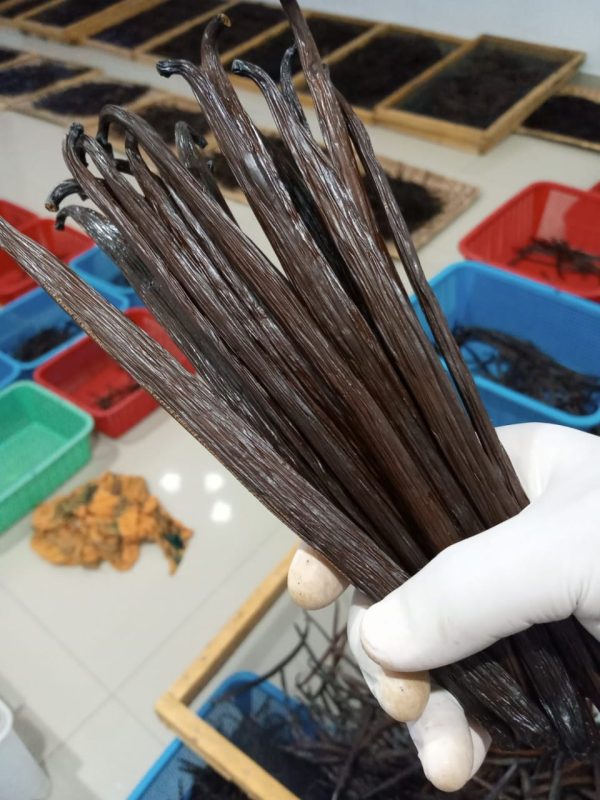
Quality sorting process at Vanillature before any bean ships
“Bourbon” Is a Variety Name, Not a Geography
The word “Bourbon” on a vanilla label does not mean the bean comes from Bourbon Island — the old colonial name for Réunion. It refers to a specific genetic lineage of Vanilla planifolia that was historically associated with that island. Today, Bourbon-type Planifolia grows across Madagascar, Uganda, Indonesia, and dozens of other origins.
When you see “Bourbon vanilla” on a label, treat it as a synonym for Vanilla planifolia with a classical curing tradition. It does not guarantee origin, it does not guarantee quality, and it carries no protected geographical status. The bean’s actual quality comes from vanillin content, moisture, and length — not the word Bourbon.
Planifolia vs. Tahitensis: Two Species, Two Flavour Profiles
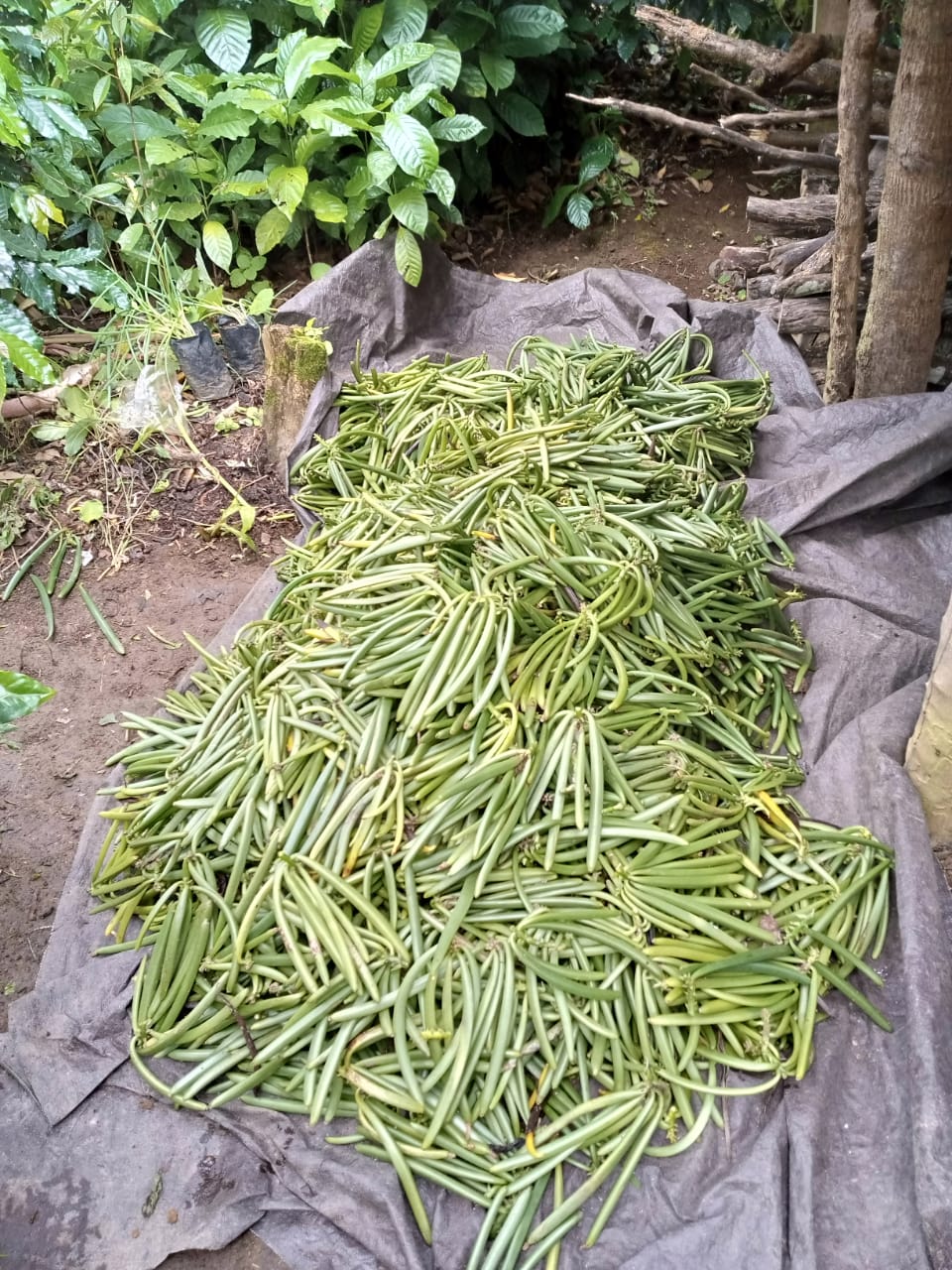
Vanilla planifolia and Vanilla tahitensis are separate species with measurably different chemistry. Planifolia delivers the deep, warm, classic vanilla character most cooks recognise — driven by vanillin concentrations that regularly reach 2.5%+ in well-grown Indonesian beans, compared with the industry average of 1.5–2.0%.
Tahitensis produces lower vanillin levels but higher concentrations of heliotropin (piperonal), which gives it a distinctly floral, anise-like quality. Dunphy et al. (2020, Food Chemistry) confirmed that heliotropin is the primary differentiating compound between the two species and that Planifolia consistently outperforms Tahitensis on total vanillin yield. Neither species is inferior — they serve different culinary purposes. Planifolia suits baking, custard, and extract-making. Tahitensis suits raw desserts, perfumery, and delicate sauces.
At Vanillature, we source both. Our Sumatra Planifolia is the core of the range; our Papua Tahitensis, grown by Bu Marlina and her network in Papua, fills the floral-forward niche.
Grade A vs. Grade B: The Numbers Behind the Labels
Grading is not a marketing exercise. It reflects two measurable parameters: bean length and moisture content. Grade A beans measure 15 cm or longer and carry a moisture content of 25–30%. That moisture level signals that enzymatic activity during curing completed correctly, locking vanillin into the bean at concentrations above 2.5%.
Grade B beans are shorter (typically under 15 cm), drier (moisture 15–25%), and carry vanillin above 1.0% — still flavourful, but concentrated differently. Grade B suits extract-making precisely because the lower moisture means more bean mass per jar. Neither grade is wrong for every application. Grade A is for whole-bean use — split pods, infused cream, visible speckling in pastry. Grade B is for alcohol extraction, where moisture is a hindrance, not an asset.
“When I select for Grade A, I check three things before anything else: the bean bends without cracking, the skin feels slightly tacky, and the length reaches my palm end to end. If any one of those is off, it goes to Grade B. The numbers match the feel every time.”
— Pak Rudi, vanilla farmer, Tapanuli, North Sumatra, 9 years cultivating Planifolia
What Vanillin Percentage Actually Tells You
Vanillin (4-hydroxy-3-methoxybenzaldehyde) is the primary flavour compound in vanilla beans. It is not the only compound — vanilla contains over 200 volatile molecules — but it is the most analytically significant and the most reliable quality proxy (Dunphy et al., 2020, Food Chemistry).
The industry standard for good-quality Planifolia sits between 1.5–2.0% vanillin by dry weight. Vanillature’s Sumatra Planifolia tests consistently above 2.5%. Our Crystal Vanilla — where vanillin crystallises visibly on the bean surface — reaches 3.5–4.0%, the highest concentration in the range. Those surface crystals are not a defect or mould. They are concentrated vanillin that has migrated outward during extended curing. When you know how to buy vanilla beans with this level of detail, you shop differently.

Moisture Content: Why “Moist” Is Not Vague
Moisture percentage is the single most misunderstood number on a vanilla label. Buyers often assume drier beans are more concentrated or more shelf-stable. The reality is more precise. A Grade A bean needs 25–30% moisture because that water content is the residue of a correctly completed curing cycle — 3–6 months of traditional sun curing that activates and fixes the vanillin compound through enzymatic breakdown of glucovanillin.
Beans with moisture below 15% have lost too much water and will be brittle, difficult to split, and extracting their seeds becomes wasteful. Beans above 35% risk mould during storage. The 25–30% window is not arbitrary — it is the equilibrium point between enzymatic preservation and microbial safety. At Vanillature, every batch clears a 5-stage quality sorting process before it reaches a customer, and moisture is checked at stage three.
Indonesia produces approximately 2,300 tonnes of vanilla annually, making it the world’s second-largest producer after Madagascar (FAO). Knowing how to buy vanilla beans from that supply means filtering by these specific parameters — not by price alone or country of origin alone.
Origin Claims: What “Sumatra” or “Papua” Actually Adds
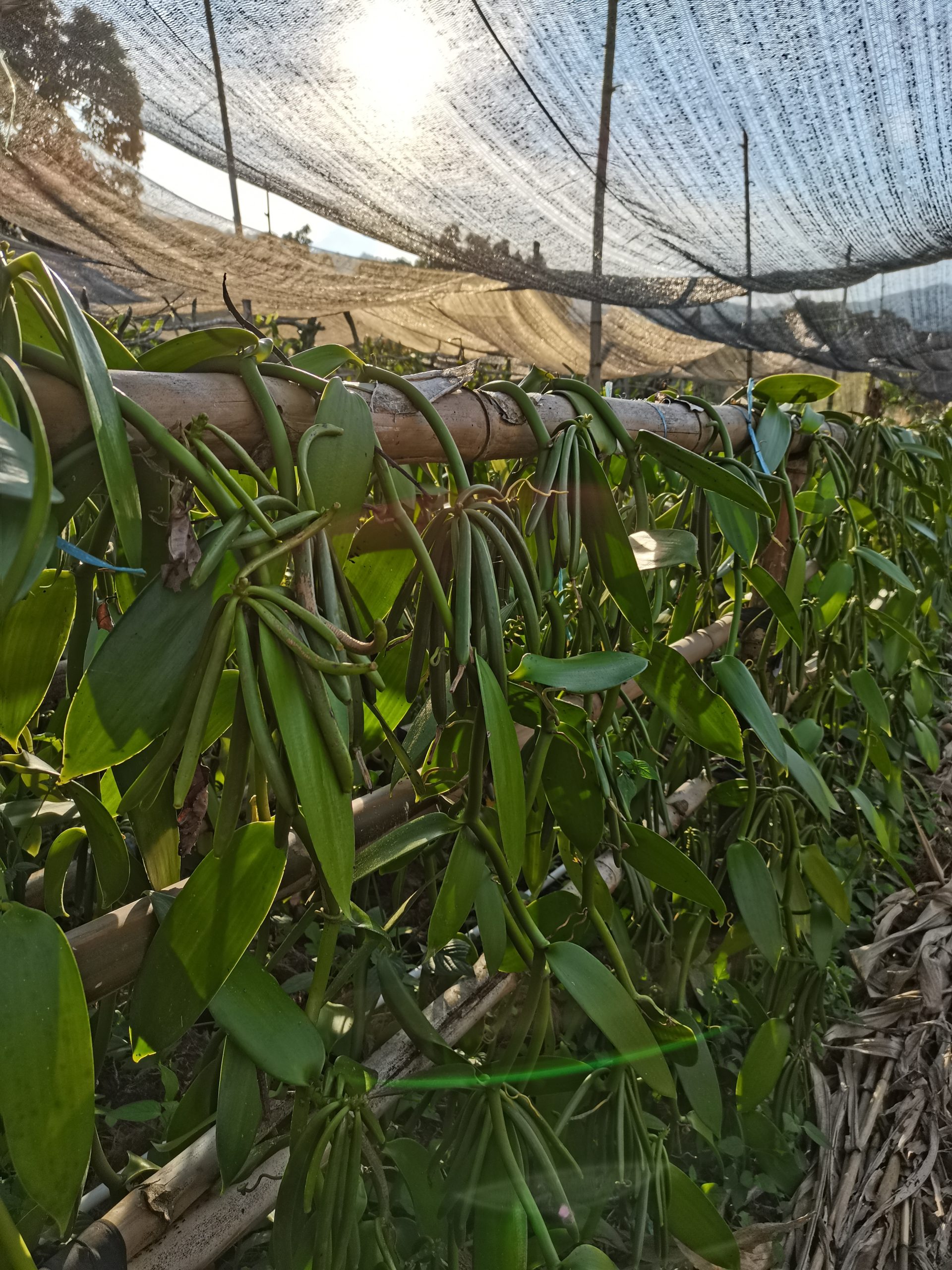
Origin on a vanilla label is meaningful when it comes with traceable sourcing, not just a country name. Vanillature’s North Sumatra farms sit at 680 metres above sea level — an elevation that slows bean maturation and concentrates aromatic compounds. Beans spend 9 months on the vine before harvest, followed by 3–6 months of traditional curing. The full cycle from flower to finished bean takes approximately 15 months.
Papua Tahitensis has a different terroir signature — lower elevation, higher humidity, and a growing environment that amplifies the heliotropin character specific to Tahitensis. When a label states origin, ask whether the brand can name the farmers. Vanillature sources directly from 500+ smallholder farmers across Sumatra and Papua. That traceability is the reason origin claims on our labels carry weight.
Frequently Asked Questions
Grade A vanilla beans measure 15 cm or longer and carry a moisture content of 25–30%, with vanillin above 2.5%. Grade B beans are shorter and drier (15–25% moisture), with vanillin above 1.0%. Grade A suits whole-bean culinary use — split pods, infused creams, pastry. Grade B suits extract-making, where lower moisture allows higher bean-to-liquid ratios.
No. “Bourbon vanilla” is a variety name referring to a genetic lineage of Vanilla planifolia — not a protected geographical designation. It carries no guarantee of origin. Bourbon-type Planifolia grows commercially in Madagascar, Indonesia, Uganda, and other countries. Quality is determined by vanillin content, moisture percentage, and bean length — not by the word Bourbon on the label.
Vanillin percentage measures the concentration of the primary flavour compound in a vanilla bean by dry weight. The industry average for quality Planifolia is 1.5–2.0%. Vanillature’s Sumatra Planifolia consistently tests above 2.5%, and Crystal Vanilla — identifiable by visible white surface crystals — reaches 3.5–4.0%. Higher vanillin means more intense, longer-lasting flavour per gram of bean used.
Look for three verifiable data points: moisture percentage, vanillin content, and bean length. A credible seller can state all three. Grade A beans must measure 15 cm+ in length, with 25–30% moisture and vanillin above 2.5% — as confirmed by quality markers research (Dunphy et al., 2020, Food Chemistry). If a label states grade without stating moisture or vanillin, the grade claim is unverified. Traceable sourcing — named farms or farmer networks — is the strongest additional signal of a label worth trusting.
Shop Vanilla Beans You Can Read the Label On
Every Vanillature bean ships with a clear grade, measured vanillin content, and moisture percentage — because learning how to buy vanilla beans well should be rewarded with a supplier who makes that information easy to find. Our Sumatra Planifolia Grade A clears 2.5%+ vanillin. Our Crystal Vanilla reaches 3.5–4.0%. All batches pass a 5-stage quality sort before they leave North Sumatra.
Vanillature holds a 5.0 star rating from 174+ verified buyers on eBay, with additional verified ratings on Shopee and TikTok Shop Indonesia — independently confirmed quality across three separate platforms.
Vanillature (PT. Sumber Bukit Jaya) — Jl. Prof. H.M. Yamin SH No. 224M, Medan, North Sumatra 20234, Indonesia — +62 878-6986-1288
