


Vanilla Knowledge
Vanilla for Coffee: Which Type Works Best and Why
Sep
Real vanilla in coffee is not a flavour trend. It is chemistry — and the form you choose determines everything about the result.
A single Grade A Planifolia bean steeped in 500 ml of cold brew releases vanillin, heliotropin, and more than 200 volatile aroma compounds over 24 hours. Vanilla syrup delivers none of these. It delivers sugar and synthetic vanillin at a fraction of the cost, and the difference registers on the palate in the first sip. This post breaks down which type of real vanilla works best for each coffee preparation — from espresso to cold brew — and exactly why the origin and variety matter. From flower to finished bean, Vanillature’s vanilla takes approximately 15 months to produce, and that time is compressed into every cup.
Why Real Vanilla Changes Coffee at a Chemical Level
Vanilla flavour is not a single compound. Research by Havkin-Frenkel & Belanger (2011) identified more than 200 volatile molecules in cured vanilla beans, with vanillin as the primary contributor and heliotropin (piperonal) as a key secondary note. Synthetic vanilla extract contains vanillin only — at roughly 35 mg per litre. Real beans release the full compound profile into the liquid.
Sumatra Planifolia from Vanillature tests consistently above 2.5% vanillin content, compared to the industry average of 1.5–2.0%. In coffee, that extra vanillin concentration rounds out acidity and amplifies sweetness without added sugar. The difference is measurable and immediate.

Cold Brew: Steeping a Whole Bean Is the Correct Method
Cold brew extracts compounds slowly at low temperature over 12–24 hours. This process suits whole vanilla beans perfectly. Use 1 split Grade A bean per 500 ml of cold brew concentrate before refrigerating overnight.
The cold water pulls vanillin and heliotropin steadily without the degradation that heat causes. The result is a smooth, floral-backed coffee with no bitterness and no cloying sweetness. At Vanillature, our Grade A beans carry 30–35% moisture content, which means the bean remains supple enough to infuse evenly throughout the full steep period.
After steeping, rinse the bean and store it in a small jar of sugar. It will perfume the sugar for up to 4 further uses — nothing is wasted.
Hot Coffee: Use Paste or Powder, Not a Whole Bean
Hot brewing extracts quickly — an espresso pulls in 25–30 seconds, a pour-over in 3–4 minutes. A whole bean cannot release meaningful vanillin in that window. Vanilla paste or fine vanilla powder is the correct form for hot coffee.
Add ¼ teaspoon of vanilla paste directly to the coffee grounds before brewing, or stir it into the finished espresso. Vanilla powder — ground from whole dried beans — blends into the dry coffee bed and extracts in parallel with the coffee itself. For a double shot of espresso, 0.2 grams of powder delivers a clean, round vanilla note that integrates fully with the roast.
Quick Reference: Vanilla Form by Brew Method
- Cold brew (12–24 hr steep): 1 split whole bean per 500 ml
- Espresso / Americano: ¼ tsp vanilla paste stirred into the shot
- Pour-over / drip: 0.2 g vanilla powder added to dry grounds
- Latte / flat white: vanilla simple syrup (see below) or ½ tsp paste in steamed milk
- Cold latte / iced coffee: vanilla simple syrup, 10–15 ml per serve
Vanilla Simple Syrup: Make It From Real Beans
Commercial vanilla syrup contains synthetic vanillin and glucose syrup. Real-bean vanilla simple syrup takes 15 minutes to prepare and lasts 3 weeks refrigerated.
Combine 200 ml water, 200 g white sugar, and 1 split Grade A bean in a small saucepan. Heat to a gentle simmer for 8 minutes, then remove from heat and steep for a further 30 minutes before straining. The finished syrup carries genuine vanillin at measurable concentration — not a synthetic approximation. Use 10–15 ml per iced coffee or latte.
One bean produces approximately 400 ml of syrup. That single bean spent 9 months maturing on the vine before a further 3–6 months in traditional sun curing. The flavour density in the syrup reflects every one of those months.
Papua Tahitian Vanilla for Floral Coffee — Sumatra Bourbon for Espresso
Variety selection matters. Papua Tahitian vanilla (Vanilla tahitensis) carries 0.5–1.5% vanillin alongside elevated heliotropin, the compound responsible for its distinctive cherry-anise floral note. In light-roast filter coffee, those floral aromatics amplify the coffee’s own fruit notes.
Bu Marlina farms Tahitian vanilla in Papua and works directly with Vanillature’s sourcing team.
“For light coffee — a pour-over or a cold brew with bright beans — I always say use the Tahitian. The flower smell comes through. With dark espresso you need something stronger, more earthy. That is when Sumatra Planifolia is better.”
— Bu Marlina, vanilla farmer, Papua, 8 years cultivating Tahitian variety
Sumatra Planifolia (Vanilla planifolia), grown at 680 metres above sea level in North Sumatra, delivers that earthy depth Bu Marlina describes. At 2.5%+ vanillin, it stands up to the intensity of dark-roast espresso without being overwhelmed. For flat whites, cappuccinos, and cold brew made from medium-dark beans, Sumatra Planifolia is the correct choice.
For fruity Ethiopian or Kenyan filter coffee, Papua Tahitian vanilla amplifies the natural stone-fruit notes already in the cup. For Brazilian or Sumatran dark-roast espresso, the Planifolia’s rich, woody vanillin is the better pairing. This is not preference — it is matching compound profiles to maximise sensory coherence (Havkin-Frenkel & Belanger, 2011).
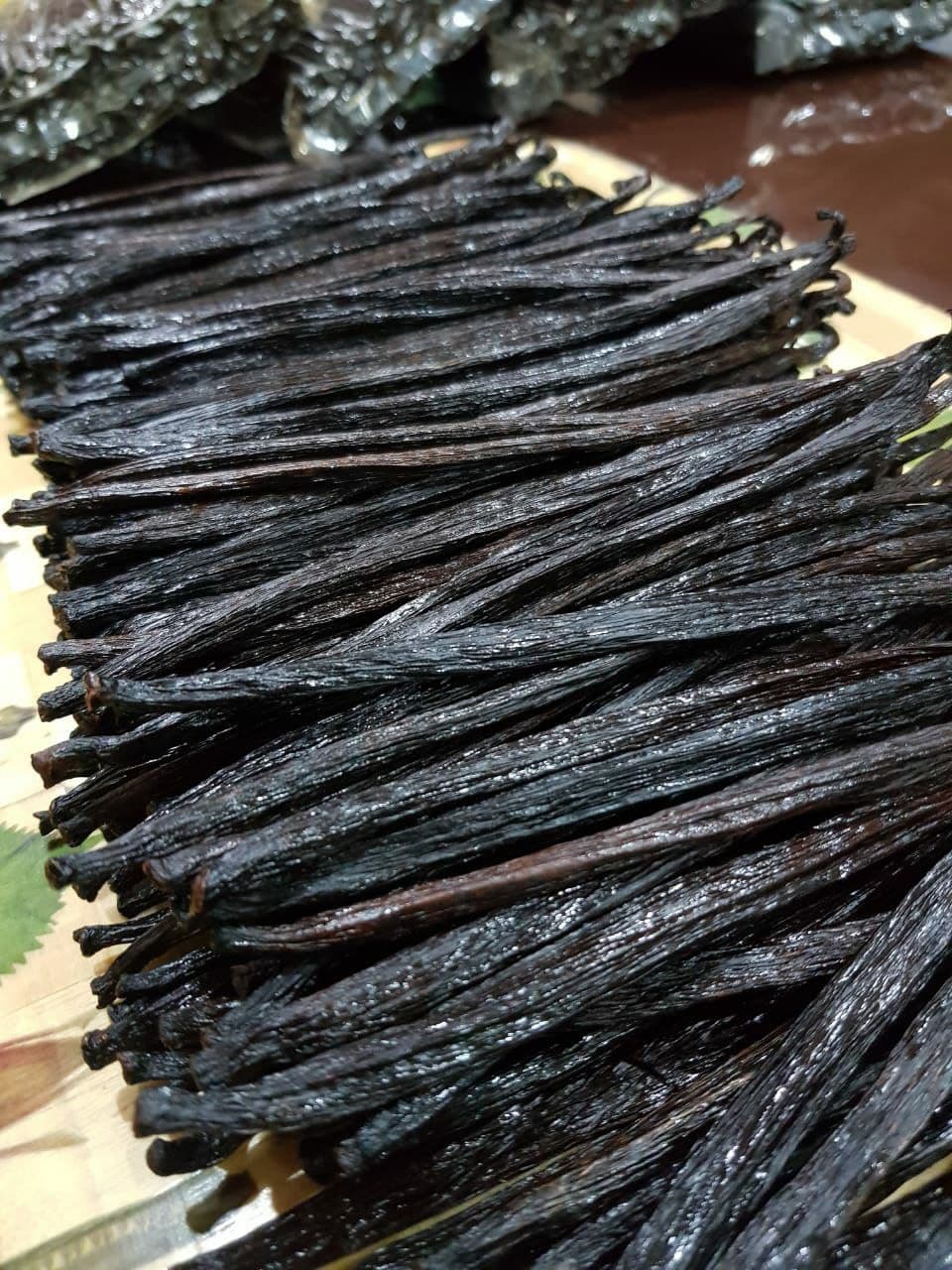
Side-by-side comparison of Tahitian and Planifolia beans — Papua vs. North Sumatra
The Crystal Vanilla Option: Maximum Vanillin for Espresso
For the most concentrated vanilla hit in a short extraction like espresso, Vanillature’s Crystal Vanilla is the logical choice. The white crystals visible on the bean surface are vanillin that has migrated outward during curing — concentrated at 3.5–4% vanillin content, the highest in our entire range.
Shave a small amount of crystal directly into an espresso shot, or scrape the crystal-coated pod wall into vanilla paste. The crystals dissolve in seconds in hot liquid, delivering an immediate, clean vanillin hit that integrates without bitterness. For baristas building signature espresso drinks, Crystal Vanilla is the most precise tool available.
Frequently Asked Questions
Add Real Vanilla to Your Coffee Routine
Vanillature sources directly from 500+ smallholder farmers across Sumatra and Papua. Every bean passes a 5-stage quality sorting process before leaving the farm.
Vanillature holds a 5.0 star rating from 174+ verified buyers on eBay, with additional verified ratings on Shopee and TikTok Shop Indonesia — independently confirmed quality across three separate platforms.
Vanillature (PT. Sumber Bukit Jaya) — Jl. Prof. H.M. Yamin SH No. 224M, Medan, North Sumatra 20234, Indonesia — +62 878-6986-1288