


Vanilla Knowledge
500 Families, One Harvest: How Vanillature Sources Directly from Sumatra
Sep
500 Families, One Harvest: How Vanillature Sources Directly from Sumatra
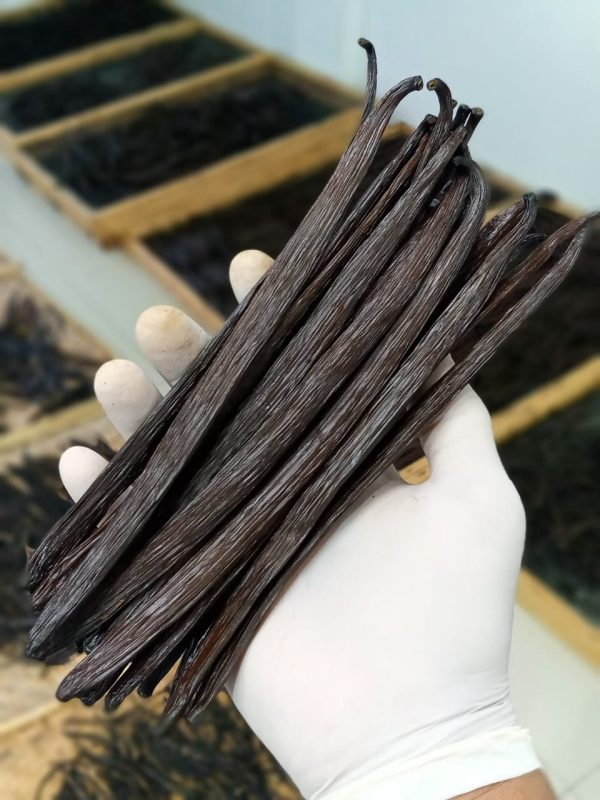
Every vanilla bean in our range traces back to a single pair of hands — a smallholder farmer in Sumatra or Papua who pollinated each flower within its 6-to-8-hour daily window, then waited 15 months before a finished bean left the farm. That chain has no middlemen. Here is how Vanillature’s Indonesian vanilla beans direct source model works, and why it matters for flavour, farmers, and the global spice trade.
Why Direct Sourcing Changes Everything
The global vanilla trade runs on layers. A farmer sells green beans to a local collector. That collector sells to a regional broker. The broker sells to an exporter. By the time vanilla reaches a buyer, the farmer has received as little as 10–15% of the final price. Vanillature was built to dismantle that structure.
Our Indonesian vanilla beans direct source network connects 500+ smallholder farmers across North Sumatra and Papua directly to international buyers. No intermediary captures the value that belongs in the farmer’s household. That structural choice is the foundation of everything we do — it drives quality, traceability, and price fairness simultaneously.
The 500+ Farmers Behind Every Order
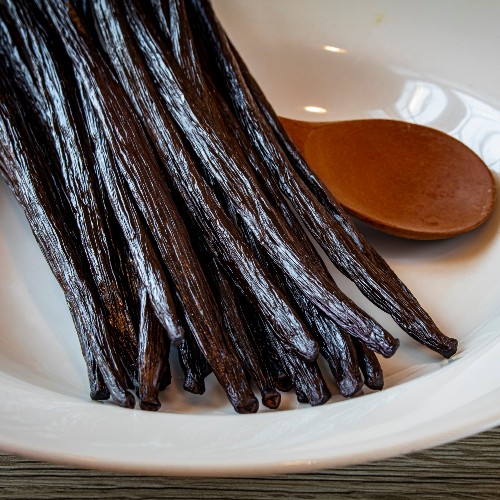
Vanillature partners with more than 500 smallholder families across Sumatra and Papua. Most North Sumatra farms sit at 680 metres above sea level — an elevation that produces the slower, more complex bean development responsible for vanillin levels consistently above 2.5%, versus the global industry average of 1.5–2.0%.
Each farmer hand-pollinates every single flower during its open window of just 6 to 8 hours per morning. There is no mechanical shortcut. One person, one flower, one decision. Multiply that by thousands of flowers per farm across more than 500 families, and the labour scale becomes clear.
After pollination, beans remain on the vine for 9 months. Harvest triggers a 3-to-6-month traditional sun-curing process — the enzymatic phase that converts glucovanillin into the vanillin compound responsible for flavour (Havkin-Frenkel & Belanger, 2011). The full cycle — from first flower to export-ready bean — runs approximately 15 months.
“When the buyer knows my name and sees my farm, I take more care — not because someone checks on me, but because I am proud. The bean from Simalungun has its own character. I have learned its seasons across 12 years and I want that to show.”
— Pak Irwan, vanilla farmer, Simalungun, North Sumatra, 12 years cultivating Planifolia
Fair Pricing: 3× the Commodity Rate
Commodity vanilla prices fluctuate sharply — the market dropped from USD 600 per kilogram in 2018 to below USD 100 in 2022, devastating growers locked into broker relationships. Vanillature pays partner farmers 3 times the prevailing commodity market rate, regardless of market swings.
That premium is not charity — it is the cost of quality. Farmers who earn a living wage invest in proper curing, careful sorting, and correct moisture management. Grade A beans from our network carry 30–35% moisture and vanillin above 2.0%. That standard does not emerge from poverty pricing.
The FAO has documented that direct trade models and fair-trade premiums in smallholder vanilla supply chains can increase grower incomes by 40–80% compared to commodity broker structures (FAO, 2022). Our network reflects exactly that outcome — stable income, reinvestment in farms, and multi-generational commitment to vanilla cultivation.
Traceability, Certifications, and the Export Chain
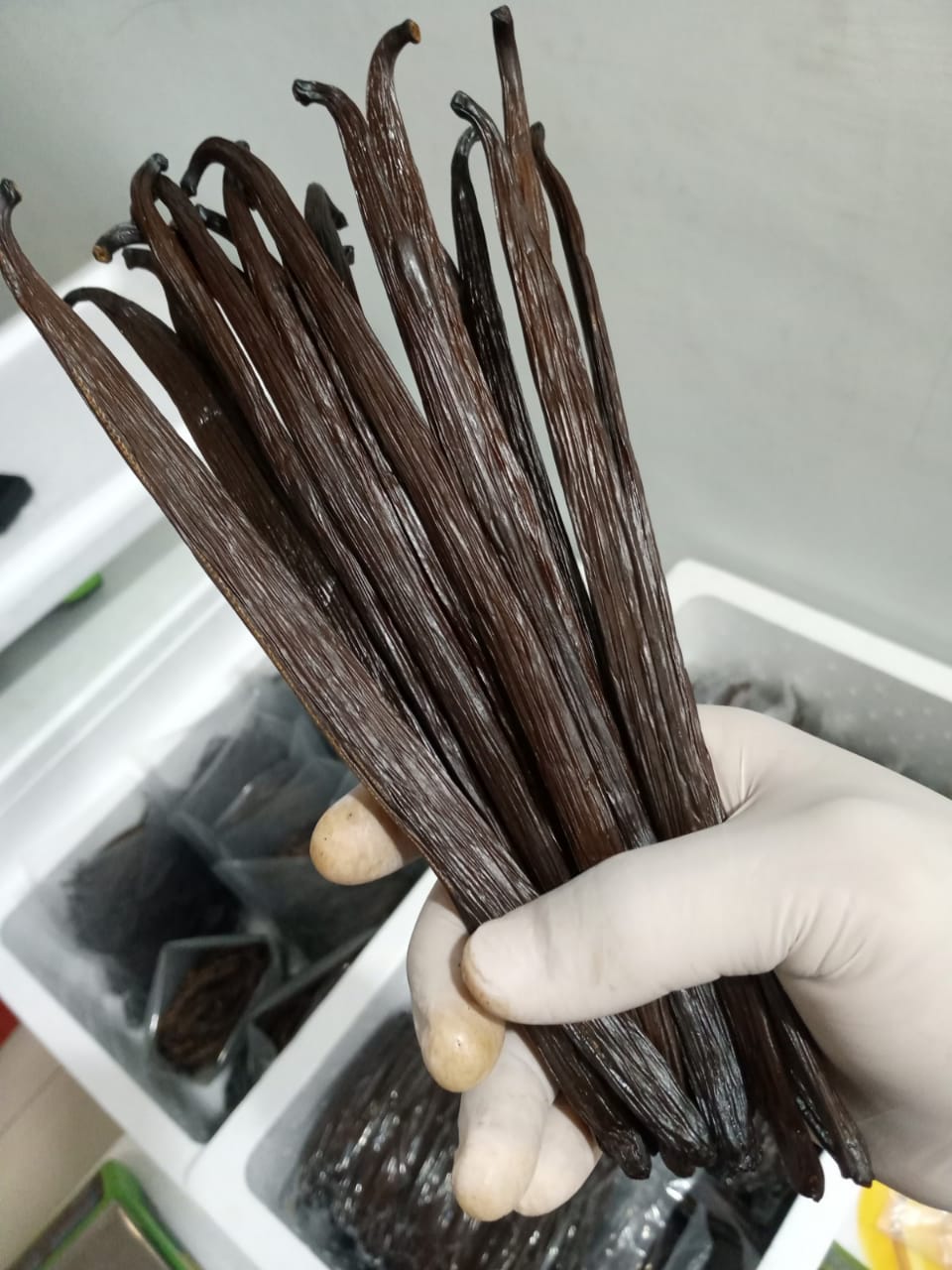
Direct sourcing only delivers on its promise when every link in the chain is documented. Vanillature operates with full FDA compliance for exports to the United States and holds REX (Registered Exporter) certification for shipments into the European Union. These are not marketing labels — they require lot-level traceability back to the farm.
Every batch passes a 5-stage quality sorting process before it leaves Indonesia. Beans are evaluated for moisture content, visual grade, length, flexibility, and vanillin aroma. Beans that fall below Grade B standards — vanillin below 1.0%, moisture outside 15–25% — are rejected from the export lot entirely.
Indonesia produces approximately 2,300 tonnes of vanilla annually, ranking second globally after Madagascar (FAO, 2022). Within that volume, traceable, directly sourced Indonesian vanilla beans represent a small and genuinely premium fraction. Buyers choosing a direct-source model choose accountability at every step.
Vanillature Quality Benchmark: Our Sumatra Planifolia tests above 2.5% vanillin — versus an industry average of 1.5–2.0%. Our Crystal Vanilla reaches 3.5–4% vanillin, with surface crystals formed from concentrated vanillin compound naturally exuding through the cured bean wall. Every figure comes from batch-level testing, not category averages.
What This Model Means for the Buyer
When you purchase Vanillature beans, you receive a product with a documented origin: a named region, a specific elevation, a verified farmer network, and a certifiable export chain. That is what the Indonesian vanilla beans direct source label actually requires — not marketing copy, but a real and auditable supply structure.
Our 500+ partner farmers are not anonymous suppliers. Pak Irwan in Simalungun knows his beans reach customers who care. Bu Sari in Deli Serdang understands her 11 years of slow-curing expertise translates into the Crystal Vanilla product that sits at the top of our range. That connection runs both ways — and it is what makes Vanillature beans taste the way they do.
Buyers investing in quality vanilla are increasingly demanding traceability (Dunphy et al., 2020). The Vanillature model answers that demand with structure, not promises.
Frequently Asked Questions
Taste the Source Directly
Every bean ships with its origin, its grade, and the story of the farmer network behind it. No middlemen. No anonymous supply chains. Just 15 months of work and 2.5%+ vanillin in every pod.
Vanillature holds a 5.0 star rating from 174+ verified buyers on eBay, with additional verified ratings on Shopee and TikTok Shop Indonesia — independently confirmed quality across three separate platforms.
Vanillature (PT. Sumber Bukit Jaya) — Jl. Prof. H.M. Yamin SH No. 224M, Medan, North Sumatra 20234, Indonesia — +62 878-6986-1288
