


Vanilla Knowledge
Indonesian vs Madagascar Vanilla Beans: Vanillin, Flavour and Price Compared
Sep
Indonesian vs Madagascar Vanilla Beans: Vanillin, Flavour and Price Compared
Vanillin dry basis — Sumatra Grade A
(TÜV NORD CERT.2309047722)
Elevation — North Sumatra volcanic highland farms
Minimum traditional sun-curing — Vanillature standard
1. Vanillin Content: What the Certificates Actually Show
Vanillin (4-hydroxy-3-methoxybenzaldehyde) is the primary flavour compound in cured Vanilla planifolia beans. Havkin-Frenkel & Belanger (2011) confirmed that vanillin concentration is the single strongest predictor of perceived flavour intensity in commercial vanilla extracts.
At Vanillature, we test every production batch through TÜV NORD under AOAC 995.25. Our Sumatra Grade A consistently tests above 3.0% vanillin dry basis — the certified result for batch CERT.2309047722 is 3.39%. The industry average for Madagascar Bourbon-type beans sits between 1.5% and 2.0% (Havkin-Frenkel & Belanger, 2011).
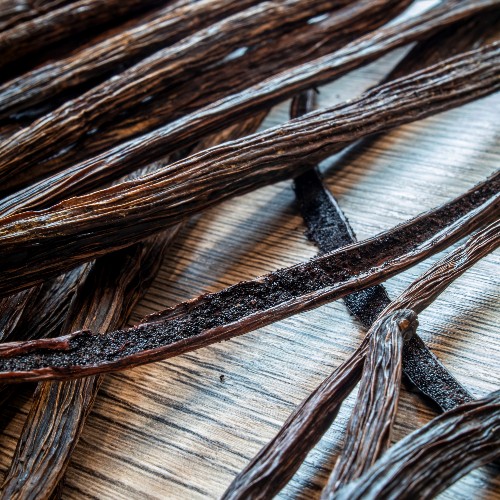
Our Crystal Vanilla reaches 3.5–4.0% vanillin. The white surface crystals visible on those beans are concentrated vanillin recrystallised during extended curing — a quality indicator, not a defect.
2. Flavour Profile: Where Sumatra and Madagascar Diverge
Madagascar Bourbon vanilla carries a classic creamy, sweet, slightly woody profile. It dominates institutional purchasing because it established the benchmark in European and American markets through the 20th century (Bythrow, 2005, Journal of Food Chemistry).
Sumatra Planifolia grown at 680 metres above sea level in North Sumatra’s volcanic highlands produces a measurably different secondary compound profile. Heliotropin (piperonal) notes are more pronounced. Earthy, slightly smoky undertones emerge from the 6-month minimum sun-curing process — a direct function of slow enzymatic hydrolysis at ambient tropical temperatures.
Farmers with over a decade of curing experience in our Deli Serdang network explain that the slow, repeated sun-and-shade cycling during traditional curing concentrates secondary glucosides that short-process industrial curing cannot replicate. This is the structural reason Sumatra beans carry layered complexity beyond raw vanillin concentration.
For bakery, ice cream, and beverage applications requiring a bold, complex top note, the Sumatra profile performs at lower usage rates — a direct cost-per-batch advantage for industrial formulators.
3. Head-to-Head Data: Indonesian Sumatra vs Madagascar Vanilla
The table below summarises the Indonesian vanilla vs Madagascar vanilla technical comparison across the parameters that matter most to commercial buyers and food scientists.
| Parameter | Sumatra (Vanillature) | Madagascar Bourbon (Typical) |
|---|---|---|
| Vanillin — dry basis | 3.39% (Grade A, CERT.2309047722) | 1.5–2.0% (industry avg) |
| Moisture — Grade A | 30–35% | 25–35% |
| Curing method | Traditional sun curing, min 6 months | Bourbon method, 3–6 months |
| Farm elevation | 680 m above sea level (North Sumatra) | 0–1,000 m (Sava region) |
| Flavour character | Bold, earthy, heliotropin-forward | Creamy, sweet, woody |
| Quality certification | TÜV NORD, AOAC 995.25 | Variable — buyer-dependent |
| Supply chain model | 500+ traceable smallholder farmers | Predominantly aggregator-traded |
| National production | ~2,300 tonnes/yr (FAO; #2 globally) | ~2,500–3,000 tonnes/yr (#1 globally) |
| Price volatility | Moderate — diversified origin | High — cyclone exposure (2015–2018 spike) |
| Third-party test access | Certificate available per batch | Batch-level certificates uncommon |
4. Price Stability and Supply Chain Risk
Madagascar controls approximately 75–80% of global vanilla trade by volume (USDA Foreign Agricultural Service, 2023). That concentration creates structural price risk. The 2015–2018 cyclone cycle drove Madagascar vanilla spot prices above USD 600 per kilogram. Buyers who had diversified to Indonesian origin avoided the worst of that volatility.
Indonesia produces approximately 2,300 tonnes annually, ranking second globally (FAO). ITC Trade Map data (2023) shows Indonesian vanilla export unit values running 20–35% below Madagascar equivalents during stable market periods — while vanillin concentration in Sumatra certified beans runs materially higher.
Supply chain transparency is the second risk dimension. Aggregator-dominated Madagascar supply chains make traceability to farm level difficult. At Vanillature, every kilogram traces to one of our 500+ partner farmers across Sumatra and Papua. Batch certificates are available before purchase confirmation — a requirement increasingly written into B2B procurement contracts in the EU and UK post-2023.
5. Which Origin Should Commercial Buyers Specify?
This is not a binary choice for most commercial users. Sumatra origin is the stronger specification when vanillin yield, price stability, and farm-level traceability are primary criteria. Madagascar remains a defensible specification where a classic Bourbon flavour profile is contractually required by an end customer.
For extract manufacturers, the Indonesian vanilla vs Madagascar vanilla technical comparison resolves simply: higher vanillin concentration per kilogram of raw bean means lower bean usage per batch at equivalent flavour intensity. At 3.39% vs 1.8% vanillin, the arithmetic consistently favours Sumatra origin on a cost-per-vanillin-gram basis.
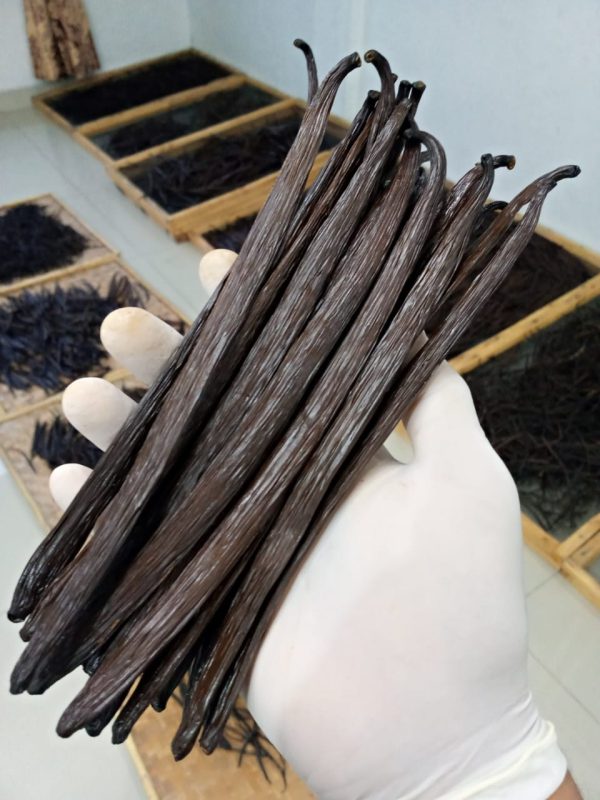
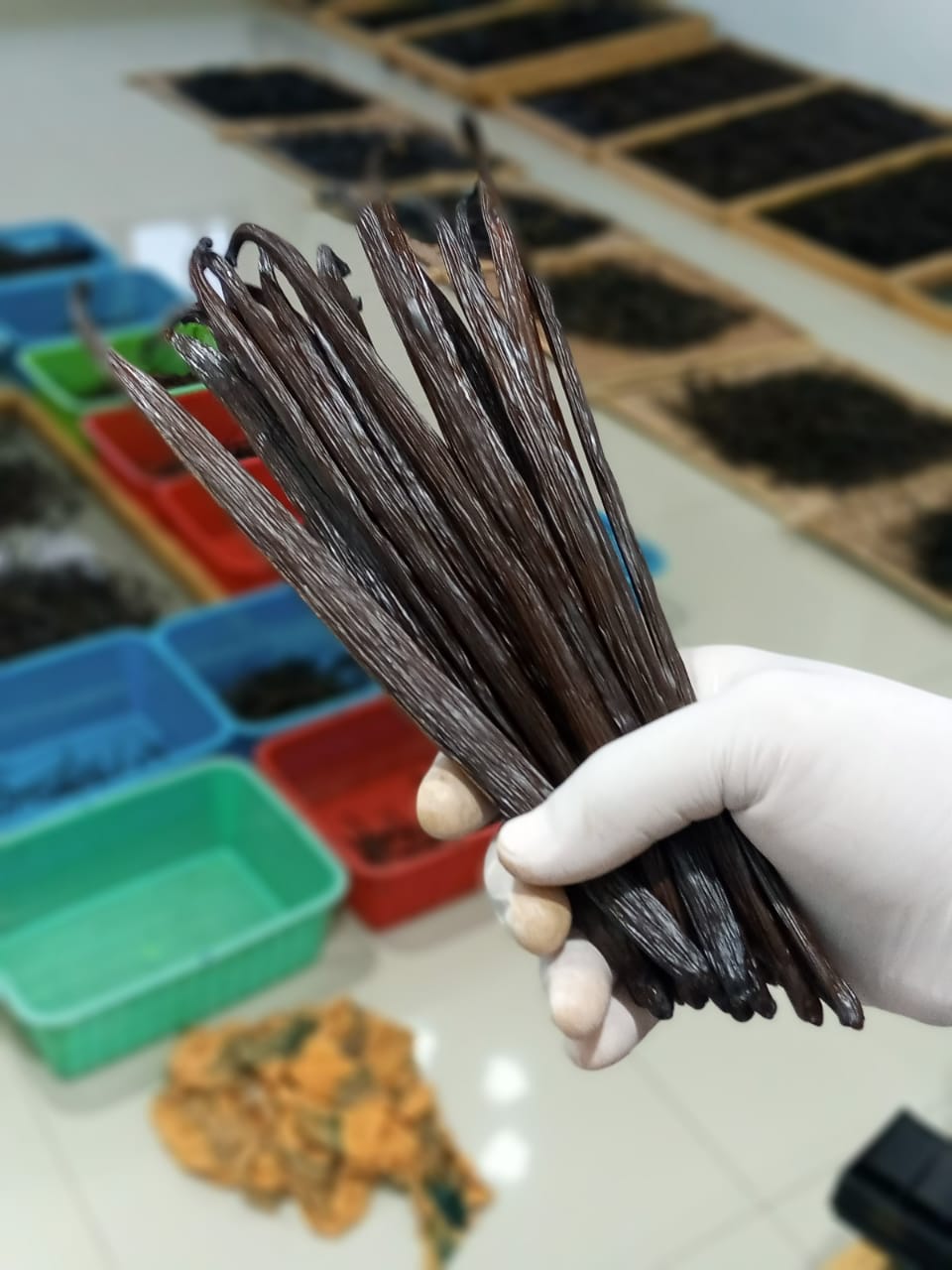
Traditional sun curing on raised racks — Vanillature partner farms, Deli Serdang, North Sumatra. Minimum 6-month curing protocol.
For flavour houses and artisan producers who require a recognisable Bourbon character, a blend specification — 70% Sumatra for vanillin mass, 30% Madagascar for aromatic character — is a formulation approach several of our wholesale partners have adopted successfully.
Frequently Asked Questions
Sources cited in this article:
Havkin-Frenkel, D. & Belanger, F.C. (2011). Handbook of Plant and Crop Science — Vanilla. Taylor & Francis. [vanillin as primary quality marker]
Bythrow, J.D. (2005). Journal of Food Chemistry. Vanillin compound research and flavour characterisation of Bourbon vanilla.
USDA Foreign Agricultural Service (2023). Vanilla: World Markets and Trade. Washington, D.C.: USDA FAS.
ITC Trade Map (2023). Indonesian and Madagascar vanilla export unit value data. International Trade Centre, Geneva.
FAO (2024). FAOSTAT Crop Production Data — Vanilla. Food and Agriculture Organization of the United Nations.
TÜV NORD Certificate CERT.2309047722 — Vanillin content analysis, AOAC 995.25 method. Issued to Vanillature (PT. Sumber Bukit Jaya).
