


Vanilla Knowledge
Vanilla Planifolia vs Tahitensis: A Buyer’s Technical Comparison
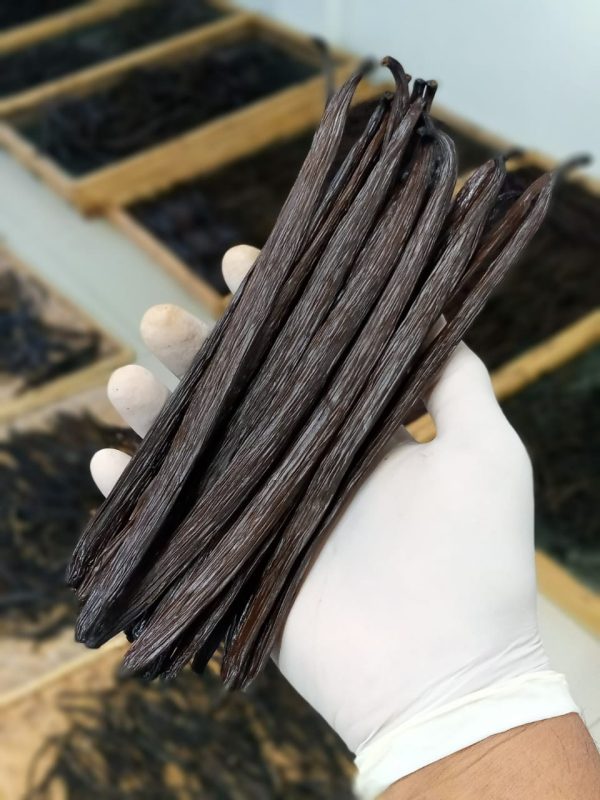
Sep
Vanillin dry basis in Vanillature Sumatra Planifolia (CERT.2309047722, TÜV NORD)
Dominant compound in Tahitensis — responsible for floral-anise aroma, not vanillin
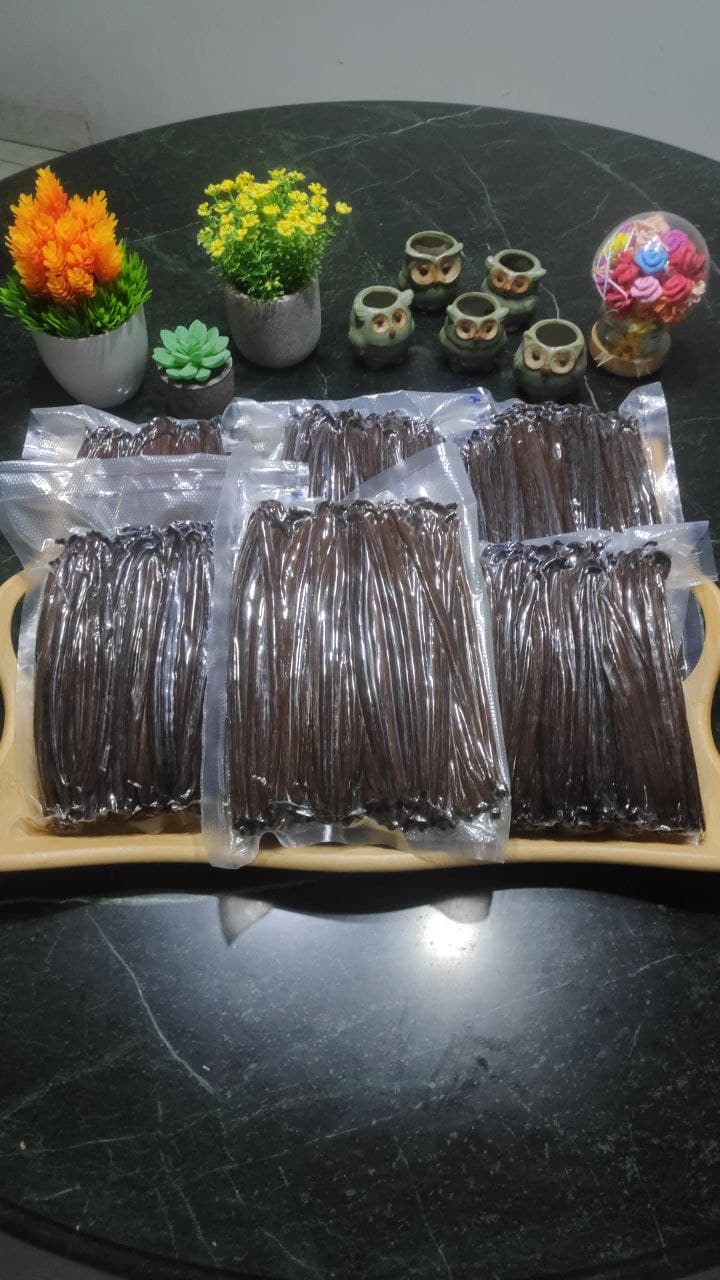
From hand-pollination to finished bean — both species produced this way in Indonesia

Two Species, One Genus — Very Different Chemistry
Vanilla planifolia originated in Mexico and accounts for roughly 95% of global vanilla production today (FAO, 2023). Indonesia alone produces approximately 2,300 tonnes annually, ranking it second globally after Madagascar. Vanilla tahitensis is a hybrid species, most likely a cross between V. planifolia and V. odorata, and it represents a far smaller share of world supply.
The key chemical divergence was documented clearly by Bauer et al. (2008, Flavour and Fragrance Journal): Planifolia beans concentrate vanillin as their primary flavour compound, while Tahitensis accumulates heliotropin (piperonal) alongside lower vanillin levels. This difference in aroma profile is not subtle — it is categorical.
Dunphy et al. (2020, Food Chemistry) confirmed that enzymatic activity during the curing phase governs which volatile compounds reach their peak concentrations in the finished bean. Both species require the same 3–6 months of traditional curing, but the enzyme pathways produce different ratios of flavour-active molecules depending on the species.
Aroma and Flavour: What Each Species Actually Delivers
Planifolia delivers a warm, woody, caramel-forward profile. The high vanillin concentration — above 2.0% in quality-grade beans, and reaching 3.5–4% in Vanillature’s Crystal Vanilla where surface crystals are concentrated vanillin — integrates seamlessly into baked goods, custards, and extract formulations. It amplifies rather than redirects surrounding flavours.
Tahitensis opens with a distinct floral note followed by cherry, anise, and stone-fruit undertones. Heliotropin drives this profile. The vanillin is present but plays a supporting role. This makes Tahitensis a better fit for applications where floral complexity is the goal — cold desserts, chocolate ganaches, and light cream-based confections.
| Attribute | Planifolia | Tahitensis |
|---|---|---|
| Primary compound | Vanillin (above 2.0% dry basis; Sumatra: 3.39%) | Heliotropin (piperonal); vanillin secondary |
| Aroma profile | Warm, woody, caramel, creamy | Floral, cherry, anise, fruity |
| Bean appearance | Long (14–20 cm), dark brown, oily | Shorter, plumper, lighter in colour |
| Best applications | Extracts, baked goods, custards, ice cream | Cold desserts, ganaches, fruit-forward pastries |
| Global production share | ~95% of world supply (FAO, 2023) | ~5% — niche, mainly Tahiti and Papua |
| Curing time | 3–6 months traditional sun curing | 3–6 months — same process |
| Hand-pollinated | Yes — 6–8 hour window daily | Yes — same manual process |
Extract Makers: Which Species Performs Better in Alcohol Extraction?
For commercial and home extract production, Planifolia is the industry standard — and for measurable reasons. A higher starting vanillin content means more flavour-active compound transfers into solution per gram of bean. Starting at 3.39% vanillin dry basis, Vanillature’s Sumatra Planifolia extracts faster and produces a darker, more potent extract than beans sitting at the 1.5% industry average.
The standard USDA extract specification requires a minimum of 35% alcohol and extraction from at least 13.35 oz of beans per gallon. With Planifolia at 3.39% vanillin, that specification produces a noticeably stronger result than the same formula applied to low-vanillin beans.
Tahitensis extract is a niche product — valid for specific applications but not a direct substitute. Its heliotropin content does not extract identically to vanillin under the same alcohol concentrations. Bauer et al. (2008, Flavour and Fragrance Journal) noted distinct solubility differences between vanillin and heliotropin in ethanol solutions, which affects how each species performs in tincture and extract production.
How Indonesian Farmers Grow Both Species — and What That Means for Quality
Indonesia produces both species. Planifolia dominates the Sumatra growing regions at 680 metres above sea level in North Sumatra. Papua produces Tahitensis alongside Planifolia. Vanillature works with 500+ smallholder farmers across both regions.
Both species require identical manual pollination. The vanilla flower opens for just 6–8 hours each day, between approximately 6 am and 9 am. Farmers must reach each flower within that window — there is no mechanical alternative. After successful pollination, each bean matures on the vine for 9 months before harvest, then undergoes 3–6 months of traditional sun curing.
Farmers in our Deli Serdang network with more than a decade of curing experience explain that Planifolia beans require particular attention during the sweating phase — the alternating heat and shade cycles that trigger enzymatic conversion of glucovanillin into free vanillin. Rushing this stage by even 2–3 weeks produces measurably lower vanillin readings at the finished stage. The 15-month total production timeline is not a constraint — it is the mechanism of quality.
At Vanillature, we sort every batch through a 5-stage quality process before grading. Grade A beans must test above 3.0% vanillin dry basis with moisture between 30–35%. Grade B beans must test above 1.0% vanillin. Both grades are tested against AOAC 995.25 methodology independently verified by TÜV NORD.
The Direct Vanilla Planifolia vs Tahitensis Decision Guide
The vanilla planifolia vs tahitensis comparison resolves quickly once you define your end use. Extract production, commercial baking, ice cream bases, and any application that needs robust vanilla character at volume — choose high-vanillin Planifolia, ideally above 2.5% dry basis.
Specialty pastry work where floral complexity is the differentiating feature — Tahitensis earns its place. The cost is typically higher per kilogram precisely because supply is tighter: Tahitensis represents approximately 5% of global vanilla production.
The vanilla planifolia vs tahitensis comparison should always include a third variable: the specific farm and curing quality behind the bean. Two Planifolia beans from different origins can test at 1.4% and 3.39% vanillin respectively. Species selection matters — but origin and post-harvest practice determine the final number on the test certificate.
Shop Certified Planifolia Beans — Direct from Sumatra
Every batch TÜV NORD tested. Every bean hand-selected through a 5-stage sort. Planifolia at 3.39% vanillin dry basis and Crystal Vanilla at 3.5–4% — the highest vanillin concentration in our range.
Vanillature holds a 5.0 star rating from 214 verified buyers on eBay, with additional verified ratings on Shopee and TikTok Shop Indonesia — independently confirmed quality across three separate platforms.
Vanillature (PT. Sumber Bukit Jaya) — Jl. Prof. H.M. Yamin SH No. 224M, Medan, North Sumatra 20234, Indonesia — +62 878-6986-1288
