


Vanilla Knowledge
Grade A vs Grade B Vanilla Beans: Cost Per Unit of Flavour
Sep
Grade B vanilla beans can cost 30–50% less per gram than Grade A — yet they can deliver more extractable vanillin per dollar spent. Understanding the grade A vs grade B vanilla beans cost per flavour calculation changes how serious extract makers buy. Here is the honest arithmetic.
Vanillin dry basis — Vanillature Grade A
(CERT.2309047722, TÜV NORD, AOAC 995.25)
Minimum bean weight per 100 ml alcohol for legal vanilla extract (FDA CFR 21 §169.175)
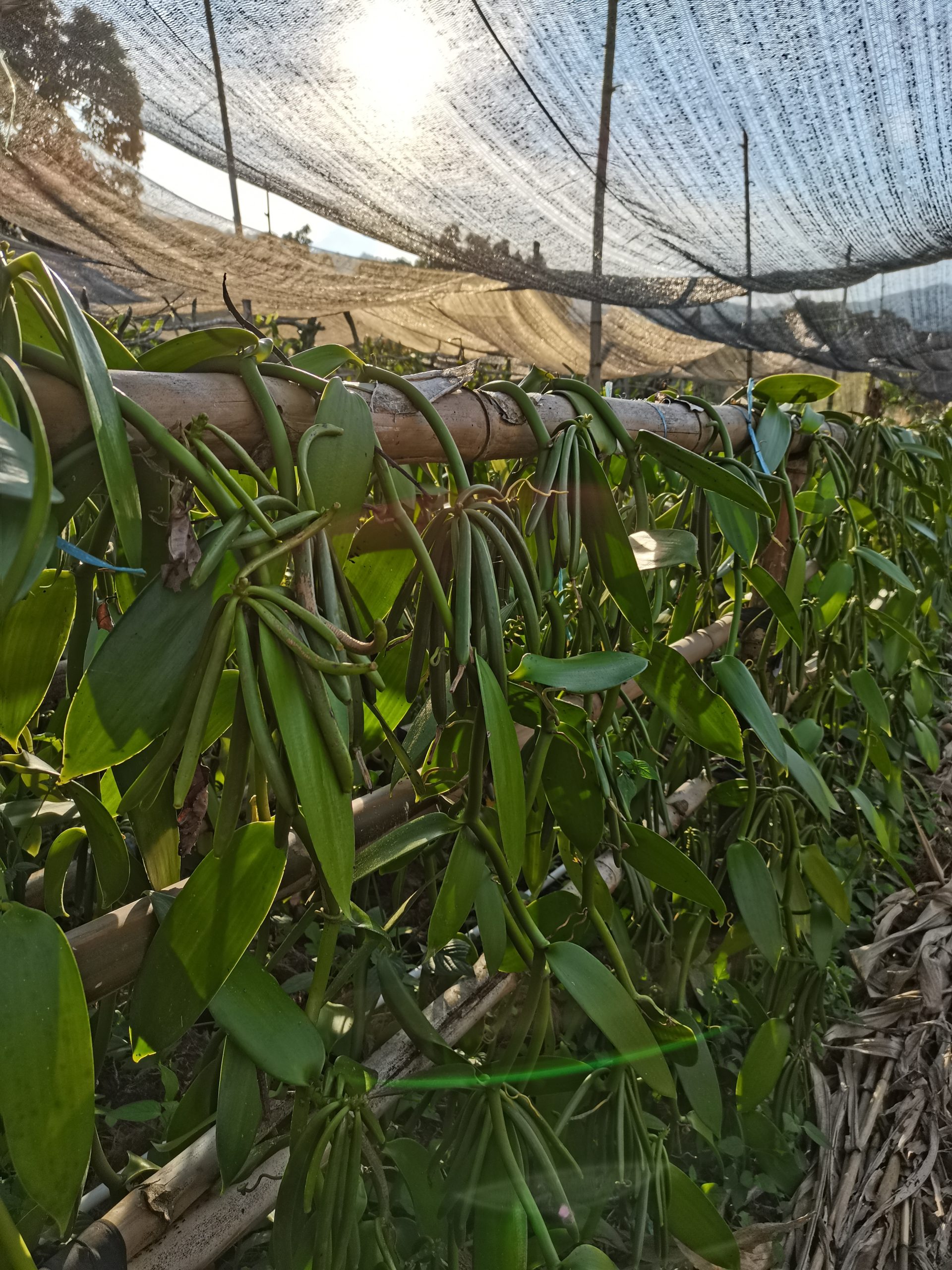
Flower to finished bean — every Grade A and Grade B pod we sell
What Grade Actually Means — and What It Doesn’t
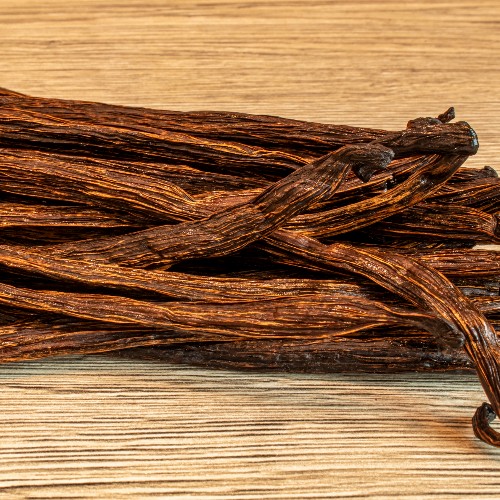
Grading vanilla beans ranks appearance and moisture, not flavour. Grade A beans carry 30–35% moisture. That plump, oily exterior is what makes them photogenic and ideal for splitting into custards or infusing into syrups where visual appeal matters.
Grade B beans carry 15–25% moisture. They look drier and sometimes brittle. But drier means more concentrated solid content — and solid content is where vanillin lives.
Both grades from Vanillature test above 1.0% vanillin. Our certified Grade A beans test at 3.39% vanillin on a dry basis (CERT.2309047722, TÜV NORD, AOAC 995.25), against an industry average of 1.5–2.0%. Grade B tests above 1.0% dry basis — which still meets or exceeds many Grade A products sold elsewhere.
The FDA Extraction Standard Every Home Baker Ignores
Under FDA CFR 21 §169.175, legally labelled pure vanilla extract requires a minimum of 10 grams of vanilla beans per 100 ml of solvent, at a minimum of 35% ABV alcohol (by weight). That benchmark exists because extraction efficiency depends on both bean mass and solvent strength.
When you account for moisture in your grade A vs grade B vanilla beans cost per flavour comparison, the maths shifts. A Grade A bean at 33% moisture delivers roughly 67 grams of dry solid matter per 100 grams purchased. A Grade B bean at 20% moisture delivers 80 grams. You are buying 13 grams more extractable solid per 100 grams of Grade B.
Food chemistry research confirms that vanillin, along with p-hydroxybenzaldehyde and heliotropin, transfers into ethanol solution during extraction in proportion to dry bean mass, not total bean weight (Bythrow, 2005, Journal of Food Chemistry). Moisture dilutes your flavour investment; it does not enhance it in the extraction context.
At 10 g beans per 100 ml of 35% ABV alcohol, Grade B beans deliver more vanillin per gram of spend because their lower moisture — 15–25% versus Grade A’s 30–35% — means more dry extractable mass in every jar.
Running the Real Cost Per Flavour Calculation
Take a straightforward example. Suppose Grade A costs $0.80 per gram and Grade B costs $0.50 per gram. At Grade A’s 33% moisture, you pay $0.80 for 0.67 g of dry solid. That is $1.19 per gram of dry extractable matter. At Grade B’s 20% moisture, you pay $0.50 for 0.80 g of dry solid — just $0.63 per gram of dry extractable matter.
Grade B delivers nearly half the cost per unit of extractable flavour in this scenario. The grade A vs grade B vanilla beans cost per flavour gap is real, measurable, and consistent across standard market pricing.
Dunphy et al. (2020, Food Chemistry) found that moisture-corrected vanillin concentration is the most reliable predictor of flavour intensity in finished extracts — reinforcing that buyers should price vanilla beans on dry-basis vanillin content, not gross weight.

When Grade A Is the Right Choice
For culinary applications where the bean is visible, Grade A wins decisively. Vanilla caviar scraped into a crème brûlée, whole pods steeped in warm milk for a panna cotta, or beans displayed in a gift jar all benefit from Grade A’s 30–35% moisture and supple, glistening appearance.
Professional pastry chefs who photograph their plated desserts buy Grade A for that reason alone. The visual premium has genuine value — it just is not a flavour premium in the extraction context.
At Vanillature, we put every batch through a 5-stage quality sorting process before either grade leaves our facility. Grade A and Grade B share the same origin — our 500+ smallholder partner farms across North Sumatra at 680 metres above sea level — and the same 15-month production timeline from hand-pollination to finished bean.
Partner farmers in the Rudi region of our Deli Serdang network explain that the grade separation happens at the curing stage, not the growing stage. Every pod on the vine receives identical care across the 9-month maturation period and the 6-hour daily hand-pollination window. After the 3–6 month traditional sun-curing process, beans are sorted by size, moisture reading, and skin texture. The farmers note that Grade B pods are often those that matured slightly faster or dried more efficiently — not inferior plants, just different moisture outcomes from the same meticulous harvest.
Our Crystal Vanilla: The Grade A Outlier Worth Knowing
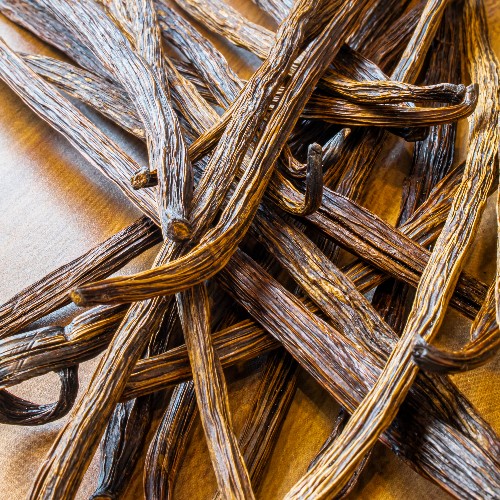
One product sits above standard Grade A in vanillin concentration: our Crystal Vanilla, which tests at 3.5–4.0% vanillin. The white surface crystals visible on these beans are concentrated vanillin that has migrated outward during extended curing — a sign of exceptional aromatic density, not spoilage.
For buyers who want maximum flavour per gram regardless of grade label, Crystal Vanilla changes the grade A vs grade B vanilla beans cost per flavour equation entirely. The vanillin concentration at 3.5–4.0% outperforms standard Grade A by up to 18% on a dry basis.
Indonesia produces approximately 2,300 tonnes of vanilla annually, ranking second globally after Madagascar (FAO, 2023). Within that volume, crystal-formation beans represent a small fraction of total production — which is why supply is limited and batches sell out.
The Practical Buying Decision
Buy Grade B if you make extract, vanilla powder, or any preparation where the bean is not visible. The lower moisture content of 15–25% means more flavour compound per gram purchased, and the lower price per gram compounds that advantage.
Buy Grade A if you cook with the bean visually present — custards, infusions, gift sets, and restaurant plating. The 30–35% moisture and full, supple pod justify the premium for culinary presentation.
Buy Crystal Vanilla if you want the highest vanillin concentration we offer — 3.5–4.0% — and price per unit of flavour is your primary metric.
At Vanillature, we test every batch and publish the certificate numbers. The grade A vs grade B vanilla beans cost per flavour question has a clear answer — it depends entirely on how you use the bean.
Frequently Asked Questions
Shop Vanillature Vanilla Beans
Vanillature holds a 5.0 star rating from 214 verified buyers on eBay, with additional verified ratings on Shopee and TikTok Shop Indonesia — independently confirmed quality across three separate platforms.
Vanillature (PT. Sumber Bukit Jaya) — Jl. Prof. H.M. Yamin SH No. 224M, Medan, North Sumatra 20234, Indonesia — +62 878-6986-1288
Grade A, Grade B, and Crystal Vanilla — all sourced from 500+ smallholder farmers, certified to 3.39% vanillin dry basis, and shipped worldwide.
Vanillature (PT. Sumber Bukit Jaya) · Jl. Prof. H.M. Yamin SH No. 224M, Medan, North Sumatra 20234, Indonesia · +62 878-6986-1288