


Vanilla Knowledge
How to Import Vanilla Beans from Indonesia: Documents, HS Codes and Timeline
Sep
How to Import Vanilla Beans from Indonesia: Documents, HS Codes and Timeline
Step 1 — Classify Your Product Correctly Under HS 2022
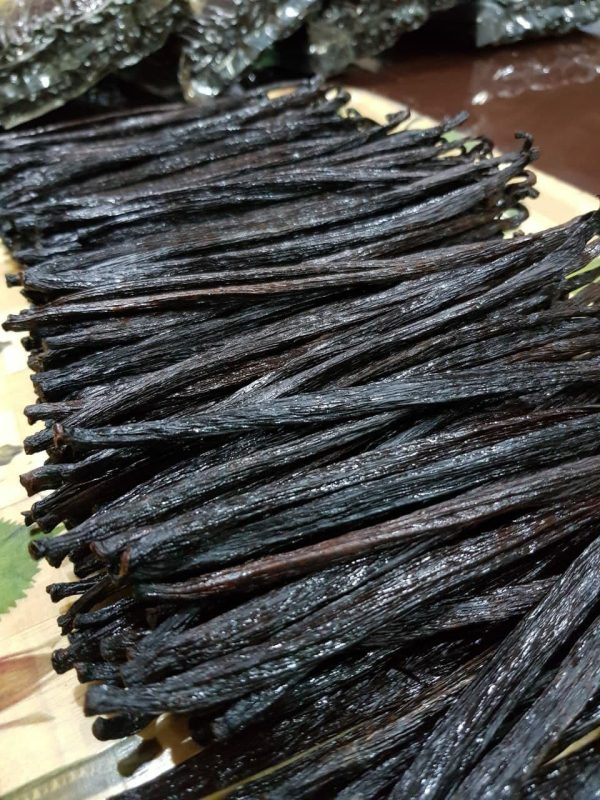
The World Customs Organization HS 2022 revision assigns HS 0905.10 to whole or cut vanilla beans — the physical, uncured or cured pod (World Customs Organization, 2022). Vanilla extract and oleoresin fall under HS 1302.19, which attracts different duty rates in every destination market. Misclassifying extract as whole bean is the single most common error that delays shipments at customs.
At Vanillature, we export under 0905.10 for all Grade A and Grade B whole bean orders. Grade A beans carry a verified vanillin content of 3.39% dry basis (CERT.2309047722, TÜV NORD, AOAC 995.25) — more than double the industry average of 1.5–2.0%. The HS code you declare must match the commodity exactly; a bean that has been powdered or dissolved becomes 0905.20 or 1302.19 respectively.
Whole / cut cured pods → HS 0905.10
Ground vanilla powder → HS 0905.20
Vanilla extract / oleoresin → HS 1302.19
Crystal Vanilla (surface vanillin 3.5–4%) → HS 0905.10 — still a whole-bean product
Step 2 — Obtain the 3 Mandatory Indonesian Export Certificates
Every legal vanilla bean shipment leaving Indonesia requires 3 core documents before the container is sealed. Missing any one of them triggers port holds that erode your entire 4–6 week FOB window.
| Document | Issuing Authority | Notes |
|---|---|---|
| Phytosanitary Certificate (PC) | Indonesian Ministry of Agriculture via IQFAST system | Required by all 3 destination markets. IQFAST issues digitally within 2–3 working days of inspection. |
| Certificate of Origin (SKA Form A) | Indonesian Trade Ministry / Disperindag | Triggers GSP tariff preferences in the EU and Australia. Apply at least 5 working days before loading. |
| Health Certificate / Lab Analysis | Accredited third-party lab (e.g. TÜV NORD) | FDA and EU buyers increasingly require vanillin % and moisture data. Our CERT.2309047722 satisfies this requirement. |
Vanillature coordinates all 3 documents on behalf of B2B clients. The phytosanitary inspection covers pest absence verification — critical because vanilla orchid pests are listed under IPPC protocols. We trigger the IQFAST application immediately after your purchase order is confirmed.
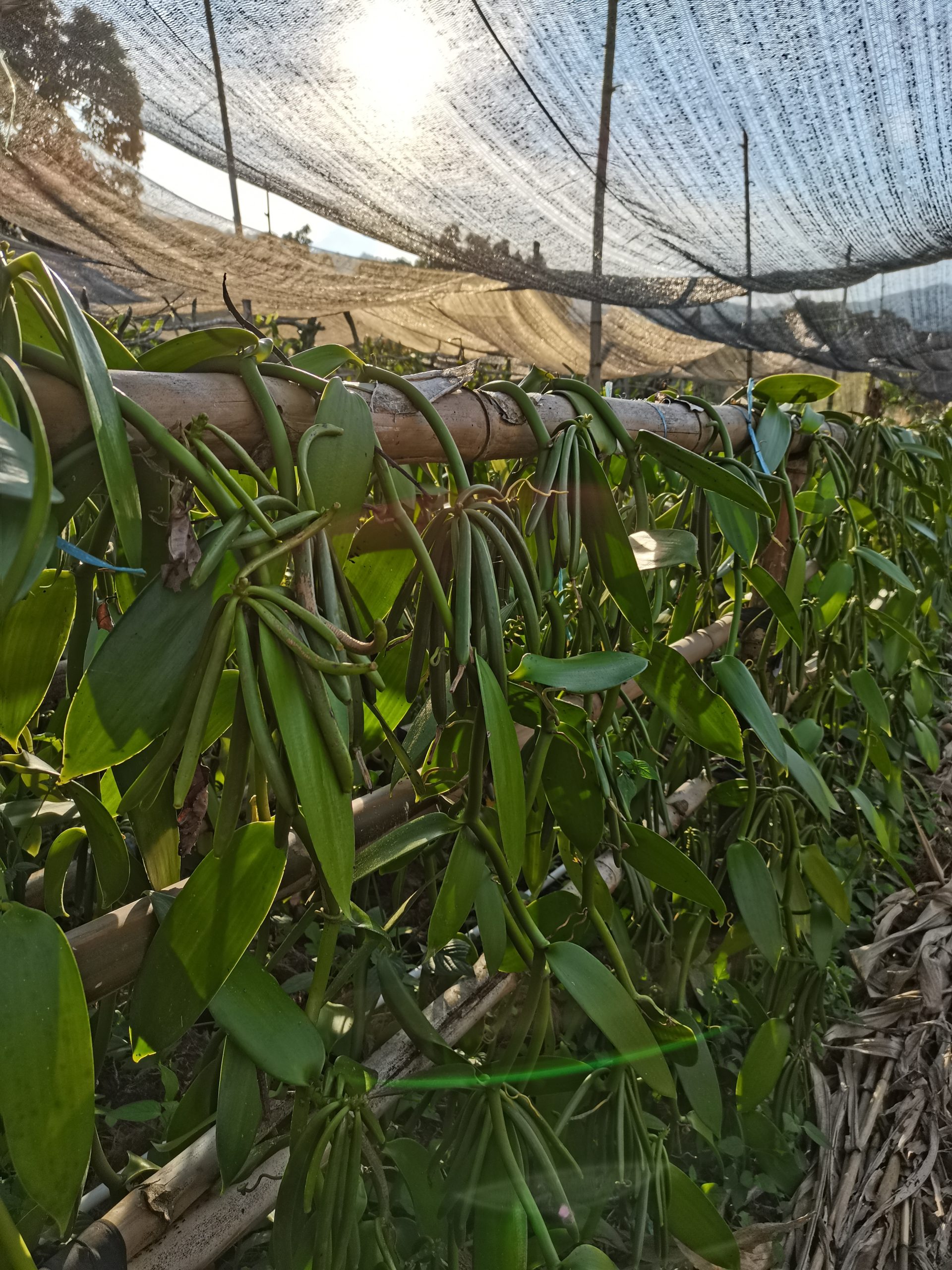
Farmers in our Deli Serdang network — operating at 680 metres above sea level in North Sumatra — understand that export compliance begins 15 months before a shipment leaves port. Partners in the Irwan region of our supply chain describe the discipline of hand-pollinating every flower within its 6–8 hour daily window, then waiting 9 months for beans to mature on the vine, followed by 3–6 months of traditional sun curing. By the time a Grade A bean reaches our 5-stage quality sorting line, the farmers who produced it already carry every document needed to prove its provenance. Compliance is not an administrative afterthought — it is built into the production calendar from the first day of flowering.
Step 3 — Destination-Specific Regulatory Requirements
United States (FDA)
Importers must submit FDA Prior Notice at least 8 hours before the vessel arrives at the US port of entry (FDA 21 CFR Part 1). File through the FDA’s Prior Notice System Interface (PNSI) or via your customs broker. Vanilla beans under HS 0905.10 are food commodities and subject to FSMA (Food Safety Modernization Act) supplier verification. First-time importers should allow an extra 5 business days for FSVP documentation review.
European Union
EU importers must verify that their Indonesian exporter holds REX (Registered Exporter) status under EU Reg 2019/1793, which governs increased controls on certain third-country food products (EU Reg 2019/1793). Indonesia is not on the high-frequency inspection list for vanilla specifically, but the REX number must appear on the origin declaration for GSP preference claims. Vanillature’s REX number is provided on request with every commercial invoice.
Australia (DAFF)
The Australian Department of Agriculture, Fisheries and Forestry classifies whole vanilla beans as a biosecurity risk item. Importers require a valid import permit and must declare the shipment through BICON. Dried, commercially prepared beans in sealed packaging typically qualify for a standard pathway, but an original phytosanitary certificate from IQFAST is non-negotiable.
Step 4 — Realistic Timeline from Purchase Order to Delivery
The 4–6 week FOB lead time covers production finalisation, document preparation, and inland logistics to Belawan Port (Medan) or Tanjung Priok (Jakarta). Sea freight to major destination ports adds additional transit time: approximately 25–30 days to the US West Coast, 28–35 days to Rotterdam, and 14–18 days to Sydney.
| Phase | Duration | Key Action |
|---|---|---|
| Purchase Order confirmed | Day 0 | Vanillature triggers 5-stage quality sorting and IQFAST phytosanitary application |
| Document preparation | Days 1–7 | Phytosanitary Certificate, Certificate of Origin (SKA Form A), lab analysis |
| Packing & inland logistics | Days 8–21 | Export cartons sealed, container booked, shipper’s export declaration filed |
| Vessel departure (FOB) | Days 22–42 | Bill of Lading issued; FDA Prior Notice filed 8+ hours before US arrival |
| Destination port arrival | +14 to +35 days | Customs clearance by importer’s broker; REX declaration for EU GSP |
Buyers who understand how to import vanilla beans from Indonesia build this 6–10 week total window into their procurement calendar. Rush orders requiring air freight are possible but raise unit costs significantly — sea freight remains the standard for commercial volumes above 5 kg.
Why Product Quality Determines Customs Smoothness
Customs inspectors flag shipments with incomplete or inconsistent documentation — and the fastest way to invite inspection is a lab certificate that contradicts the commercial invoice. At Vanillature, every batch ships with a TÜV NORD-verified certificate (CERT.2309047722) confirming 3.39% vanillin dry basis and 30–35% moisture for Grade A beans. These figures are consistent and reproducible across consignments, which builds a clean import history with destination customs authorities.
Buyers sourcing vanilla beans from Indonesia for the first time should request a sample shipment — typically 100 g to 500 g — before committing to a full commercial consignment. Sample shipments travel as personal imports in most jurisdictions and require no commercial documentation, but they give procurement teams the lab data needed to pre-register supplier details with FDA or DAFF before the first full container arrives.
Indonesia’s 500+ smallholder farming partners, producing beans that undergo a 15-month cycle from hand-pollinated flower to finished export bean, deliver consistency that supports repeat import compliance. Knowing how to import vanilla beans from Indonesia at scale starts with choosing a supplier whose traceability chain holds up to regulatory scrutiny at every destination.
Frequently Asked Questions
