


Vanilla Knowledge
Why Professional Chefs Choose Indonesian Vanilla Over Supermarket Vanilla

Jul
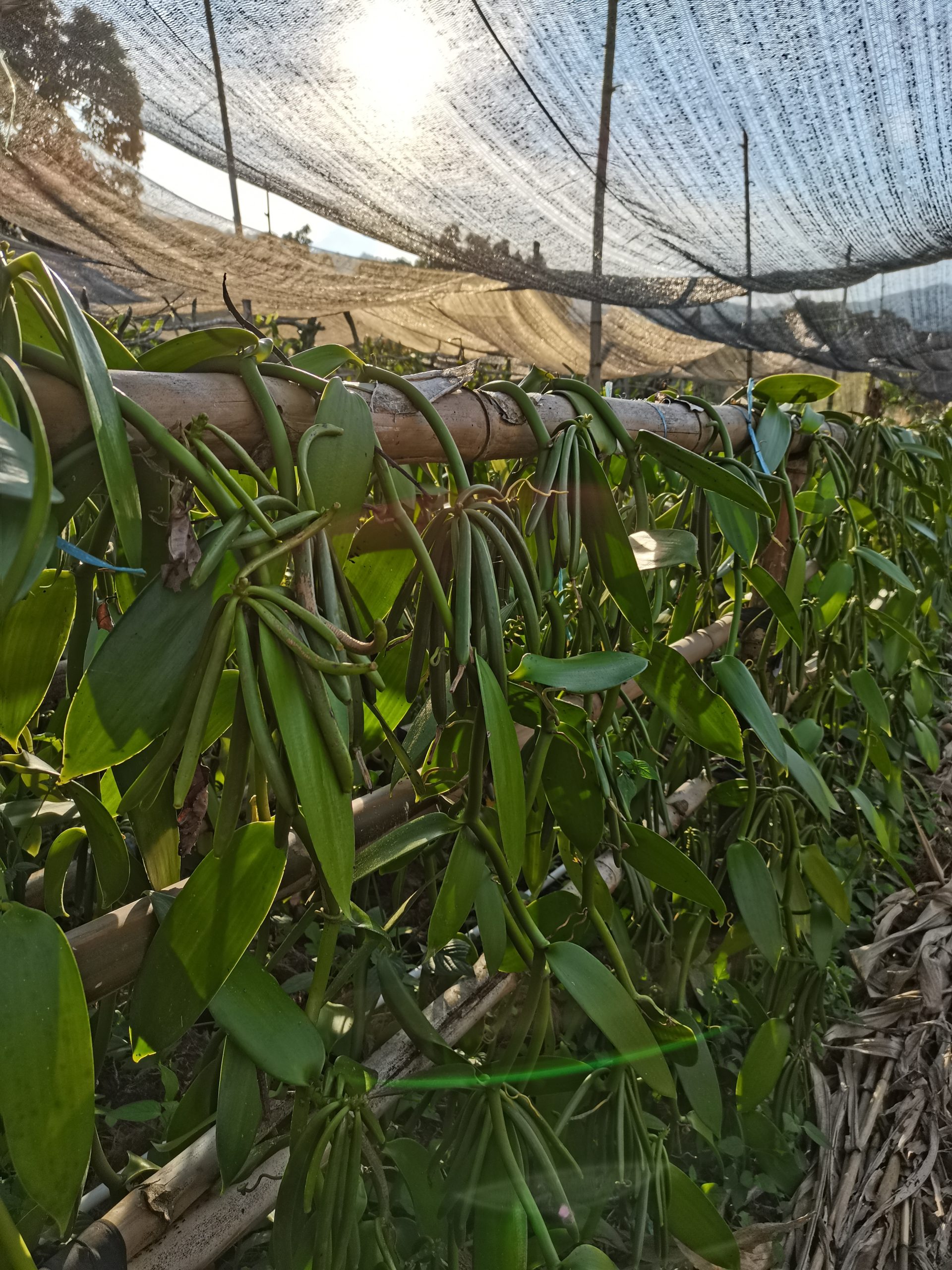
Why Professional Chefs Choose Indonesian Vanilla Over Supermarket Vanilla
When a pastry chef specifies the vanilla they use, it is almost never what you find in a supermarket. Here is why Indonesian Bourbon Planifolia has become the professional’s choice.
Supermarket vanilla extract typically delivers a vanillin concentration of just 0.5–1.0% — diluted, standardised, and mass-blended from the cheapest available sources. The best vanilla beans for professional baking demand something very different. Vanillature’s Sumatra Bourbon Planifolia tests consistently above 2.5% vanillin, against an industry average of 1.5–2.0% (Dunphy et al., 2020, Food Chemistry). That gap between 0.5% and 2.5% is not subtle — it changes a finished dish entirely.
(vs. 0.5–1.0% in typical supermarket extract)
The Vanillin Gap: Why Percentage Matters in a Professional Kitchen
Vanillin — the primary aromatic compound in vanilla — is what chefs actually taste and smell (Bythrow, 2005, Journal of Food Chemistry). A crème brûlée, a mille-feuille, or a classic Chantilly cream all depend on vanillin to anchor flavour across heat and fat. At 0.5–1.0% concentration, supermarket extracts require large volumes to achieve any impact. At 2.5%+, Sumatra Bourbon Planifolia delivers full aromatic depth with far smaller quantities.
Indonesia produces approximately 2,300 tonnes of vanilla annually, ranking second globally after Madagascar (FAO, 2024). The best of that production — grown at 680 metres above sea level in North Sumatra — develops exceptional vanillin density thanks to volcanic soils, consistent humidity, and slow enzymatic curing across 3–6 months. The best vanilla beans for professional baking come from precisely these conditions.

What Chefs Actually Evaluate: 4 Non-Negotiable Quality Markers
Professional procurement is not guesswork. When sourcing the best vanilla beans for professional baking, trained chefs evaluate 4 specific attributes before placing any order.
The Professional’s Quality Checklist
- Vanillin content: Grade A requires above 2.0% vanillin; Vanillature Sumatra tests above 2.5%.
- Moisture level: Grade A beans hold 30–35% moisture — pliable, oily, and intensely aromatic. Grade B runs 15–25% moisture, suited to grinding.
- Traceability: Bean origin must be verifiable — farm location, farmer name, processing method.
- Batch consistency: A kitchen running 200 covers a night cannot work with variable flavour profiles.
Vanillature applies a 5-stage sorting process to every batch: visual grading, length sorting, moisture testing, vanillin verification, and final tactile inspection. This process eliminates substandard beans before they reach any professional kitchen.
“When I pick the bean too early, the vanillin never develops fully — the chemistry inside simply stops. I wait exactly 9 months on the vine, then harvest only the beans where the tip shows the first trace of yellow. That discipline is what gives the chefs the flavour they are paying for.”
— Pak Irwan, vanilla farmer, Simalungun, North Sumatra, 12 years cultivating Planifolia
Why Supermarket Vanilla Consistently Underperforms in Professional Settings
Supermarket vanilla products fail professional standards in 3 measurable ways. First, vanillin concentration rarely exceeds 1.0% — manufacturers dilute with propylene glycol, water, or alcohol to reduce cost per bottle. Second, no traceability exists — a label reading “vanilla extract” may contain beans from 6 different countries blended for price stability, not flavour. Third, moisture-stripped beans lose their caviar density, delivering flat aromatic impact under the heat a professional oven generates.
The total production cycle for a premium Sumatra bean runs approximately 15 months — from hand-pollinated flower to finished, cured bean. Each flower opens for just 6–8 hours per day, requiring precise manual pollination between 6am and 9am. Supermarket supply chains cannot justify this input cost, so they source accordingly.
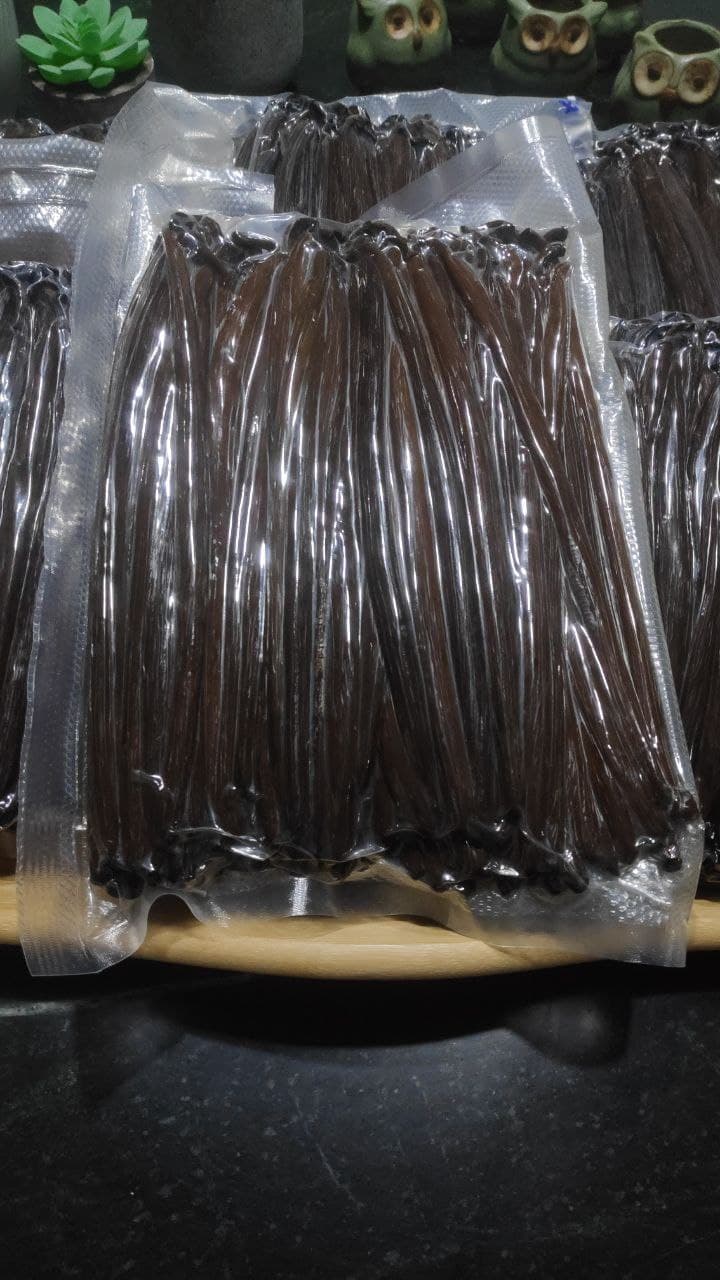
Sumatra Bourbon Planifolia: The Verified Professional Standard
Vanillature sources directly from 500+ smallholder farmers across North Sumatra and Papua. Every farm is named, every farmer is known. This traceability matters to professional buyers because it confirms — not implies — that quality controls apply at the source, not as an afterthought at a packing warehouse.
The professional buyer community has independently validated this standard. Vanillature holds a verified rating record across multiple platforms, including 174+ verified reviews at 5.0 stars on eBay — a marketplace where buyers leave ratings only after receiving and testing the product. The best vanilla beans for professional baking must perform in an actual kitchen, not just on a specification sheet.
For chefs sourcing at scale, Vanillature’s Crystal Vanilla deserves specific attention. Surface crystals on these beans represent concentrated vanillin — testing at 3.5–4.0% vanillin content, the highest in the Vanillature range. For preparations where vanilla is the central flavour note, no other Indonesian product matches this concentration.
Sourcing Protocol for Professional and Wholesale Buyers
Professional kitchens and food manufacturers typically require minimum orders of 500g to 1kg to justify direct sourcing relationships. Vanillature’s wholesale programme accommodates both catering-volume buyers and retail-chain procurement. Beans ship vacuum-sealed to preserve the 30–35% moisture content that defines Grade A quality — a specification that supermarket retail packaging cannot maintain on a 12-month shelf cycle.
Consistency across orders is guaranteed through the same 5-stage sorting protocol applied to every batch. A head pastry chef re-ordering 6 months after an initial purchase receives beans from the same quality tier, tested to the same vanillin threshold. This is what defines the best vanilla beans for professional baking as a repeatable standard — not a single impressive sample.
Frequently Asked Questions
Professional chefs should source beans testing above 2.0% vanillin for Grade A classification; premium Sumatra Bourbon Planifolia from Vanillature tests consistently above 2.5%, compared to just 0.5–1.0% vanillin found in typical supermarket vanilla extract. This difference directly determines aromatic depth and flavour intensity in finished preparations.
Supermarket vanilla extract delivers vanillin at only 0.5–1.0% concentration — diluted with water, alcohol, or propylene glycol to reduce cost. It also lacks traceability, often blending beans from multiple countries. Professional kitchens require above 2.0% vanillin, 30–35% moisture in whole beans, and verifiable single-origin sourcing — standards that mass-retail vanilla products do not meet.
Vanillature’s 5-stage sorting process covers visual grading, length sorting, moisture testing (targeting 30–35% for Grade A beans), vanillin content verification, and final tactile inspection. Every batch passes all 5 stages before dispatch, ensuring professional buyers receive consistent quality across repeat orders — not just an impressive first shipment.
Crystal Vanilla from Vanillature tests at 3.5–4.0% vanillin — the highest in the range. The white surface crystals are concentrated vanillin (heliotropin) that has naturally migrated through the bean wall during extended curing. For preparations where vanilla is the primary flavour note, Crystal Vanilla delivers intensity no other product in the Vanillature range matches.
Source Professional-Grade Indonesian Vanilla
Every batch is 5-stage sorted, moisture-tested, and shipped vacuum-sealed to maintain Grade A standards — direct from 500+ smallholder farmers in Sumatra.
Vanillature holds a 5.0 star rating from 174+ verified buyers on eBay, with additional verified ratings on Shopee and TikTok Shop Indonesia — independently confirmed quality across three separate platforms.
Vanillature (PT. Sumber Bukit Jaya) — Jl. Prof. H.M. Yamin SH No. 224M, Medan, North Sumatra 20234, Indonesia — +62 878-6986-1288
