


Vanilla Knowledge
Vanilla in Perfumery: Why the World’s Most Expensive Fragrances Use Real Vanillin
Jul
Guerlain’s Shalimar, first composed in 1925, remains one of the best-selling luxury fragrances on earth — and vanilla fragrance perfume sits at its core. Natural vanillin (C₈H₈O₃) commands $600+ per kilogram for perfumery-grade supply. The same molecule that defines a Madagascar or Sumatra bean is what every master perfumer reaches for when building a lasting base note.
Market price for perfumery-grade natural vanillin — versus ~$15/kg for synthetic
How long a vanilla base note actively projects on skin in a well-structured fragrance
The exact molecular formula of vanillin — identical in a Shalimar base and a vanilla bean pod
The Same Molecule in Your Kitchen and Your Perfume Bottle
Vanillin is vanillin. The molecule that makes a crème brûlée smell extraordinary — C₈H₈O₃ — is the same compound a perfumer weighs out for a luxury oriental fragrance. Bythrow (2005) in the Journal of Food Chemistry identifies vanillin as a near-universal aroma compound, active in both food and cosmetic applications, with sensory detection thresholds as low as 20 parts per billion in aqueous solutions.
This single chemical identity is why vanilla fragrance perfume and culinary vanilla cannot be discussed in isolation. The perfume industry and the food industry compete for exactly the same raw material. When vanilla harvests fall short — Indonesia produces approximately 2,300 tonnes annually, ranking #2 globally after Madagascar (FAO, 2023) — both markets feel the pressure simultaneously.
Why Perfumers Use Vanilla as a Base Note and Fixative
In classical perfumery structure, fragrance molecules are classified by volatility. Top notes evaporate within 15–30 minutes. Heart notes last 1–3 hours. Base notes — vanillin among them — persist on skin for 6–8 hours and serve a second function: fixation. Vanillin slows the evaporation rate of lighter molecules, binding the entire composition together.
Thierry Mugler’s Angel (1992) and Guerlain’s Shalimar both deploy vanilla as the anchor of their base. Without it, the top and heart notes would disperse in under 2 hours. With a high-vanillin base, the fragrance holds structural integrity across a full wearing day. This fixative property is why natural vanillin — not the synthetic version — is the preference when a house can afford it.
Synthetic vanillin, produced from guaiacol or lignin, replicates one compound. Natural vanilla extract contains over 200 aroma compounds alongside the dominant vanillin — including heliotropin, eugenol, and anisic aldehyde. These trace compounds create what perfumers describe as “warmth” and “depth” that synthetic versions cannot reproduce with a single molecule.
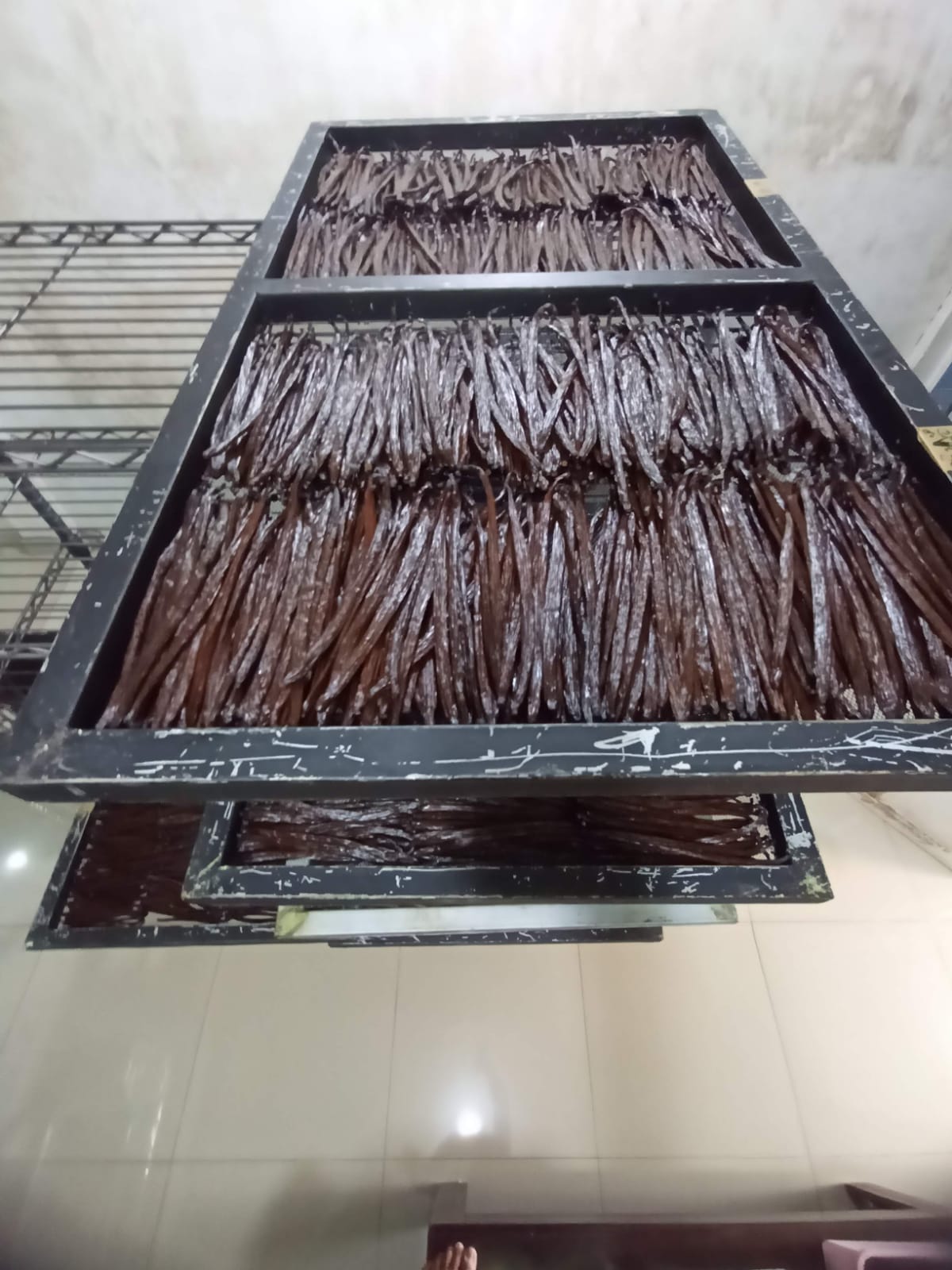
“When I cure slowly — 3 to 4 months under the Sumatra sun — the beans develop a complexity that smells almost like perfume already. You open the curing box and the whole room changes. That depth, the sweetness underneath the sweetness, that is what takes time to build.”
— Bu Sari, vanilla farmer, Deli Serdang, North Sumatra, 11 years cultivating Planifolia
Why Natural Vanillin Commands $600+ Per Kilogram
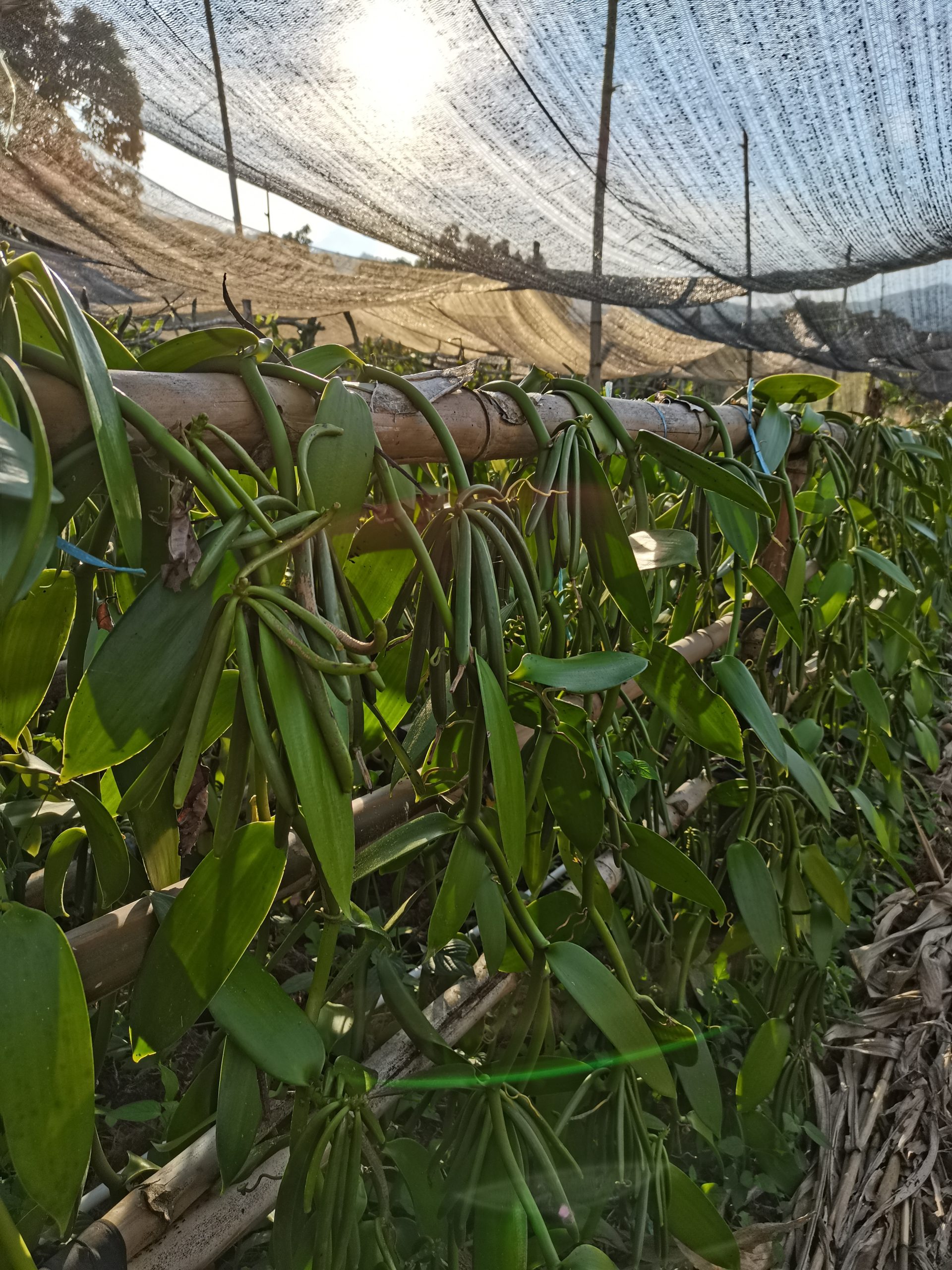
Natural vanillin reaches $600+ per kilogram for perfumery-grade supply because of what it costs to produce. A single vanilla flower opens for 6–8 hours a day — from approximately 6am to 9am — and must be hand-pollinated within that window. Miss the window, and the flower dies unpollinated. Each bean then spends 9 months maturing on the vine.
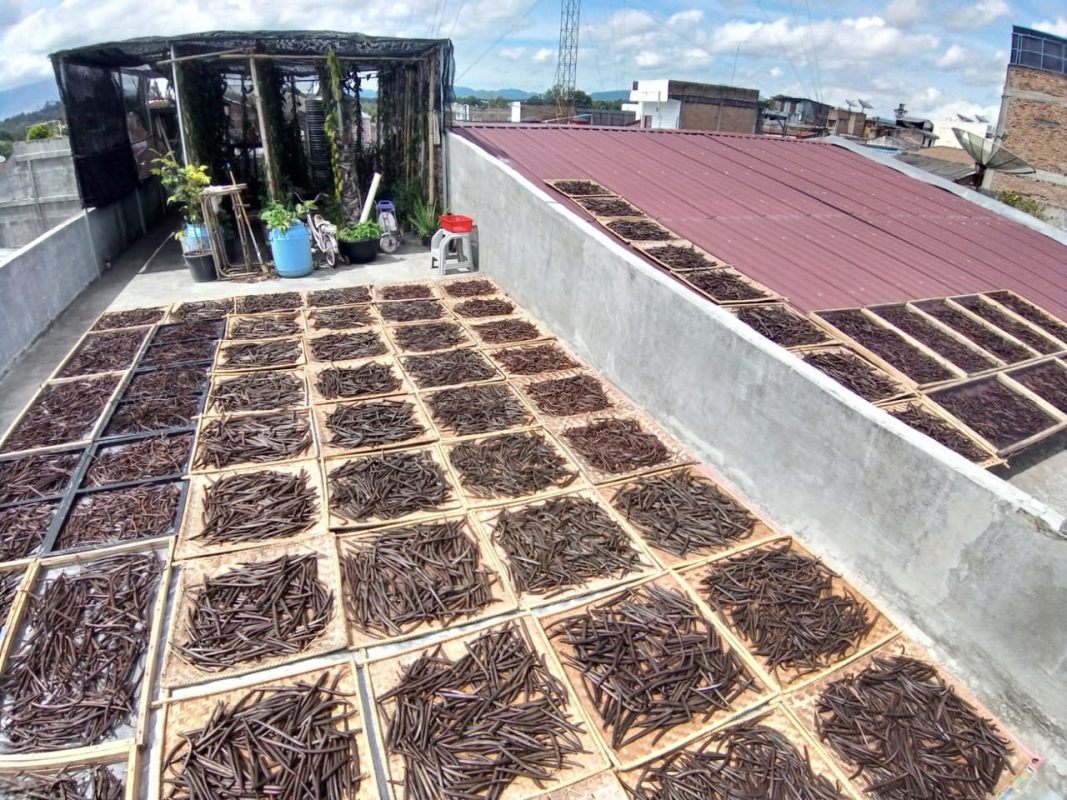
After harvest, curing takes a further 3–6 months of traditional sun-curing and slow enzymatic transformation. Enzymatic processes convert glucovanillin into free vanillin during this phase — no shortcut produces the same result. From first flower to finished bean ready for extraction, total production time runs approximately 15 months.
At Vanillature, we work directly with 500+ smallholder farmers across North Sumatra and Papua. Our Sumatra Planifolia beans consistently test above 2.5% vanillin content — against an industry average of 1.5–2.0%. At the top of our range, Crystal Vanilla carries surface vanillin crystals representing 3.5–4% vanillin concentration. For a perfumer requiring a high-vanillin extract, that starting-point purity directly reduces the volume needed per batch.
The Psychology of Vanilla Scent: Why It Works on the Human Brain
Vanilla fragrance perfume is not merely a sensory preference — it engages the brain’s limbic system, the region governing emotion and memory. Studies in environmental psychology consistently find vanilla among the top 3 scents associated with comfort, safety, and positive affect across multiple cultures. No other single aroma compound occupies such a broad emotional register.
This psychological dimension explains why vanilla appears in over 40% of all fine fragrance compositions on the global market. Perfumers know that a base note with built-in positive emotional association gives their entire composition a structural advantage. The warm, sweet, slightly woody depth of vanillin grounds more challenging materials — leather, tobacco, oud — and makes them wearable.
The connection to early food experience is real. Humans encounter vanillin in breast milk and early nutrition. The molecule arrives before any other complex flavour training begins. By adulthood, the association with comfort is neurologically deep-rooted — which is exactly why luxury perfumers building emotional experiences at $300+ a bottle never abandon it.

How Food-Grade Vanilla Connects to the Fragrance Supply Chain
The supply chain for natural vanilla extract — used in perfumery — begins on the same farms producing culinary beans. Extraction houses purchase high-vanillin beans, perform solvent or CO₂ extraction, and supply concentrated absolute or oleoresin to fragrance houses. The starting quality of the bean determines the vanillin yield per kilogram of extract.
At Vanillature, we apply a 5-stage quality sorting process to every batch. Grade A beans carry 30–35% moisture and vanillin above 2.0%. Grade B beans carry 15–25% moisture with vanillin above 1.0%. Beans destined for extraction — whether for food or fragrance — begin their journey at these precise specifications. Our farms sit at 680 metres above sea level in North Sumatra, where the elevation and humidity produce the slow bean maturation that drives higher vanillin accumulation.
The same quality transparency we provide to pastry chefs and home bakers applies to any extractor sourcing for fragrance applications. Knowing the exact vanillin percentage before purchase is not standard practice across the industry — at Vanillature, we test every batch.
Frequently Asked Questions
Source Vanilla Beans Tested Above 2.5% Vanillin
Whether you’re a perfumer, extractor, pastry chef, or home baker — Vanillature delivers traceable, high-vanillin Sumatra Planifolia beans from 500+ smallholder farmers. Every batch tested. Every origin verified.
Vanillature holds a 5.0 star rating from 174+ verified buyers on eBay, with additional verified ratings on Shopee and TikTok Shop Indonesia — independently confirmed quality across three separate platforms.
Vanillature (PT. Sumber Bukit Jaya) — Jl. Prof. H.M. Yamin SH No. 224M, Medan, North Sumatra 20234, Indonesia — +62 878-6986-1288
