


Vanilla Knowledge
Sumatra Vanilla Supplier: Why Buyers Choose North Sumatra Over Other Indonesian Origins
Aug
Sumatra Vanilla Supplier: Why Buyers Choose North Sumatra Over Other Indonesian Origins
Indonesia produces approximately 2,300 tonnes of vanilla annually — the second-largest output in the world after Madagascar (FAO, 2023). That volume comes from four distinct growing regions: North Sumatra, Papua, Java, and Sulawesi. For buyers who specify vanillin content, single-origin traceability, and reliable export logistics, the origin choice inside Indonesia matters as much as the country itself.
(industry avg 1.5–2.0%)
Why Indonesian Origin Selection Matters to Specification Buyers
Not all Indonesian vanilla delivers the same vanillin yield. A buyer sourcing from Java or Sulawesi may receive beans testing at 1.2–1.6% vanillin. A buyer sourcing from a specialist Sumatra vanilla supplier receives beans consistently above 2.5% — a measurable difference that affects every application from food manufacturing to fine fragrance.
Vanillin concentration is the primary benchmark in commercial vanilla procurement. It determines extract potency, flavour depth, and price-per-unit value. Choosing the wrong Indonesian origin costs buyers money on downstream correction — more beans, more extract, weaker final product.
North Sumatra: Volcanic Terroir at 680 Metres Above Sea Level
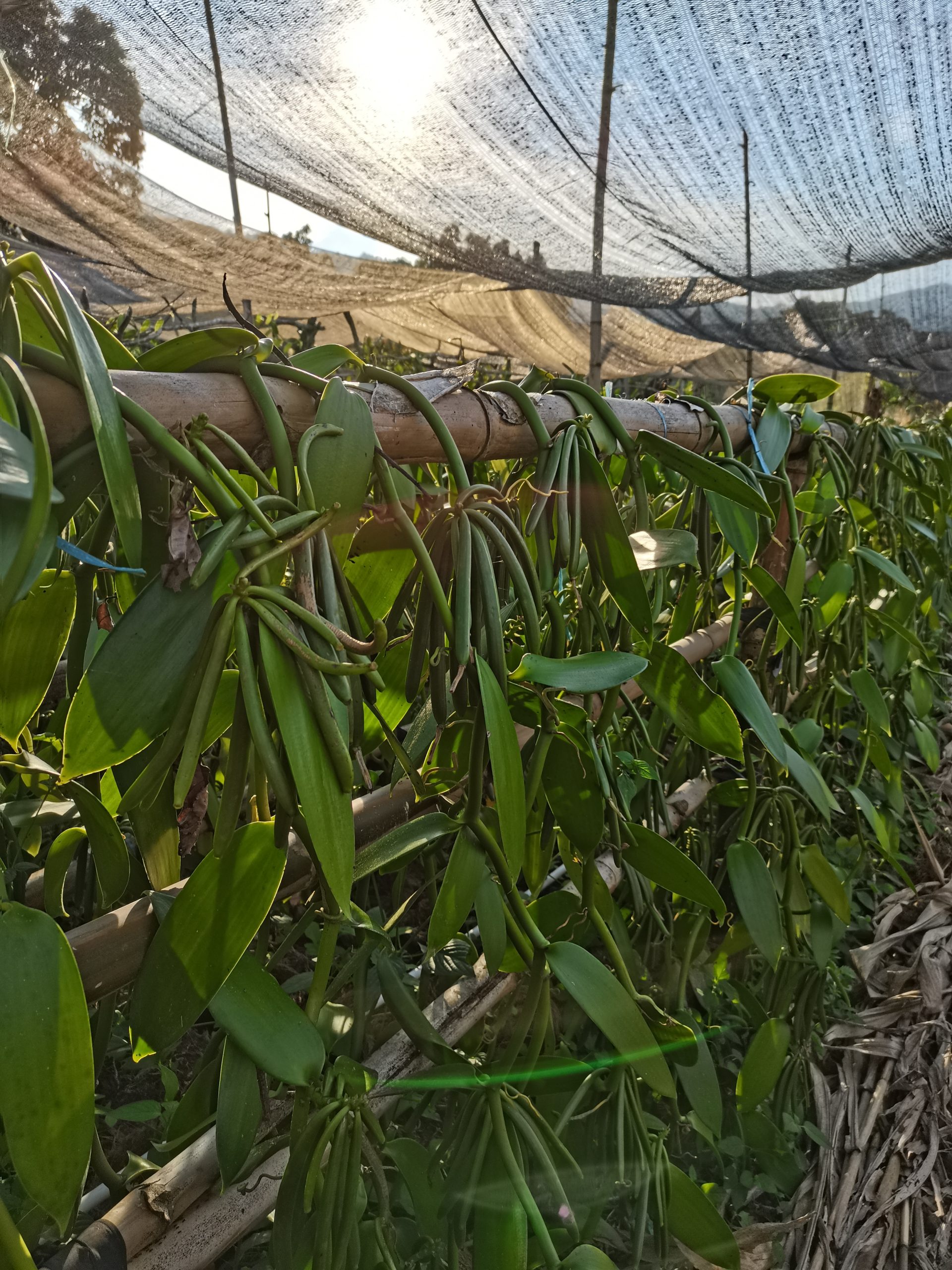
North Sumatra farms sit at 680 metres above sea level on volcanic Andosol soils derived from the Toba Supervolcano. These soils drain freely, retain phosphorus, and deliver mineral complexity directly to the vanilla vine root system. Havkin-Frenkel & Belanger (2011) documented that elevation, diurnal temperature variation, and soil mineral composition each independently influence vanillin precursor accumulation in Vanilla planifolia — and North Sumatra scores high on all three.
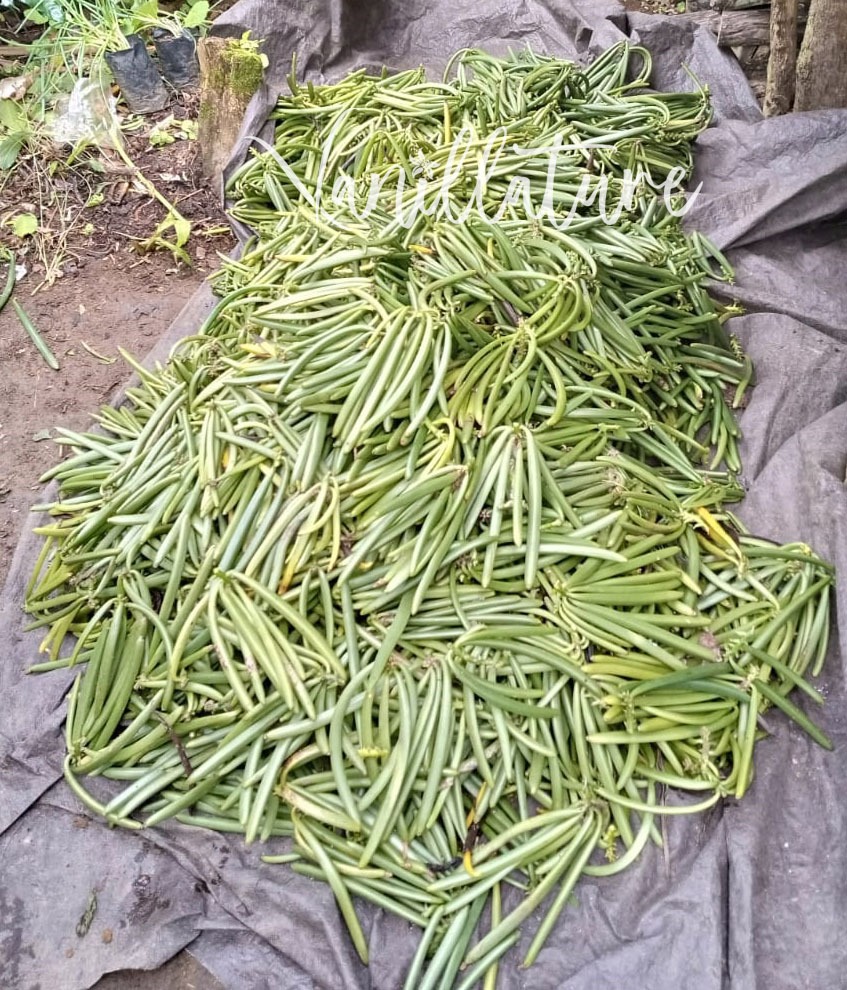
Daytime temperatures in the growing zones average 24–27°C. Nights cool sharply. That 10–12°C daily swing slows enzyme activity during the dark hours, allowing glucovanillin to accumulate in the bean rather than converting prematurely. The result: beans that test above 2.5% vanillin at harvest, before curing even begins.
Our 500+ farming partners work within a 120-kilometre corridor of North Sumatra’s highland interior. At Vanillature, we test every batch from this corridor before it leaves the farm gate — no blending with lower-elevation material.
Papua Vanilla: Excellent Tahitian Profile, Different Specification
Papua’s vanilla grows at elevations up to 1,200 metres and produces Vanilla tahitensis — a botanically distinct species from the planifolia grown in Sumatra. Tahitian vanilla carries heliotropin (piperonal) as its dominant aromatic compound rather than vanillin. That profile delivers floral, cherry, and anise notes prized in high-end patisserie and niche fragrance.
However, Tahitian vanillin content ranges from 0.5% to 1.5% — significantly below North Sumatra’s planifolia benchmark. Buyers who specify vanillin above 2.0% for food-grade extract production will not meet their specification with Tahitian beans, regardless of cultivation quality. Papua vanilla is excellent for its intended purpose; it serves a different buyer with a different specification sheet.
At Vanillature, Bu Marlina’s Papua operation supplies our Tahitian range precisely for buyers seeking that floral profile. We do not substitute one species for the other. Each origin is sourced, labelled, and sold for what it actually is.
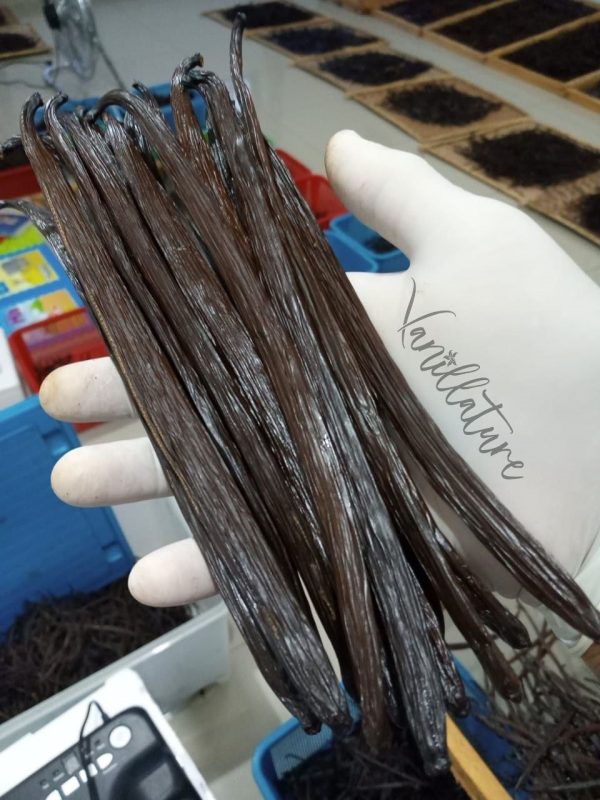
In Deli Serdang, we slow-cure each bean for at least 4 months in the sun. That process is what takes the vanillin from good to exceptional. Buyers who come to North Sumatra for the first time always ask why the colour and the scent are so much deeper than what they have tested before. The answer is the soil, the altitude, and the patience in the curing shed.
Java and Sulawesi: Lower Vanillin, Limited Traceability
Java and Sulawesi both produce planifolia vanilla, but at lower elevations — typically under 300 metres — on soils with less pronounced mineral character. Independent laboratory testing across Java-origin beans consistently returns vanillin concentrations in the 1.2–1.6% range. That sits inside the industry average but well below the North Sumatra benchmark.
Traceability also presents a challenge in these regions. Java vanilla often aggregates through multi-tier intermediary chains before reaching export. The result is blended, difficult-to-trace material where the buyer cannot confirm farm origin, cultivation method, or whether any single-origin claim is accurate.
Sulawesi vanilla faces similar traceability limitations. The island’s production volume is smaller and the export infrastructure less developed than the Belawan port hub serving North Sumatra’s Medan corridor.
| Origin | Species | Elevation | Vanillin Range | Traceability |
|---|---|---|---|---|
| North Sumatra Premium | V. planifolia | 680 m | 2.5%+ | Farm-level, 500+ partners |
| Papua | V. tahitensis | Up to 1,200 m | 0.5–1.5% | Moderate, floral-specific buyers |
| Java | V. planifolia | <300 m | 1.2–1.6% | Limited, multi-tier chains |
| Sulawesi | V. planifolia | <400 m | 1.2–1.7% | Limited, smaller volumes |
Export Infrastructure: Belawan Port and the Medan Advantage
North Sumatra’s logistics advantage is concrete. Finished beans travel from highland farms to Belawan Port, Medan — one of Indonesia’s most active international cargo hubs — in under 6 hours. Direct sea freight routes connect Belawan to Singapore, Rotterdam, Los Angeles, and Sydney without the transshipment delays that affect Java-origin shipments routing through Tanjung Priok.
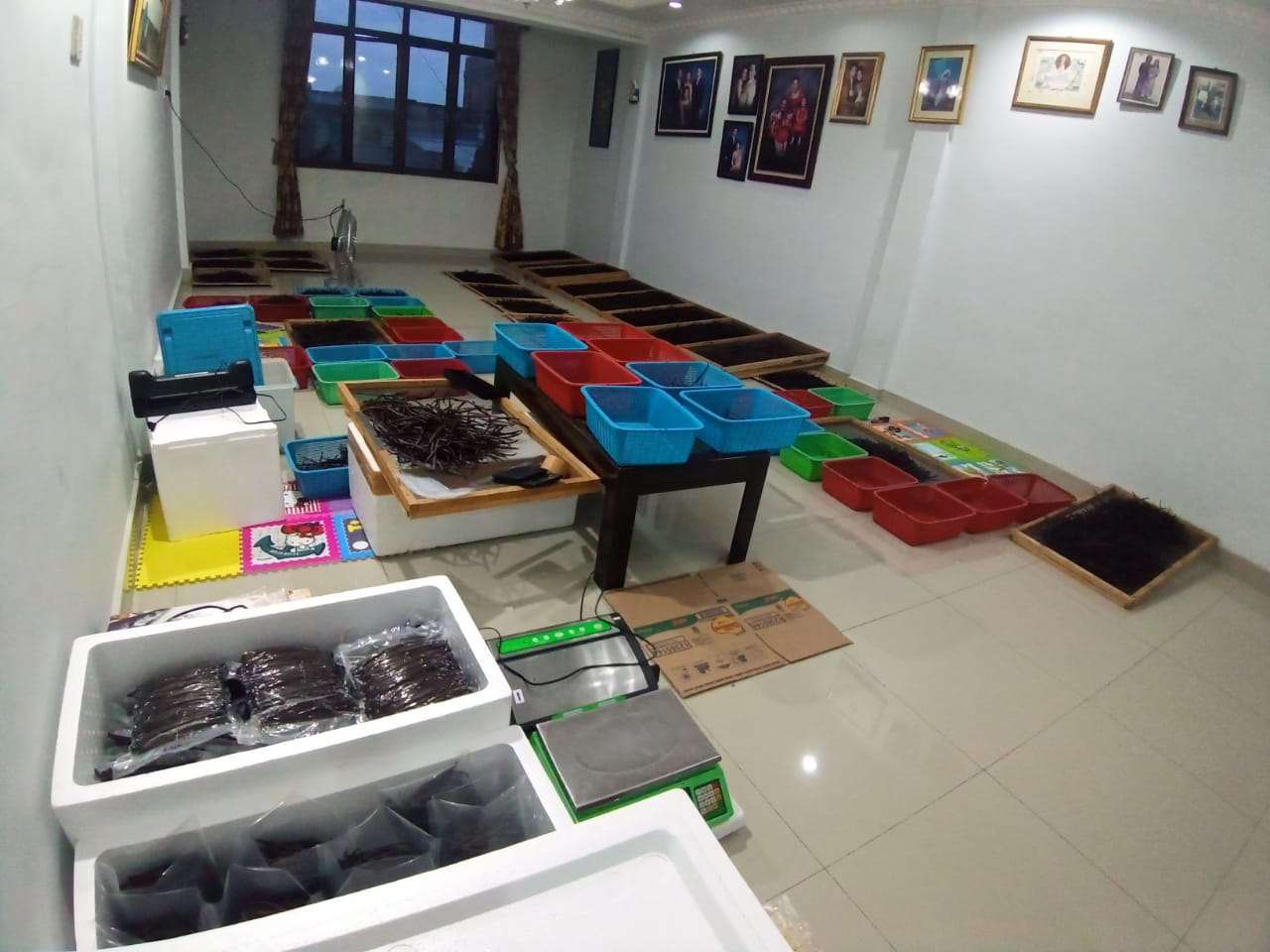
For buyers with quarterly procurement schedules, this means predictable lead times. At Vanillature, we dispatch from Medan within 3–5 business days of order confirmation for wholesale volumes above 1 kilogram. Our 5-stage quality sorting process runs entirely in-house before beans reach any export packing.
What Specification Buyers Should Request from Any Sumatra Vanilla Supplier
A serious Sumatra vanilla supplier provides documentation, not just descriptions. Buyers should request: a certificate of analysis (CoA) showing vanillin percentage by HPLC testing, a moisture content reading (Grade A: 30–35%; Grade B: 15–25%), farm-region identification, and the species designation — planifolia or tahitensis, never unlabelled.
Buyers should also ask whether the supplier owns its curing operation or outsources it. Traditional sun curing takes 3–6 months and cannot be meaningfully accelerated without sacrificing vanillin concentration. Suppliers who quote 4–6-week turnarounds are using hot-air or oven methods that reduce complexity and cut vanillin yield.
Vanillature controls curing in-house across our North Sumatra network. Bu Sari’s team in Deli Serdang runs minimum 4-month sun-curing cycles on Grade A material. That timeline is non-negotiable at specification level.
Frequently Asked Questions: Sumatra Vanilla Sourcing
North Sumatra Vanilla planifolia consistently tests above 2.5% vanillin — compared to the industry average of 1.5–2.0% across global origins. At 680 metres elevation on volcanic Andosol soils, North Sumatra’s diurnal temperature variation and mineral-rich growing conditions produce measurably higher vanillin precursor accumulation than lower-elevation Indonesian regions (Havkin-Frenkel & Belanger, 2011).
Sumatra produces Vanilla planifolia with vanillin content above 2.5% — suited to extract manufacturing, food production, and buyers with high vanillin specifications. Papua produces Vanilla tahitensis, a distinct species with vanillin content of 0.5–1.5% and a dominant heliotropin (piperonal) aromatic profile delivering floral, cherry, and anise notes. Papua vanilla suits patisserie and niche fragrance applications. The two are not interchangeable at specification level.
North Sumatra vanilla exports through Belawan Port, Medan — one of Indonesia’s primary international cargo terminals. Farms are within 6 hours of Belawan by road, enabling faster farm-to-port transit than Java-origin vanilla routing through Tanjung Priok. Vanillature dispatches wholesale orders from Medan within 3–5 business days of confirmation, with direct sea freight routes connecting to Singapore, Rotterdam, Los Angeles, and Sydney.
Request a certificate of analysis (CoA) showing HPLC-tested vanillin percentage, moisture content (Grade A: 30–35%, Grade B: 15–25%), species designation (planifolia or tahitensis), and farm-region identification. Also confirm whether the supplier controls its own curing operation — traditional sun curing requires 3–6 months and suppliers who quote shorter timelines typically use accelerated methods that reduce vanillin concentration and aromatic complexity.
Source Direct from North Sumatra’s Specialist
Vanillature works with 500+ smallholder farmers across North Sumatra’s 680-metre volcanic highlands. Every batch is HPLC-tested, 5-stage sorted, and dispatched from Medan. Request a wholesale sample or browse retail-grade beans below.
Vanillature holds a 5.0 star rating from 174+ verified buyers on eBay, with additional verified ratings on Shopee and TikTok Shop Indonesia — independently confirmed quality across three separate platforms.
Vanillature (PT. Sumber Bukit Jaya) — Jl. Prof. H.M. Yamin SH No. 224M, Medan, North Sumatra 20234, Indonesia — +62 878-6986-1288