


Vanilla Knowledge
What Is Vanillin and Why Does It Matter for Your Baking?
Aug
What Is Vanillin and Why Does It Matter for Your Baking?
The Chemistry Behind the Flavour
Vanillin (C₈H₈O₃) is an aldehyde compound that sits at the intersection of chemistry and sensory pleasure. It is the molecule your nose detects first when you split a vanilla bean open. Research published in the Journal of Food Chemistry confirmed vanillin as the dominant phenolic aldehyde in cured Vanilla planifolia, responsible for the characteristic sweet, woody, creamy scent (Bythrow, 2005).
Raw vanilla beans contain almost no free vanillin. The compound exists locked inside glucovanillin, a bound precursor. Only during the curing process — specifically the enzymatic phase called sweating — does beta-glucosidase cleave the glucose bond and release free vanillin into the bean tissue. Without proper curing, you get a green, grassy bean with negligible aroma.
Vanillin is joined in the pod by over 200 additional volatile compounds. Those secondary compounds — including heliotropin, p-hydroxybenzaldehyde, and various phenols — create complexity. But vanillin alone drives 85–90% of the recognisable vanilla aroma that bakers rely on.
Why Vanilla Planifolia Indonesia Produces Higher Vanillin
Vanilla planifolia Indonesia — particularly from North Sumatra — consistently tests above 2.5% vanillin. The global industry average sits between 1.5% and 2.0%. That gap is not marketing language. It is a measurable biochemical difference rooted in three factors: elevation, terroir, and slow traditional curing.
Vanillature sources from farms at 680 metres above sea level in North Sumatra. At that elevation, temperature fluctuates meaningfully between day and night. Slower bean maturation — 9 months on the vine — gives glucovanillin more time to accumulate before harvest. Higher precursor load at harvest translates directly into higher free vanillin after curing.
Indonesia produces approximately 2,300 tonnes of vanilla annually, making it the world’s second-largest producer after Madagascar (FAO, 2023). Within that national output, Sumatran vanilla planifolia Indonesia earns its premium position through precisely these elevated vanillin readings. At Vanillature, we test every batch before dispatch to confirm the threshold is met.
How Curing Unlocks — or Destroys — Vanillin
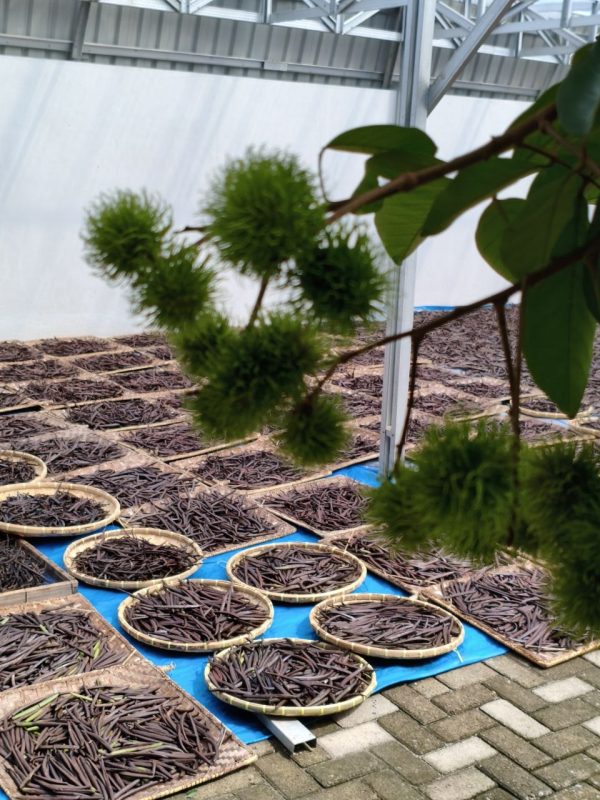
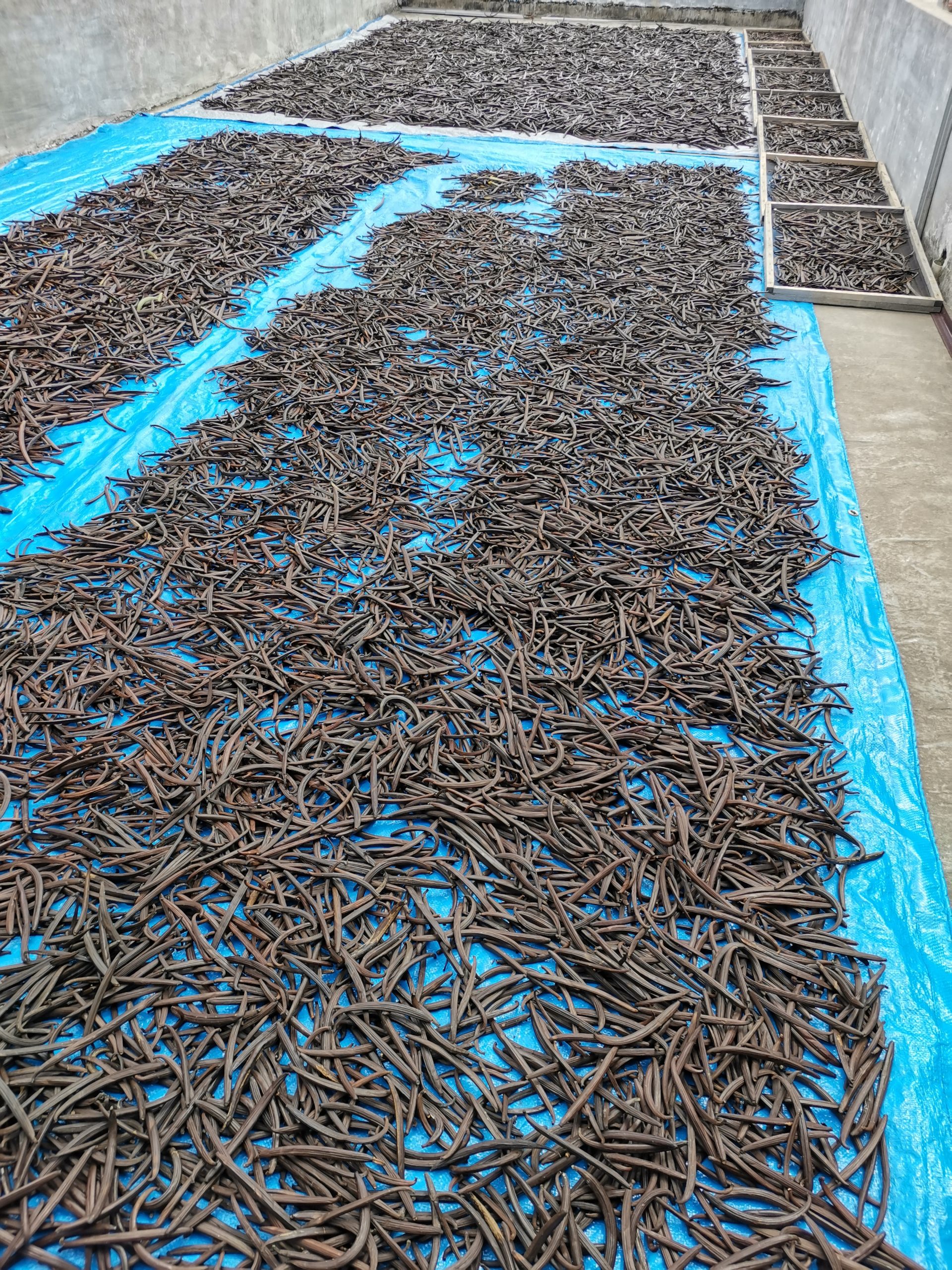
The curing process runs for 3–6 months using traditional sun-curing methods. Each stage is critical to vanillin development. The sequence is: blanching (halts vegetation), sweating (enzymatic conversion), slow drying, and conditioning. Shortcut any stage, and vanillin content drops sharply.
Commercial producers under price pressure often compress curing to 6–8 weeks using artificial drying. Enzymatic conversion is incomplete. Vanillin readings at that stage may still be 1.0–1.2% — far below the grade A minimum. Vanilla planifolia Indonesia processed with full traditional curing, by contrast, finishes conditioning with vanillin above 2.0% at Grade B and above 2.5% for Grade A (Havkin-Frenkel & Belanger, 2011).
Grade A beans carry 30–35% moisture and vanillin above 2.0%. Grade B beans are drier — 15–25% moisture — with vanillin above 1.0%. Both grades release vanillin during baking, but Grade A plump beans infuse into liquids more readily, making them the preferred choice for custards, ice creams, and high-hydration batters.
“When I watch the sweating stage, I know the vanillin is forming. If you rush it — even by one week — the bean never reaches its potential. I have been doing this for 11 years and I still check each batch by hand and by smell before it moves to the drying mats.”
Crystal Vanilla: The Highest Vanillin Expression
At the top of the vanillin spectrum sits Crystal Vanilla. The white surface crystals visible on premium aged beans are not mould, salt, or frost. They are deposits of crystallised vanillin — heliotropin and related phenolic compounds that have migrated to the surface during extended conditioning. Vanillature’s Crystal Vanilla tests between 3.5% and 4% vanillin. That makes it the most flavour-dense product in the range.
Bu Sari, who specialises in Crystal Vanilla production, conditions selected Grade A pods for an additional 4–8 weeks beyond the standard curing period. The extra weeks allow surface migration and crystallisation to complete. Only beans that already carry exceptional internal vanillin content form visible crystals — the crystal itself is confirmation of quality, not decoration.
For bakers, 3.5–4% vanillin means a single pod infused into 250ml of warm cream delivers intense, true vanilla flavour without any synthetic supplement. The compound concentration makes it the professional baker’s benchmark for comparison.
How to Test a Bean’s Vanillin Quality at Home
You cannot run a gas chromatography test in your kitchen. But you can run 4 practical checks that reliably indicate high vanillin content before you use a bean.
1. The bend test. A high-vanillin Grade A bean bends 180° without cracking. Stiff, brittle beans are over-dried — below 15% moisture — and enzymatic activity ceased prematurely. Vanillin conversion is likely incomplete.
2. The oil test. Run your thumbnail along the surface. A quality bean leaves a slight oily residue. That oil carries volatile vanillin compounds. Dry, powdery surfaces signal low residual vanillin.
3. The split-and-smell test. Split the bean lengthwise. The scent should hit you immediately — sweet, deep, slightly woody. Weak or delayed aroma indicates vanillin content likely below 1.5%.
4. The crystal check. Tiny white specks on the surface are vanillin crystals — a reliable positive indicator. At Vanillature, beans displaying visible crystallisation are batch-tested and consistently return readings above 3.5%.
Frequently Asked Questions
Experience the Vanillin Difference in Your Kitchen
Vanillature sources directly from 500+ smallholder farmers across Sumatra and Papua. Every bean is tested, sorted through a 5-stage quality process, and dispatched to bakers who demand the real compound — not extract, not imitation.
Vanillature holds a 5.0 star rating from 174+ verified buyers on eBay, with additional verified ratings on Shopee and TikTok Shop Indonesia — independently confirmed quality across three separate platforms.
Vanillature (PT. Sumber Bukit Jaya) — Jl. Prof. H.M. Yamin SH No. 224M, Medan, North Sumatra 20234, Indonesia — +62 878-6986-1288
