


Vanilla Knowledge
The Science of Vanilla Curing: Why Three to Six Months Changes Everything
Aug
A freshly harvested vanilla bean has almost no flavour. The curing process — blanching, sweating, slow drying, conditioning — is where the magic happens. Four precise stages unlock the compound that defines one of the world’s most complex natural flavours.
Months Curing
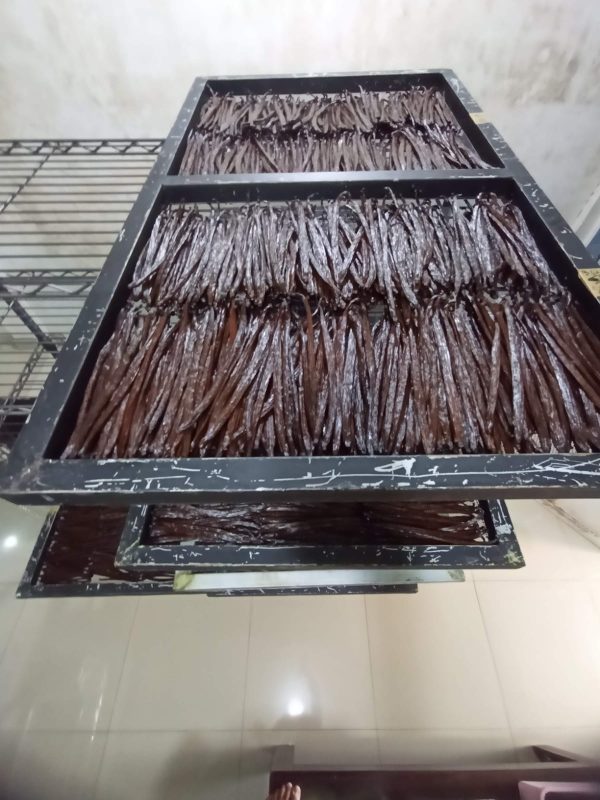
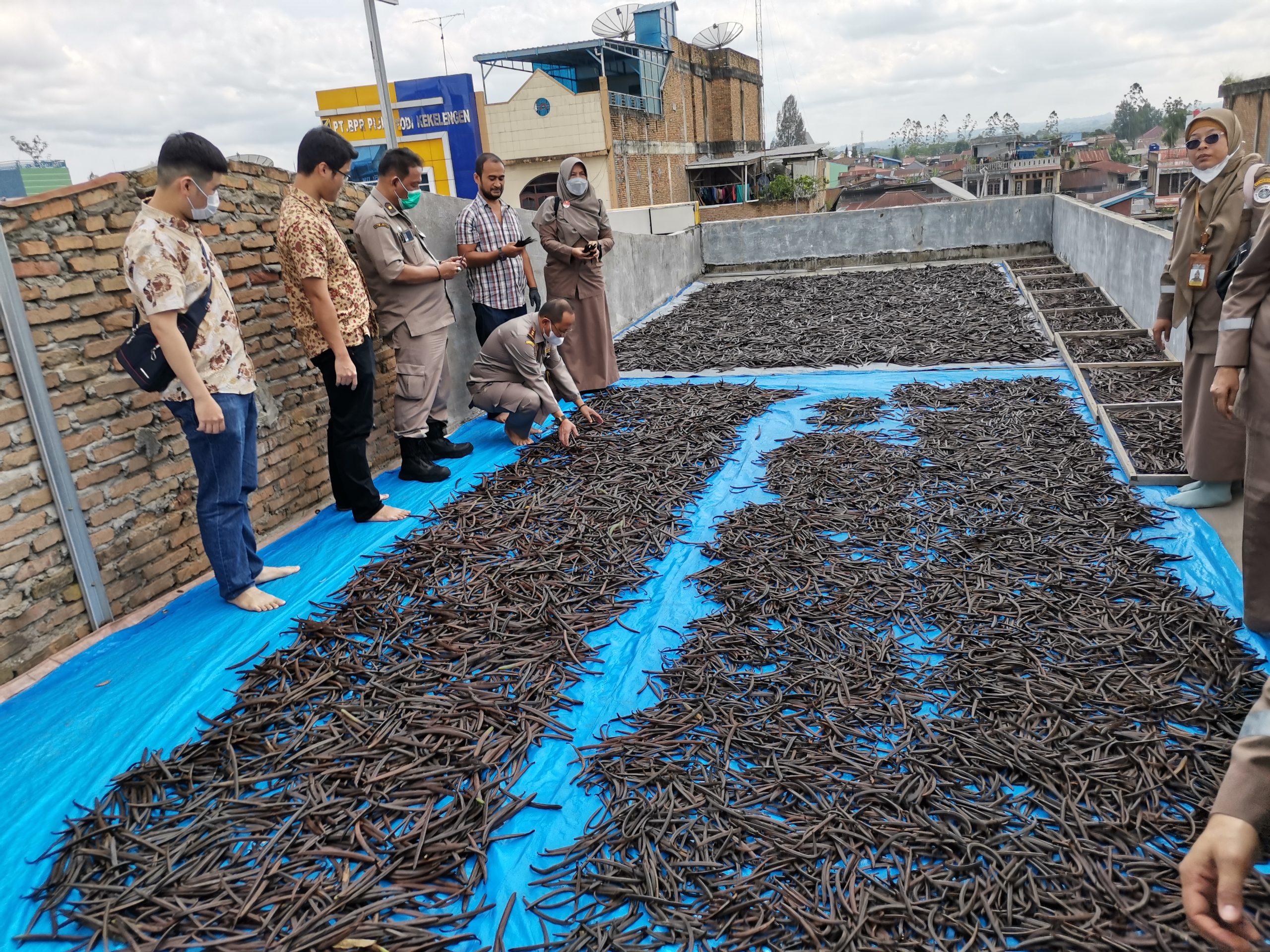
Traditional sun-curing, Sumatra
Curing Stages
Blanch → Sweat → Dry → Condition
Blanching Temperature
Triggers enzymatic vanillin release
Why the Green Bean Has No Vanilla Taste
Understanding how vanilla beans are made starts with a counterintuitive fact: the freshly picked pod is almost odourless. At harvest, the bean contains glucovanillin — a bound, inactive precursor — rather than free vanillin, the compound responsible for vanilla’s signature aroma.
The bean also holds the enzyme beta-glucosidase in a separate cellular compartment. The 2 compounds never interact during the 9 months the pod matures on the vine. Curing physically disrupts the cellular structure, bringing enzyme and substrate together for the first time.
This enzymatic reaction is irreversible. Without it, Vanillature’s Sumatra Planifolia beans would never reach their tested vanillin content above 2.5% — roughly 40% higher than the global industry average of 1.5–2.0%. The entire flavour of the finished product depends on what happens in the next 3–6 months.
The 4 Stages of Curing: A Step-by-Step Timeline
Blanching
3 minutes
Sweating
1–2 weeks
Slow Drying
2–4 months
Conditioning
1–2 months
Stage 1 — Blanching. Harvested beans are submerged in water held at exactly 60–65°C for approximately 3 minutes. This heat shock kills the vegetative tissue, halting biological growth and — critically — rupturing the cellular walls that kept beta-glucosidase separated from glucovanillin (Havkin-Frenkel & Belanger, 2011). The enzymatic conversion begins immediately.
Stage 2 — Sweating. Blanched beans are wrapped tightly in wool blankets or wooden crates and kept at 45–65°C. Farmers alternate between sunlight exposure during the day and sealed, insulated storage at night. This 1–2 week stage sustains enzyme activity and drives moisture from roughly 80% down to around 60%, concentrating developing flavour compounds.
Stage 3 — Slow Drying. Beans are laid on raised racks in direct morning sun for 3–4 hours each day, then shaded to prevent cracking. This 2–4 month stage gradually reduces moisture to the Grade A target of 30–35%. Rushing this stage through artificial heat destroys volatile aromatics. Patience is not optional — it is the product.
Stage 4 — Conditioning. Finished beans rest in sealed wooden or tin boxes for a final 1–2 months. Vanillin crystals form on the surface of the most potent pods during this phase — that white dusting is not mould, it is concentrated vanillin at its visible peak. Vanillature’s Crystal Vanilla achieves 3.5–4% vanillin through extended conditioning, the highest concentration in our entire range.
Traditional Sumatran Curing: What Industrial Processing Loses
Industrial curing shortcuts Stage 3, using forced-air ovens to reduce drying time from months to days. The moisture target is reached. The vanillin content is not. Industrial beans frequently test at 1.0–1.5% vanillin — half the concentration Vanillature’s traditionally cured Sumatra Planifolia delivers.
At Vanillature, farmers at 680 metres above sea level in North Sumatra follow the full 3–6 month traditional process. The equatorial climate provides consistent solar intensity for the drying racks. Evening humidity slows moisture loss just enough to prevent the bean skin cracking, which would release volatile aromatics prematurely.
“The beans tell you when they are ready — you cannot rush them. I do the sweating for two full weeks before I put them on the racks. Every morning I check the colour. When that deep chocolate brown comes all the way through, then the slow drying begins. That takes four months here in Deli Serdang. The crystals at the end — that is when I know the work is done.”
— Bu Sari, vanilla farmer, Deli Serdang, North Sumatra, 11 years cultivating Planifolia
Bu Sari’s 4-month drying protocol exceeds the minimum threshold. Her Crystal Vanilla batches consistently form visible vanillin crystallisation — the surface white crystals that confirm 3.5–4% vanillin content. That result is reproducible because the process is followed without abbreviation, every single batch.
The Biochemistry of Vanillin Formation, Simply Explained
Vanillin (4-hydroxy-3-methoxybenzaldehyde) forms when beta-glucosidase cleaves the glucose molecule from glucovanillin. The reaction requires both heat and moisture — which is why the blanching temperature of 60–65°C is non-negotiable. Too cool, enzyme activity stalls. Too hot, the enzyme denatures and the reaction stops entirely.
Research confirms that traditional multi-stage curing — specifically the alternating heat-and-shade drying cycle — produces significantly higher vanillin concentrations than any accelerated method (Havkin-Frenkel & Belanger, 2011, Handbook of Plant and Crop Science). The biochemistry validates what Sumatran farmers have practised for generations.
Secondary aromatics also develop during curing. p-Hydroxybenzaldehyde, p-hydroxybenzoic acid, and vanillic acid contribute floral, creamy, and woody notes that make vanilla far more complex than synthetic vanillin alone. These compounds emerge only through the slow oxidative processes of traditional sun drying — another reason that knowing how vanilla beans are made clarifies why authentic beans cost more than extract.
How Vanillature Tests and Grades Every Cured Batch
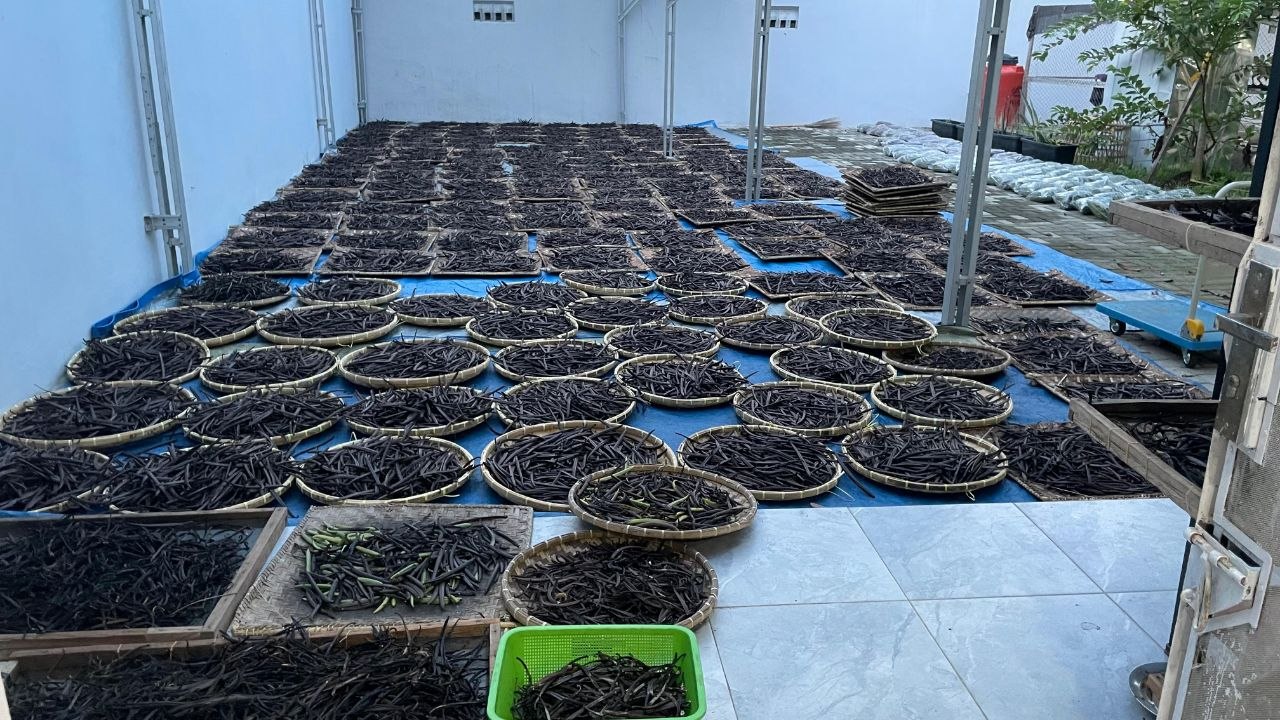
Understanding how vanilla beans are made is only half the equation. Knowing how to verify the result is equally important. At Vanillature, every cured batch passes through a 5-stage quality sorting process before it reaches a customer.
| Grade | Moisture Content | Vanillin Content | Appearance |
|---|---|---|---|
| Grade A | 30–35% | Above 2.0% | Full, pliable, dark brown |
| Grade B | 15–25% | Above 1.0% | Drier, extract-ready |
| Crystal Vanilla | 30–35% | 3.5–4.0% | White crystal surface bloom |
Beans that miss the moisture or vanillin targets at any stage are redirected to lower-grade processing rather than blended upward. This zero-compromise grading approach is why Vanillature’s 500+ smallholder farmers in Sumatra and Papua maintain consistent batch-level quality, not just farm-level averages.
The full journey — 9 months on the vine, then 3–6 months of traditional curing — totals approximately 15 months from flower to finished bean. Every day of that timeline contributes to the vanillin content measured in the final product. There are no shortcuts that preserve the result.
Frequently Asked Questions About Vanilla Curing
