


Vanilla Knowledge
How Many Vanilla Beans Does a Recipe Actually Need?
Aug
How Many Vanilla Beans Does a Recipe Actually Need?
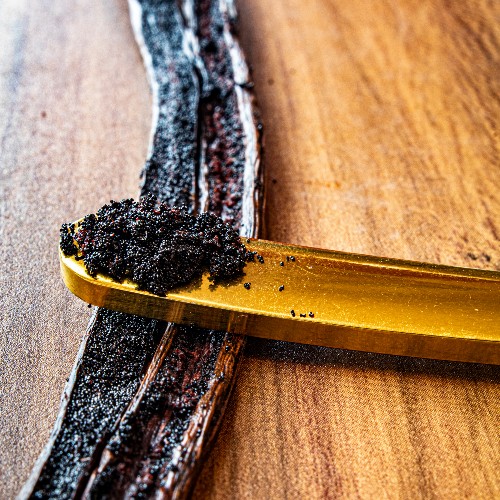
Most home cooks underuse vanilla. One scraped bean delivers roughly 1 teaspoon of seeds — enough to visibly perfume 500 ml of cream — yet many recipes call for half a bean where a full bean belongs. This guide gives you exact quantities for every common recipe type, and explains why high-vanillin beans like Vanillature Sumatra Planifolia (2.5%+ vanillin versus the industry average of 1.5–2.0%) let you adjust slightly downward without losing depth.
The Vanilla Equivalency Table: Bean vs Extract vs Paste vs Powder
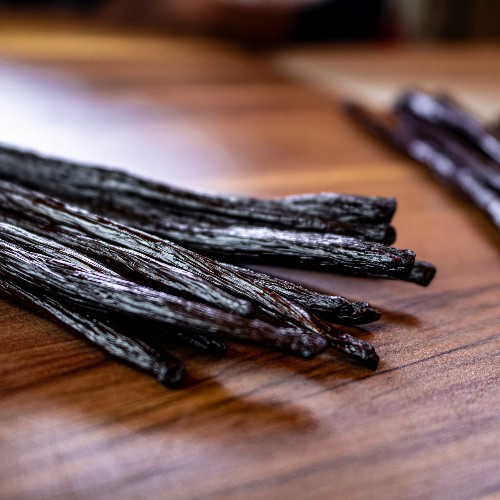
Understanding how many vanilla beans to use starts with knowing how each format compares in concentration. The table below reflects standard culinary ratios used by professional pastry kitchens — 1 whole bean equals 1 teaspoon of extract, 1 teaspoon of paste, or 0.5 teaspoon of powder.
| Format | Equivalent to 1 Whole Bean | Best Use | Sumatra Adjustment |
|---|---|---|---|
| Whole Bean | 1 bean (seeds + pod) | Custard, ice cream, infused milk | Use ¾ bean for equal intensity |
| Liquid Extract | 1 teaspoon (5 ml) | Cakes, cookies, batters | No change — pre-calibrated |
| Paste | 1 teaspoon (5 ml) | Buttercream, panna cotta, visible seeds | No change — pre-calibrated |
| Powder | 0.5 teaspoon (2.5 ml) | Dry spice blends, chocolate, ice cream powder | Use 0.4 tsp for equal intensity |
| Crystal Vanilla* | ⅓ teaspoon (1.5 ml) | Finishing sugar, whipped cream, espresso | Surface crystals = 3.5–4% vanillin |
*Vanillature Crystal Vanilla carries 3.5–4% vanillin — the highest in the product range. Surface crystals are concentrated vanillin, not sugar.
Vanillature Sumatra Planifolia tests above 2.5% vanillin, compared to an industry average of 1.5–2.0%. When you know how many vanilla beans to use from a standard recipe, reduce Sumatra quantities by roughly 20–25% to match the intended flavour intensity — or keep the full amount and enjoy noticeably deeper flavour.
Exact Quantities by Recipe Type
Recipe books rarely specify bean origin or vanillin percentage. These quantities assume average-quality beans. When using Sumatra Planifolia at 2.5%+ vanillin, apply the 20–25% reduction noted above.
🍨 Ice Cream Base
Per 500 ml cream. Split lengthways, scrape seeds, steep pod and seeds in warm cream for 20 minutes before churning.
🍮 Crème Brûlée / Custard
Per 6-portion custard (approx. 600 ml milk/cream). A single bean gives subtle warmth; 2 beans gives classic depth.
🎂 Vanilla Cake (layered)
Per 2-layer 20 cm cake. Seeds scraped directly into butter during creaming. Alternatively, 2 tsp extract.
🍪 Cookie Batch
Per 24-cookie batch. Beans outperform extract in brown-butter or shortbread doughs. Use 1 tsp extract as substitute.
☕ Vanilla Latte / Beverage
Per single 250 ml serving. Steep split pod in hot milk for 5 minutes. One pod serves 2 lattes before flavour fades.
🍮 Panna Cotta (4 portions)
Per 400 ml cream base. Or substitute 1 tsp paste to display seeds visibly in the set dessert.
Getting Every Drop from a Whole Bean
A single Grade A Vanillature bean contains thousands of seeds — 100 to 200 milligrams of seed mass — packed into a pod that measures 14–20 cm in length. Wasting any part reduces the flavour yield significantly.
Split the bean lengthways with a sharp knife. Scrape seeds with the back of the blade. Add both seeds and pod to your liquid. The pod holds aromatic compounds even after scraping; a single pod infuses well for 20–30 minutes in warm cream at 60–70°C.
After infusion, do not discard the pod. Rinse, dry, and place it in a jar with caster sugar. Within 2 weeks you produce vanilla sugar at near-zero extra cost — one dried pod per 200 g sugar.
“When I first started, I thought more beans always meant more flavour. But good beans, grown slowly and cured properly, give you full flavour in one pod. The 6-hour pollination window, the 9 months on the vine — every step adds to what you taste in the kitchen.”
Choosing the Right Format for Each Dish
Knowing how many vanilla beans to use matters less than knowing when a whole bean outperforms extract. In custard, ice cream, and panna cotta — any fat-rich, heat-infused preparation — whole beans release aromatic aldehydes that extract cannot replicate at the same depth.
Extract performs best in baked goods where high oven temperatures (above 160°C) would volatilise delicate aromatic compounds from whole-bean seeds. The alcohol base in extract helps distribute flavour evenly through cake batter and cookie dough.
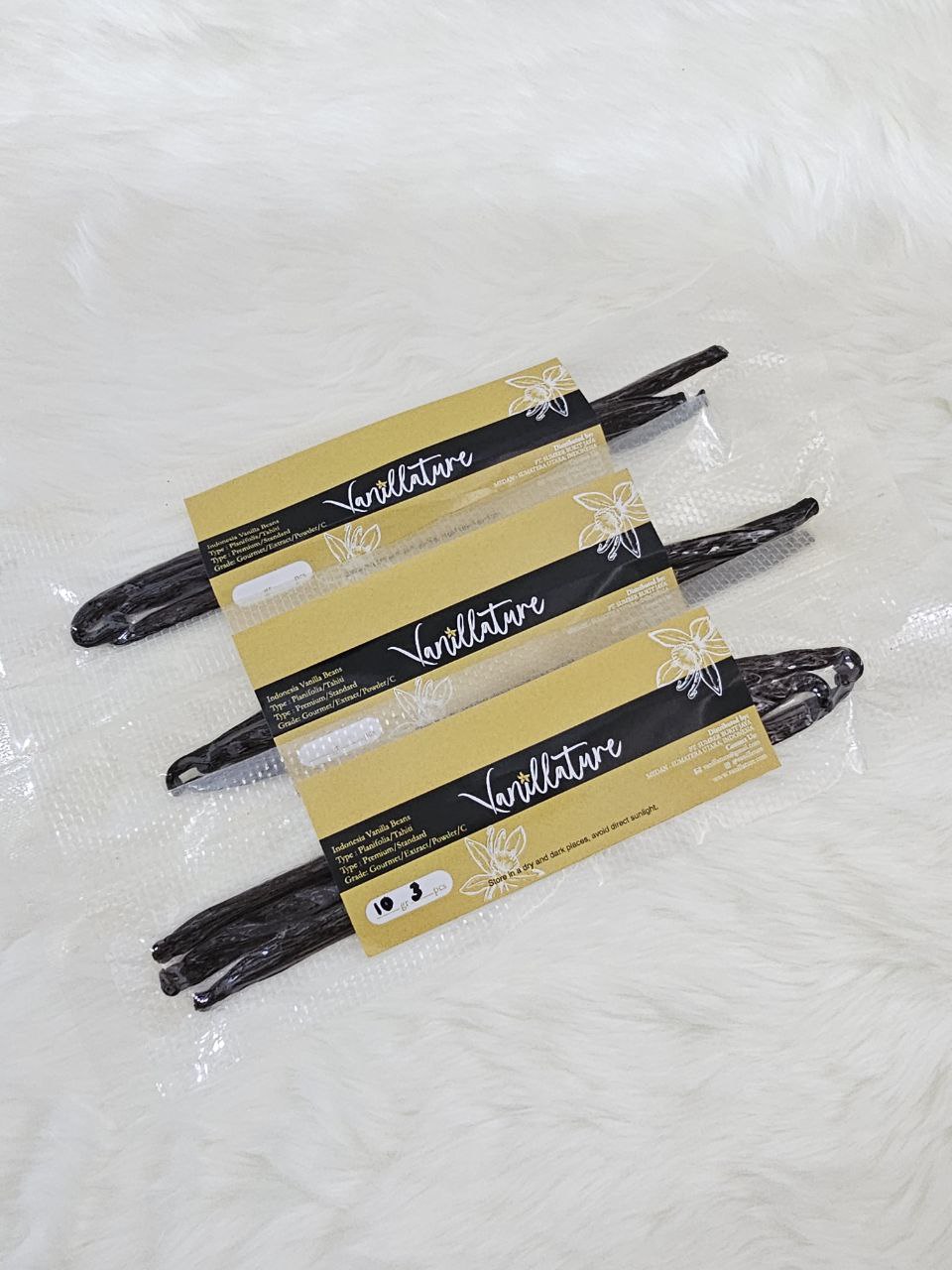
Paste is the single most versatile format. It delivers the visual appeal of whole-bean seeds with the precision of measured liquid. Use 1 teaspoon paste where a recipe calls for 1 bean — the ratio is exactly equivalent.
Powder concentrates flavour through dehydration. At 0.5 teaspoon per bean equivalent, it integrates into dry spice blends, chocolate ganache, and ice cream base mixes without adding moisture. Vanillature Crystal Vanilla, carrying 3.5–4% vanillin, is the most concentrated format in the range — reduce to ⅓ teaspoon per bean equivalent.
Grade A vs Grade B: How Bean Quality Changes Quantity Needed
Not all vanilla beans deliver the same flavour per gram. Vanillature Grade A beans carry 30–35% moisture and test above 2.0% vanillin. Grade B beans, with 15–25% moisture and vanillin above 1.0%, suit extraction rather than direct use — and require larger quantities to match Grade A intensity.
Every Vanillature batch passes a 5-stage quality sorting process before dispatch. Using Grade B beans in a custard recipe that calls for 2 Grade A beans requires 3–4 Grade B beans to achieve comparable flavour. Know your grade before you count your beans.
Indonesia produces approximately 2,300 tonnes of vanilla annually, ranking second globally after Madagascar (FAO, 2023). Within that volume, beans grown at elevation — Vanillature’s North Sumatra farms sit at 680 metres above sea level — consistently produce higher vanillin concentrations than lowland equivalents. Elevation affects how many vanilla beans to use: fewer Sumatra beans deliver the same result as more lowland beans.
Frequently Asked Questions
