


Vanilla Knowledge
Vanilla Bean Paste vs Vanilla Extract: When to Use Each
Aug
Vanilla Bean Paste vs Vanilla Extract: When to Use Each
One teaspoon of vanilla bean paste equals one teaspoon of extract equals one whole vanilla bean — yet the two products behave very differently in your kitchen. Choosing the wrong form costs you visible specks in a custard or uneven flavour in a sponge. Here is exactly when each one wins.
What Each Product Actually Contains
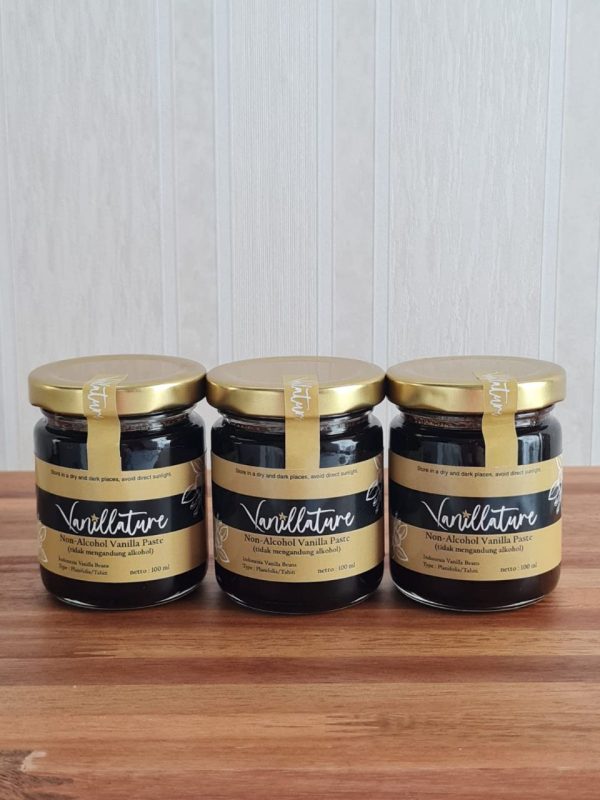
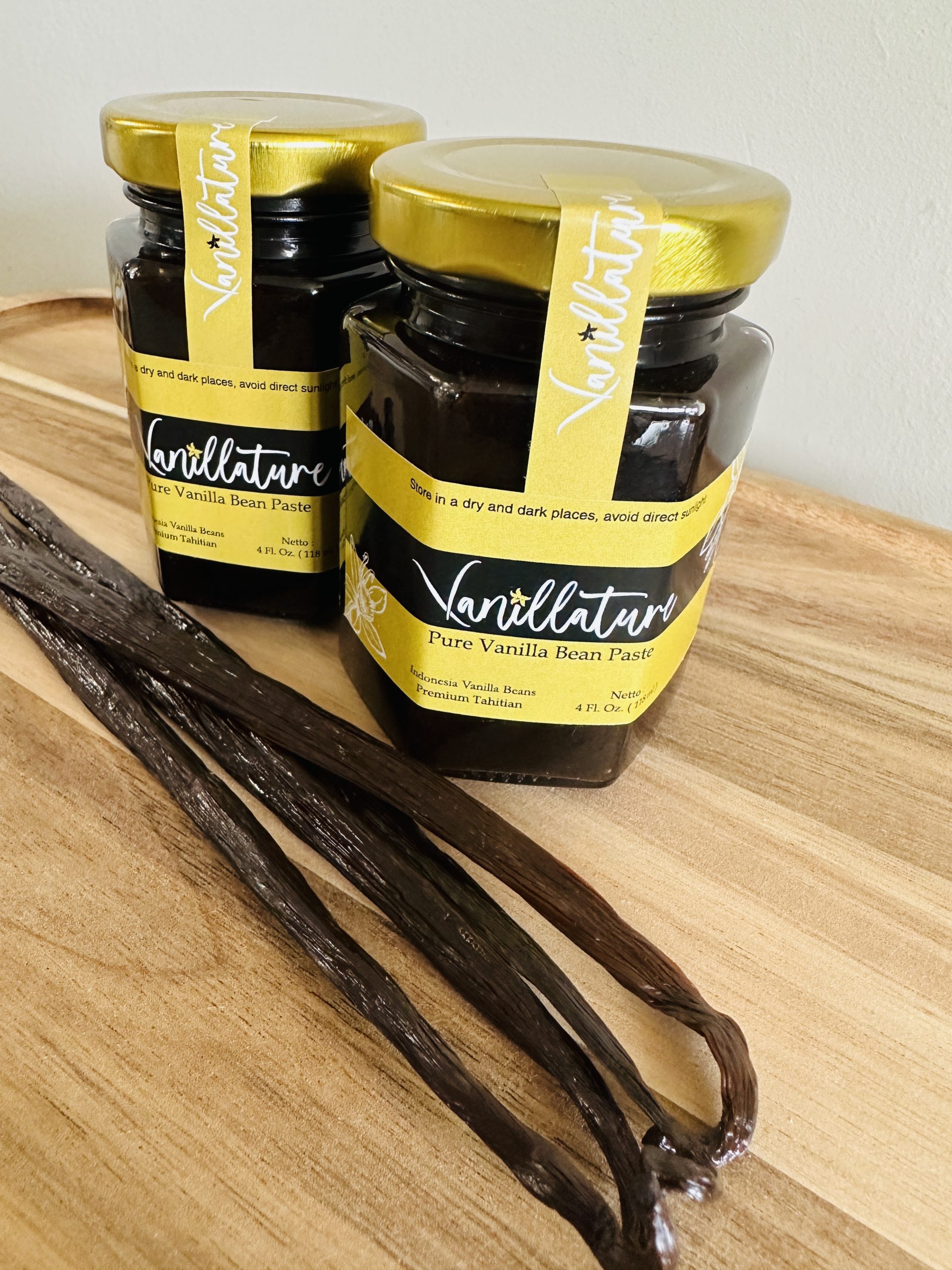
Vanilla bean paste is a thick, syrup-based blend of vanilla extract, ground vanilla bean powder, and whole seeds scraped directly from cured pods. Each teaspoon delivers 100 to 200 seeds — the small black specks that signal real vanilla to every guest at your table.
Vanilla extract is a liquid infusion of vanilla beans in alcohol and water. It carries the full flavour profile of the bean — including vanillin, heliotropin, and more than 200 aromatic compounds — but without visible seed particles (Havkin-Frenkel & Belanger, 2011).
At Vanillature, our Sumatra Planifolia beans test above 2.5% vanillin — compared to the industry average of 1.5–2.0%. Both our paste and extract start from this higher-vanillin raw material, which means richer flavour at the same measured dose.
When Vanilla Bean Paste Is the Right Choice
Paste excels in any dish where visible seeds matter as much as flavour. Crème brûlée, panna cotta, ice cream, pastry cream, and buttercream frosting all benefit from the speckled appearance that signals scratch-made quality.
The thick base of paste also holds its position in fat-heavy mixtures. Stir it into heavy cream or softened butter and the seeds stay evenly distributed throughout, rather than sinking or floating. This makes paste the correct vanilla bean paste substitute for a whole scraped bean in cream-based applications — with none of the extra prep work.
Custards and puddings cooked at temperatures above 80°C retain paste’s seed structure because the thick carrier protects volatile aromatics during heating. You get both visual impact and deep flavour in a single ingredient.
“When I make a good vanilla custard, I always use the paste. The seeds do not disappear into the cream — they stay and remind you something real is in there. With extract only, you taste it but you cannot see it. Both are good, but for cream dishes, paste is the one.”
— Bu Sari, vanilla farmer, Deli Serdang, North Sumatra, 11 years cultivating Planifolia
When Vanilla Extract Performs Better
Extract distributes through batter more evenly than paste because it is liquid. In delicate sponge cakes, chiffon layers, and macarons — where texture depends on precise moisture levels — adding a syrup-based paste can upset the balance and weigh down aeration.
For every 240 ml of batter in a light génoise or angel food cake, 1 teaspoon of extract integrates without altering density. The same dose of paste adds roughly 5–6 grams of sugar solids, which shifts the crumb in fine-textured bakes.
Extract also performs better in recipes where clear colour matters. A white glaze, a pale lemon curd, or a translucent simple syrup stays visually clean with extract. Paste introduces dark specks that, in these contexts, read as impurities rather than markers of quality.
Use extract in cookies, quick breads, and hot beverages too. The alcohol carrier evaporates during baking above 78°C, leaving pure flavour behind without any textural interference.
Practical Substitution Ratios at a Glance
The 1:1:1 rule covers most substitutions. One teaspoon of paste replaces one teaspoon of extract or one whole vanilla bean in any recipe. This ratio holds across all standard measurements.
| Recipe Calls For | Use Instead | Adjust? |
|---|---|---|
| 1 tsp vanilla extract | 1 tsp vanilla bean paste | Reduce other liquids by ½ tsp in delicate batters |
| 1 tsp vanilla bean paste | 1 tsp vanilla extract | No adjustment needed — you lose seed specks only |
| 1 whole vanilla bean | 1 tsp paste or extract | No adjustment; paste delivers 100–200 seeds equivalent |
| 2 tsp extract (strong flavour) | 1½ tsp Vanillature paste | Higher vanillin content (2.5%+) means less is needed |
One important note: vanilla bean paste is not always an ideal vanilla bean paste substitute in no-bake or raw preparations like mousse or whipped ganache. In those recipes, the ground bean powder in paste can introduce a faint textural graininess. Extract is cleaner in cold, unset applications.
Shelf Life and Storage for Both Forms
Both paste and extract last 2–3 years when stored correctly. Keep them in a cool, dark cupboard away from heat sources — not above the stove, where temperature swings degrade aromatic compounds faster.
Do not refrigerate paste. Cold temperatures cause the sugar carrier to crystallise and the seeds to clump, making it difficult to measure accurately. Extract tolerates a wider temperature range but still performs best at 15–20°C.
Our Vanillature beans cure for 3–6 months through traditional sun curing before processing into paste or extract. This extended curing phase — validated in research on enzymatic vanillin development (Havkin-Frenkel & Belanger, 2011) — is what drives the flavour intensity that makes both products shelf-stable and potent for the full 2–3 year window.
Traditional sun curing in North Sumatra — 3 to 6 months develops vanillin depth
Which Vanillature Product to Choose
If you bake custards, ice cream, or pastry cream more than 3 times per month, keep paste as your primary ingredient. The 100–200 seeds per teaspoon make every dessert visually unmistakable and the flavour — anchored by 2.5%+ vanillin from Sumatra Planifolia — stands distinct from any supermarket alternative.
If you bake cakes, cookies, and breads weekly, extract is the workhorse. It moves through batter uniformly, survives baking temperatures without loss of depth, and keeps your light-coloured bakes visually clean.
Many serious home bakers keep both on hand and treat vanilla bean paste as the correct vanilla bean paste substitute for whole scraped beans — cutting preparation time from 5 minutes per pod to 10 seconds per teaspoon, with no loss of the seed count that makes scratch baking visible.
Frequently Asked Questions
Yes, at a 1:1 ratio — 1 teaspoon of paste replaces 1 teaspoon of extract in most recipes. The exception is delicate batters like chiffon sponge or angel food cake, where paste adds approximately 5–6 grams of sugar solids per teaspoon and can reduce lift. In those cases, extract is the better choice. In cream-based dishes, custards, and buttercreams, paste is the superior vanilla bean paste substitute because it delivers 100–200 visible seeds alongside full flavour.
One teaspoon of vanilla bean paste contains 100–200 seeds, equivalent to scraping one whole Grade A vanilla bean by hand. This seed count is why paste produces the characteristic black-speckled appearance in ice cream, crème brûlée, and pastry cream. Vanillature paste uses Sumatra Planifolia beans testing above 2.5% vanillin — higher than the industry average of 1.5–2.0% — so the flavour behind those seeds is also measurably stronger.
Vanilla bean paste lasts 2–3 years when stored in a cool, dark cupboard at 15–20°C. Do not refrigerate it — temperatures below 10°C cause the sugar carrier to crystallise and seeds to clump. Vanilla extract has the same 2–3 year shelf life under identical storage conditions. Both products maintain potency for this full period because Vanillature beans undergo 3–6 months of traditional curing, which builds the stable aromatic compounds that resist degradation over time.
Vanilla extract outperforms paste in 4 specific situations: light sponge and chiffon cakes where excess moisture or sugar disrupts texture; visually clear preparations like white glazes and lemon curd where dark seeds are unwanted; no-bake cold desserts like mousse where ground bean powder causes graininess; and hot beverages where liquid extract disperses in under 3 seconds of stirring. In all other baked goods, including cookies, quick breads, and muffins, extract and paste perform equally well at the 1:1 ratio.
Shop Vanillature Vanilla Paste & Extract
Both made from Sumatra Planifolia beans testing above 2.5% vanillin. Sourced from 500+ smallholder farmers. Cured for 3–6 months. Ready to use in every recipe above.
Vanillature holds a 5.0 star rating from 174+ verified buyers on eBay, with additional verified ratings on Shopee and TikTok Shop Indonesia — independently confirmed quality across three separate platforms.
Vanillature (PT. Sumber Bukit Jaya) — Jl. Prof. H.M. Yamin SH No. 224M, Medan, North Sumatra 20234, Indonesia — +62 878-6986-1288
